Known as "the father of Iraqi photography", Latif al Ani captured a cosmopolitan Baghdad back in the 1960s, when it seemed as though the country was progressing towards a bright shiny future. What happened instead was not, as in some other Muslim countries, the rise of a regressive anti-Western Islamism. That came later. It was, rather, the Baath takeover in 1968, and the brutal thirty-five-year tyranny of Saddam Hussein:
By the late 1960s, Al Ani held the prestigious position of director at the photography department of the government's Iraqi News Agency, but was forced into retirement shortly after the Baath Party took power in a bloodless coup in 1968.
According to Al Ani, he later discovered a young member had been informing the party — for which Saddam Hussein was then a rising deputy — about his activities.
Al Ani took his last professional photograph in 1977, he says, losing his desire to photograph anyone beyond close family and friends during the years of successive wars and totalitarian government that followed. Electing to remain in Iraq and preserve his "spiritual connection" with the country of his birth, he gave up hopes of future exhibitions.
But then, despite losing much of his historic archive during the 2003 Allied invasion, he was exhibited at Venice in 2015 to much acclaim – and now has a book out.
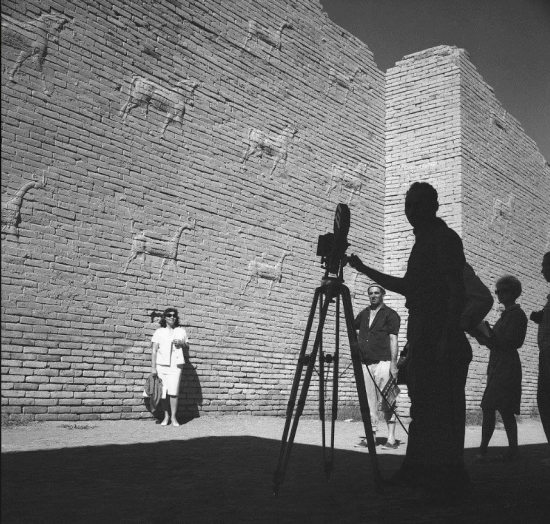
Shooting a film promoting tourism, Babylon, 1962.
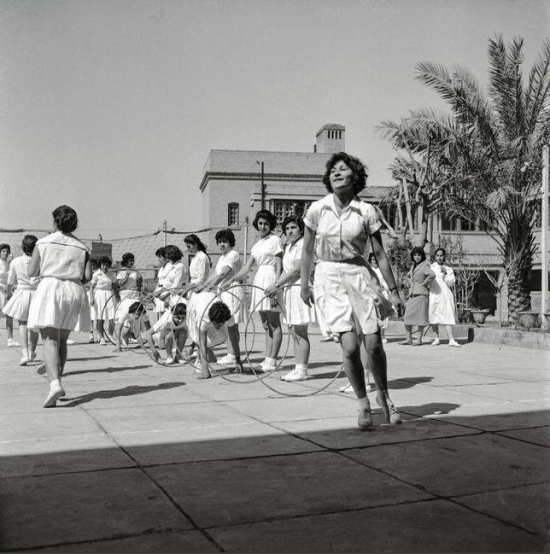
Al Aqida, High School, Baghdad, 1961.
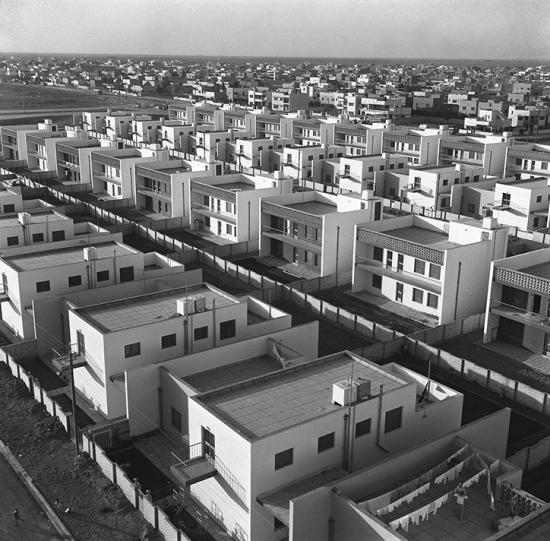
Housing Project, Yarmouk, Baghdad, 1962.
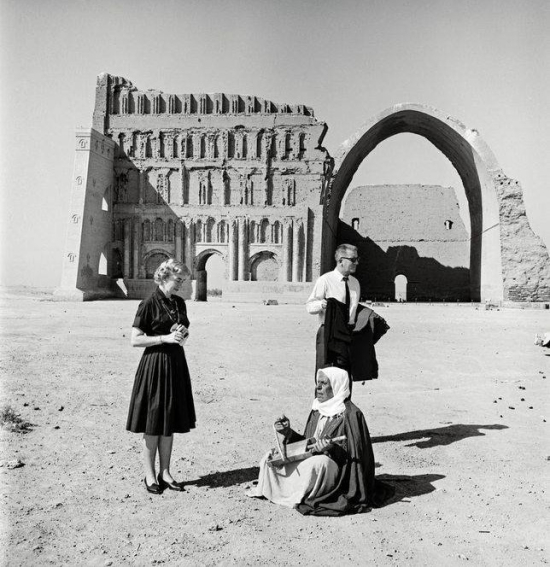
American couple at Taq Kasra, Al Mada'in, Salman Pak, Baghdad, 1965.
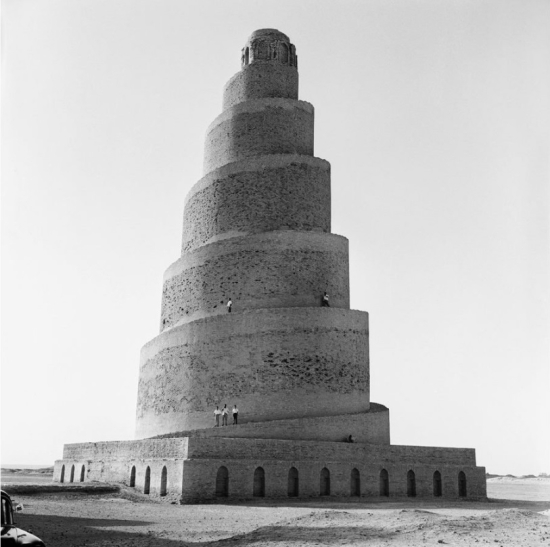
Minaret of the Great Mosque of Samarra, 1960.
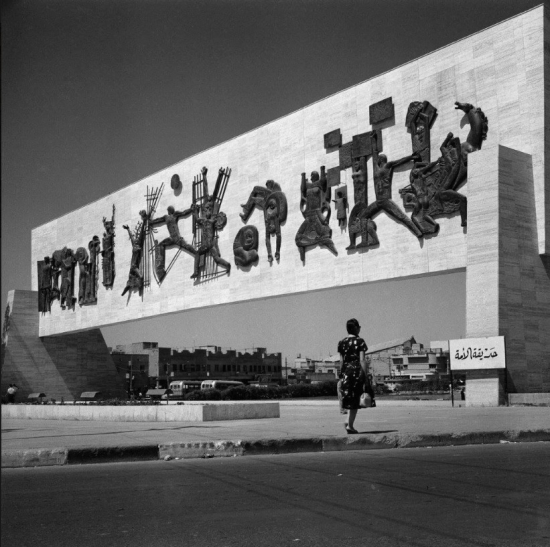
Tahrir Square, Baghdad, 1962.
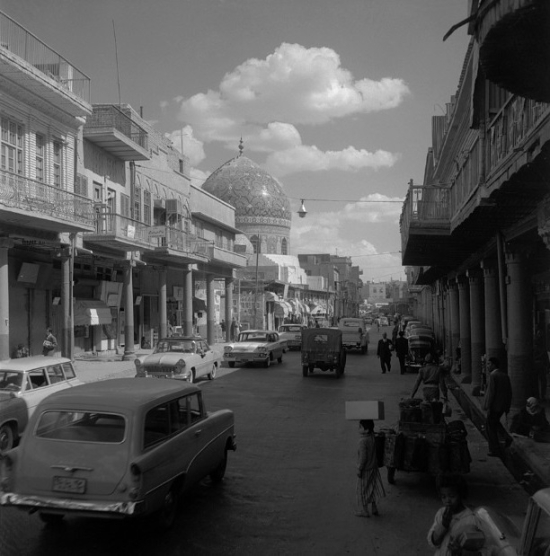
Rashid Street, Haydarkhana, Baghdad, 1961.
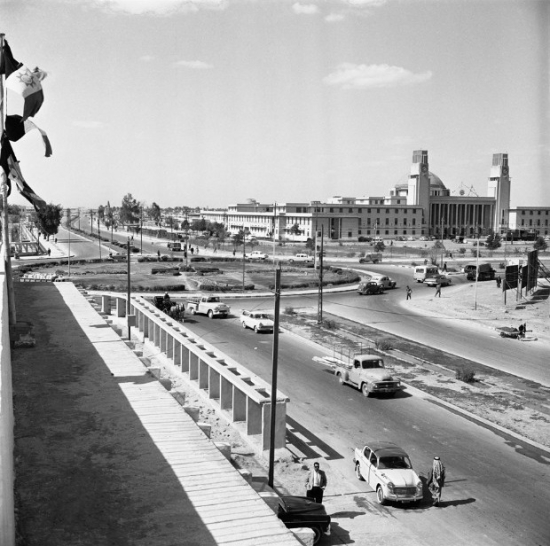
Train Station, Baghdad, 1961.
 Mick Hartley
Leave a comment