• Why is the government’s legal representative at the High Court arguing against the implementation of single-sex spaces, contrary to the its claimed position? I wondered about that yesterday, and now here’s Legal Feminist with the same question:

    Lawyers in court act on the client’s instructions. Which part of government is instructing the lawyers to make these arguments? And why? Formally, it is the Minister for Women and Equalities (Ms Bridget Phillipson) who is responsible. She will surely have taken advice from the government’s lawyers, ultimately answerable to the Treasury Solicitor and the Attorney-General. That legal advice is, of course, privileged. But the actual arguments in court are open. They show a government arguing in contradiction to what the Supreme Court judgment says and doing so in a lower court which is bound to follow the Supreme Court’s judgment.

    Why? Is this deliberate? Is this a misunderstanding? Is this an attempt to appease those Labour backbenchers who seem unwilling to accept the judgment and who want to water it down in some way? Or is it what might be termed the permafrost layer of management (whether in the civil service or the legal function) who are determined to frustrate the judgment or make it unclear or confusing, either because of their own personal position or ideological views or simply because they do not like it?  None of these considerations should play any part in the advice to Ministers or indeed in Ministers’ actions. Are they doing so here? 

    This topic has been bedevilled by a continuing serious concern: the extent to which government (and other public bodies) have allowed a gross conflict of interest to arise, through their embrace of Stonewall “advice” (Stonewall are not lawyers) and membership of its schemes, and to continue, to the detriment of civil service duties of impartiality and professionalism….

    Now we have government Ministers saying one thing to Parliament and government lawyers saying something inconsistent to the courts. This is unacceptable. Ministers need to clarify this – and without delay. The public and the courts deserve nothing less. 
  • On the subject of UK universities failing Jewish students….from the Times:

    The Israeli government has accused the University of Glasgow’s rector of being a “propagandist and a fraud” after he claimed organs had been removed from the bodies of Palestinians.

    Dr Ghassan Abu-Sittah, a plastic surgeon who specialises in conflict injuries, said photographs of the remains of Gazans showed evidence of what he described as expert surgery to take out parts.

    Critics of Israel have long charged the country with organ harvesting — in what Jewish commentators believe is antisemitic trope inspired by centuries-old blood libels of Jews taking children to kill them.

    Of course it’s an antisemitic trope: a new blood libel. Welcome to UK campus life.

    Abu-Sittah was elected rector for the University of Glasgow — his alma mater — last year, eliciting concerns from Jewish students. Last month a student group called the Glasgow University Justice for Palestine Society (GUJPS) gathered under a banner reading “Glory to Our Martyrs”.

    On social media the protest was advertised as an opportunity to “celebrate the glorious Al-Aqsa Flood which permanently crippled the Zionist entity, putting it into a state of slow but inevitable collapse”.

    This is what you get when the idiot left across UK campuses decides to embrace Islamist ideology. It comes with a strong dose of antisemitism – which our young radicals seem only too happy to swallow.

  • Former UCL student Fiyaz Mughal, in the Telegraph – British universities have failed Jews:

    A Muslim student and staunch anti-racist, I was friends with people from all different backgrounds, including several Jews. We stood together when some students spoke of receiving racist chants and abuse when they visited football matches, and I remember Jewish students standing up for Muslim students who wanted a quiet place to pray.

    Fast forward three decades and Jewish students have repeatedly said that they do not feel comfortable being students at UCL. This, at the very least, should sicken us all and rouse us into supporting these students against anti-Semitism.

    UCL used to be a beacon for progressivism; it was the first institution to admit Jewish students when it was founded in 1826. Yet earlier this year, more than seventy masked students rallied outside the university chanting: “No more hiding, no more fear, Zionists not welcome here.”

    Not long after, a Jewish staff member said to The Jewish Chronicle: “We have experienced staggering levels of activism on campus. The call to remove Zionists from campus is just the latest in a long line of abuse Jews can expect at UCL.” How has my alma matter become more backwards today than it was in the 19th century?

    There is no excuse for anyone targeting British Jews with hatred. I learnt plenty during my time at UCL, but the lesson I still carry with me every day is this: while the 1990s were no heyday for ethnic minority students in British universities, at the very least we tried to stand up for each other. We are far away from that point today.

    It’s not just UCL, of course. They’ve just been caught red handed, as it were. It’s across the board.

  • The United Nations Special Rapporteur on Violence Against Women, ffs.

  • The Labour government say they’re right behind the Supreme Court ruling on single sex spaces – that “women” means real actual biological women, not men-who-say-they’re-women – but they don’t seem to mean it. At this latest Jolyon Maugham’s Good Law Project case at the High Court, where the obsessive trans champion is attempting to overturn the legality of the interim guidelines issued by the Equality and Human Rights Commission and show it’s all transphobic and horrible and mean, the government seems to be back-tracking. Tom Harris in the Telegraph:

    Until yesterday’s proceedings at the High Court in London, we all assumed that ministers were wholly on board with the Supreme Court’s ruling. The Equality Act is, after all, the law of the land. It has been in force since 2010, even if its provisions were not fully understood or followed until the Supreme Court’s intervention. And, as Rebecca Paul has pointed out, not even then. But ministers have no choice but to respect and implement the law as it stands, or seek to change the law through primary legislation.

    So why is Phillipson’s legal representative now advancing a wholly unnecessary and impractical practice of a “case-by-case” assessment of which men get to use women’s toilets? The Supreme Court says that if even one “trans woman” uses such a facility, it is then no longer a single-sex space. Is that what the Government wants? The answer seems to be yes.

    Clearly Zoe Leventhal KC is representing Phillipson’s view accurately; that, after all, is her job. So when was the minister going to tell the country that she no longer believes that the “clarity” provided by the Supreme Court on single-sex spaces was clear enough? And will she explain how, in practical terms, the “case-by-case” process she now advocates will be practically implemented to allow certain men who identify as women to use public toilets? Who makes that assessment? Who enforces it?

    Phillipson was right back in April when she welcomed the Supreme Court’s “clarity”. To maintain women’s safety and privacy, all men, however they identify, must refrain from using women’s facilities. That is clear, it is simple and it is easily explained. But now the ironically-titled women and equalities minister has muddied the waters in an entirely unnecessary and damaging way. And as always, it is women, not men, who risk paying the price in lost security and lost privacy.

    The answer to the riddle, surely, is that Phillipson didn’t mean what she said about welcoming the clarity of the Supreme Court judgement: that in fact she doesn’t welcome it at all – either through conviction or, more likely, because she doesn’t want to upset the Labour backbenchers who still believe in the gender nonsense.

    This looks very much like political cowardice.

  • A different take on the current BBC crisis, taking a longer-term look, from Graham Majin at Quillette.

    The original Reithian BBC journalism was based on what Majin calls the Victorian model, which followed the classical journalistic values of reporting “who,” “what,” “when,” “where,” and “how” – but not “why”. Report the facts, not values, and let the public form their own opinions. This was especially important for the BBC, it was felt, governed as it was by the Royal Charter that requires it to “provide impartial news and information to help people understand and engage with the world around them.”

    This was all a bit dry and dull for the Boomer generation, though. Fired up by the ongoing cultural revolutions of the Sixties and Seventies, they wanted a change.

    By the late 1980s, the Baby Boomer generation was moving into positions of power and authority in journalism, and in 1992, a new director general arrived at the BBC. His name was John Birt and his self-declared mission was to destroy the old classical Victorian model of journalism and replace it with Boomer journalism. This was hardly a surprise. Birt’s beliefs about journalism were public long before he was appointed to lead the BBC. During 1975 and 1976, he and his colleague Peter Jay wrote five important articles for the London Times. In the first of these, they attacked the traditional journalistic “who, what, where, when, how” framework, which they said represented a “bias against understanding.” The most important question, they argued, and the one that should be answered first, was “why.” This reversed the old journalistic methodology that prioritised factual reporting, and confined explanation and commentary to the editorial columns.

    The primary job of the journalist, Birt and Jay maintained, was to identify and explain a story’s wider narrative. Constructing these narratives would require crack squads of elite reporters who could help ordinary people to understand the world’s problems: “knowledgeable and educated journalists, sometimes working in teams and continuously blending inquiry and analysis, so that the needs of understanding direct the inquiry and the fruits of inquiry inform the analysis.” In their final article, they repeated their view that Victorian journalism was no longer relevant: “In sum, most journalists, including television journalists, work to obsolete and muddled concepts which need to be replaced by the values of a new journalism.

    They decided that just reporting the facts wasn’t enough. The public needed to be educated.

    Birt reinvented journalism at the BBC and introduced a new methodology. Scripts would now be written by senior journalists in the newsroom, and then reporters would be dispatched to shoot supporting interviews and footage. In this way, reality would conform to the pre-determined narrative. In Uncertain Vision, her book about Birt’s BBC tenure, Georgina Born describes a meeting at which Birt told producers he wanted to see far more “scripting and planning in advance.” When he was asked which BBC current affairs shows he liked, he replied, “To be honest, there’s nothing I like.” His implication, she reports, was that the truth of a news story “could be arrived at intellectually.”

    And here we are.

    As a consequence of these developments, modern BBC journalism now suffers from two major defects. The first of these is the reliance on narrative. Once it has worked out which causes it thinks are good and which are bad, these moral narratives quickly become unchallengeable articles of faith to which group members must adhere….

    The BBC’s second major defect is that the need to protect the narrative pushes truth-telling into second place.

    So the BBC decides, with the help of Stonewall, that people need to be educated about the joy of trans. They also decide that Israel – Zionism – is wicked, in keeping with long-term left-wing thinking. Truth-telling takes a back seat…

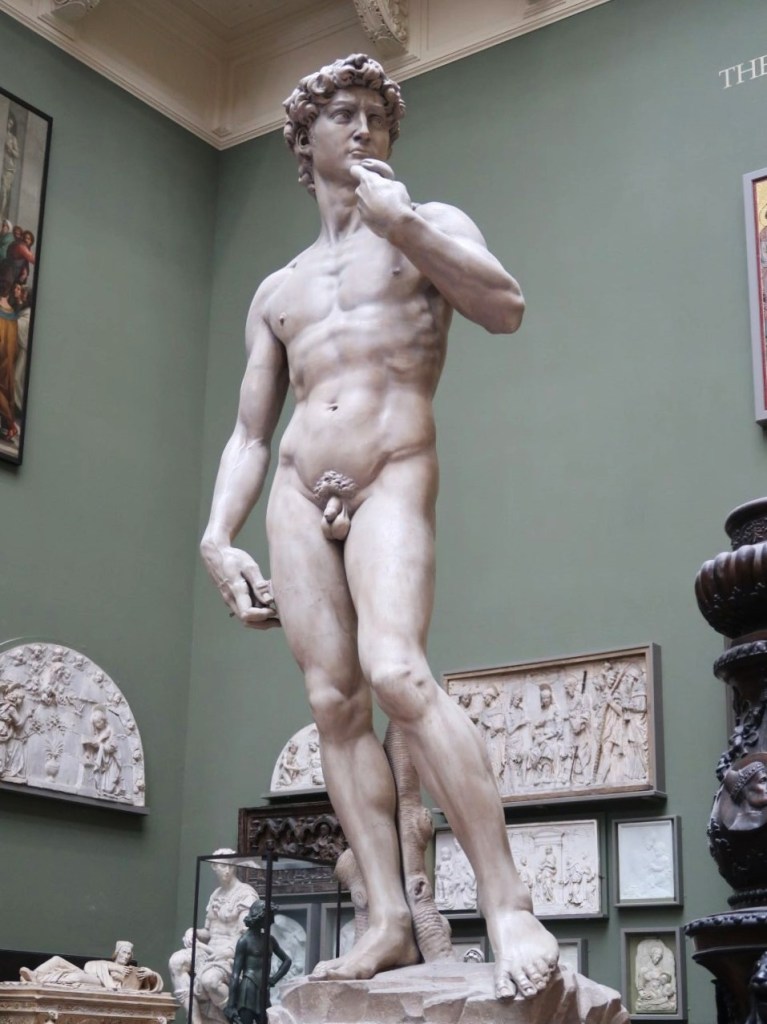
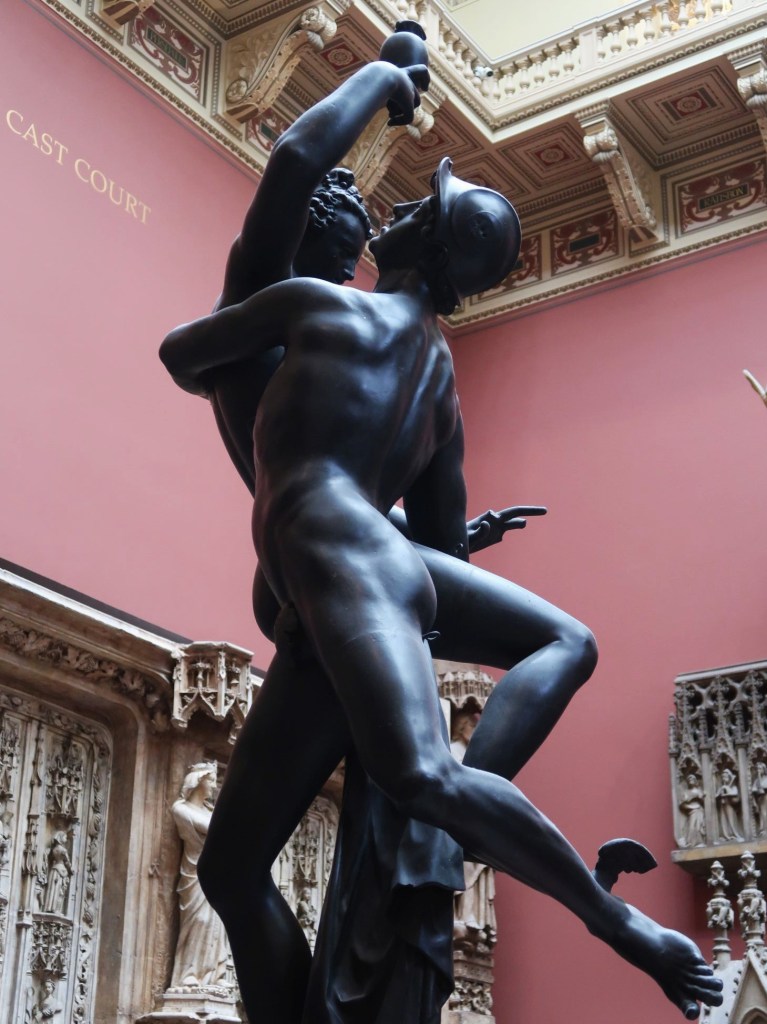
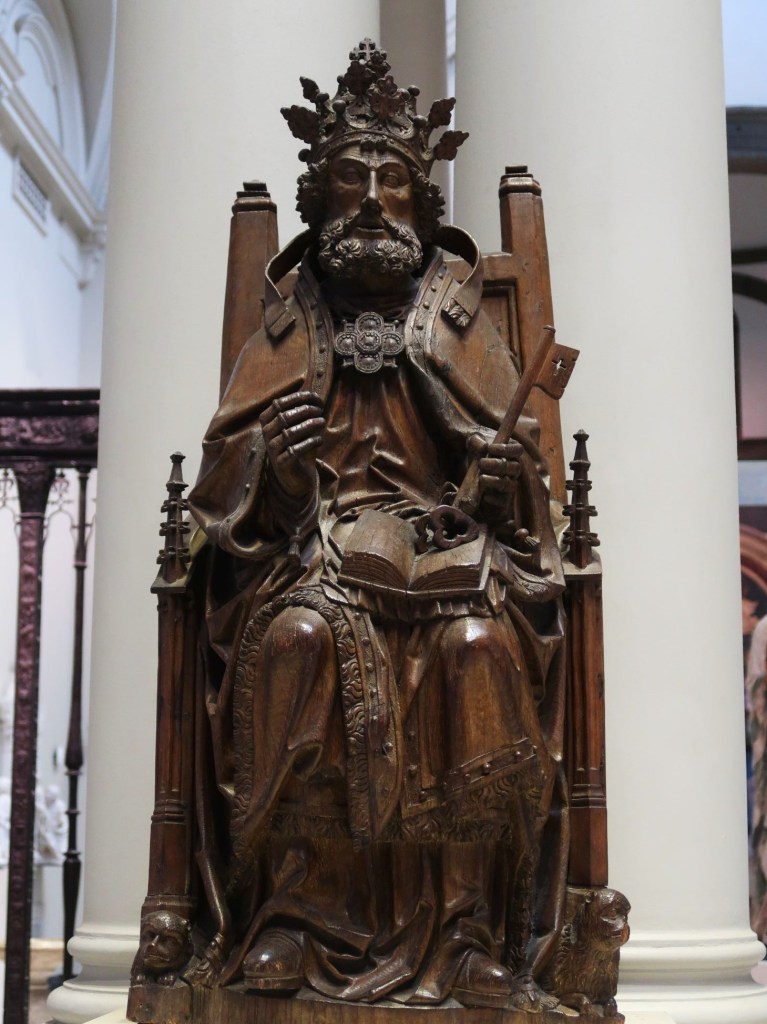
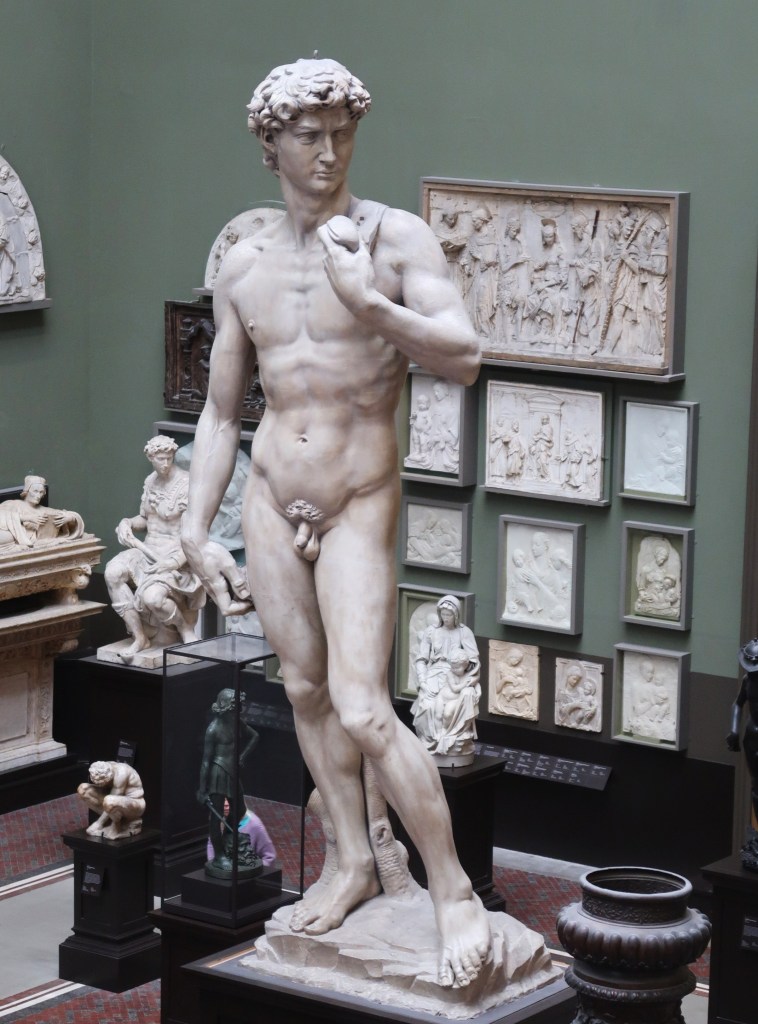
  • Figures at the Victoria and Albert Museum. At the Cast Courts – David, of course, and Mercury and Psyche by Dutch sculptor Adriaen de Vries (1593) – then a gaunt St Peter, about 1520, from Holland.

  • More on that UCL blood libel case, from the JC:

    University College London has banned an academic who told students a “story” that Jews murdered a priest and used his blood to make “pancakes” in what has been condemned as an “outrageously antisemitic lecture”.

    In a lecture titled ‘The Birth of Zionism’, Dr Samar Maqusi – a former researcher at UCL’s School of Engineering and a former employee of the United Nations Relief and Works Agency for Palestine Refugees (Unrwa) – recounted the notorious Damascus Affair, when Jews were falsely accused of killing an Italian monk, Father Thomas.

    A former employee of UNRWA. Makes sense.

    In the lecture, Dr Maqusi launched into a series of extraordinary tirades – claiming Jews “controlled” the banks and alleging that Zionists have “controlled” all of the information around the history of Israel.

    If this hadn’t been recorded, then we wouldn’t know about it – which leads to the question: how common is this kind of grade A antisemitism in these academic circles? As a Jewish attendee said, “The acceptance by my fellow students of antisemitic blood libels and conspiracy theories was a chilling moment”. I imagine it’s common enough for these students to nod along, as though it’s common talk in their pro-Palestine circles.

    And such historical ignorance. This Samar Maqusi lives in a hate-filled fantasy world which bears little or no connection to actual history. How on earth did she get to her position, given her complete lack of any historical competence?

    Her UCL page has been removed, but here she is at Exeter University’s Imagining futures:

    Samar Maqusi is a Research Associate at PEARL, currently working in tandem with UCL’s RELIEF centre. Her work investigates modes of sociality and vitality in the camps, inside a burdened Lebanon, while drawing analysis and reflections on possible forms of livelihoods between the camp and the city.

    All this says much about the wretched state of academic discourse now. Good for UCL for reacting so quickly – but you get the feeling this is just the tip of the antisemitic iceberg.

  • BBC children’s programmes pushed a trans agenda. As if we didn’t know. From the Times:

    BBC bosses have been accused of “downplaying” concerns that children’s programmes promoted transgender ideology after producers were influenced by activists.

    The accusation came after a cache of emails, shared with The Times, revealed how both a Labour peer and campaigners repeatedly warned of a “pro-transitioning narrative” being pushed within the BBC Children’s and Education department.

    The messages also reveal that BBC chiefs continually refused to meet gender-critical campaign groups concerned about the medical transitioning of children and rise in gender identity teaching in schools.

    BBC staff were at the same time consulting LGBT rights charity Stonewall, which they considered to be experts on sexuality and transgender issues.

    They were captured by Stonewall, in other words, and enthusiastically promoted the whole trans ideology: that children could be born in the wrong body, that puberty blockers were the answer to every troubled (gay) child’s prayer, that there were loads of different genders to choose from, that trans children were happy children.

    In emails sent in 2020 to the director of the Children’s and Education department, Patricia Hidalgo, Transgender Trend director, Stephanie Davies-Arai, flagged issues about both online and broadcast output.

    Content she identified as problematic included a since-removed BBC Bitesize article, which linked to Stonewall, encouraging young people to use “preferred pronouns” such as “they/them” and “ze/zir” to show that they are “allies” to transgender people.

    She similarly identified a video by BBC Teach, which provides resources to primary schools, that tells children there are more than 100 genders.

    Other transgender-focused content flagged included a 2015 documentary broadcast on CBBC called I am Leo, about a 13-year-old girl who transitions to the opposite gender, the 2016 CBBC drama Just a Girl and four-part school drama, First Day, screened in 2020.

    But the BBC brushed off any accusations of following a trans agenda, and refused to meet critics.

    Speaking to The Times this week, Davies Arai said: “We have spent many years attempting to alert BBC executives to the fact that children’s programming appears to be following Stonewall’s pro-transitioning playbook when it comes to trans issues.

    “But rather than allowing us to speak to BBC staff to give them an alternative narrative, these executives only seem intent on downplaying that any problems exist.”

  • That’s The Big Issue, but it’s a lesson the BBC would do well to learn.