Medical pogromists-in-waiting. This person has reached a Der Sturmer level of antisemitic conspiracist kookery and hate. You know, this used to be the effluent that seeped from crank neo-Nazi sites. Now it's urbane western professionals. Let that sink in. https://t.co/tDpKxlV6S6
— Alan Johnson (@Fathom_Editor) January 25, 2024
Mick Hartley
Politics and Culture
-
-
Anti-Hamas rallies in Gaza – "Yes to handing over the hostages"…"The people want to end the war"…"We the people are the victims"…"They (Hamas) are just asleep and know nothing about us".
The Hamas leaders are not asleep, but very rich men living in luxury in Qatar, who are happy to see the people of Gaza suffer. That's the plan.
A relevant thread:
It’s going to be interesting if protests against Hamas in Gaza actually grow, because many of Hamas main beneficiaries and quiet backers over the years have been international organizations that profited off Hamas control. They will fear the protests as much as Hamas. That’s why…
— Seth Frantzman (@sfrantzman) January 24, 2024
"…That’s why they make sure Hamas gunmen control things like food and humanitarian aid. We have to understand that Hamas is a product and result of the international community. It’s not like Boko Haram or Al-Shabab. It’s an institution that has long had sympathetic ears among many organizations in the UN and has a lot of quiet international backing."
-
From part three of a series at the Daily NK – An in-depth look at Kim Jong Un’s “two states” narrative. This follows Kim Jong-un's recent declarations that talk of unification with Souh Korea is no longer possible, and that North and South Korea are now hostile states:
Much attention has been paid to Kim Jong Un’s denunciation of South Korea as the “primary foe and invariable principal enemy,” his definition of inter-Korean relations as “the relations between two states hostile to each other and the relations between two belligerent states, not [. . .] consanguineous or homogeneous ones,” and his orders for “preparations for a great event to suppress the whole territory of South Korea.”
But it should be remembered that this is a twofold tactic that, first of all, serves as “positional warfare” to give North Korea a pretext for bolstering its nuclear arsenal and increasing controls over its citizenry. Secondly, it is part of a “battle for the high ground” designed to pressure the U.S. and incite conflict in South Korea through psychological operations and a range of online and offline provocations.
Well yes. To those of us outside Korea this just seems like another step in the aggressive bombast of a desperate autocrat whose only tactic is to increase the fear factor, both for domestic consumption – how else to justify the enormous sums spent on nuclear weapons while the people starve? – and for international consumption, both in South Korea, and in Washington. Pay attention! You can't just ignore us! Unhappily for Pyongyang, the Yoon administration in Seoul is hard-line on North Korea, unlike the previous appeasement-minded Moon administration, while Biden has other things on his mind.
To sum up, Kim Jong Un has resorted to the desperate measure of threatening a “war between two states” that could go beyond limited skirmishes to all-out war while denying the doctrine of unification through a federation, which was the legacy of Kim Il Sung and Kim Jong Il. This reflects both Kim’s confidence in his ability to upgrade his nuclear weapon and missile forces, and his desire to frame the April general election in South Korea as a conflict between those who favor war and those who favor peace. But beyond that, Kim’s measures were likely motivated by the North Korean authorities’ fear and anxiety that the regime will soon implode unless it can fundamentally quash the “South Korea fever” that is so rampant among North Korean young people.
That's the key. The chances of Kim's rhetoric having much effect on South Korea's upcoming election are slim to non-existent. On the other hand the soft power of South Korean culture – now a world force in movies, TV, and music – is a very real threat to the North: hence the draconian measures, from years in labour camps up to and including execution, for anyone importing or even watching anything South Korean. All the Respected Commander can do is shout louder and up the threats.
So yes, it's a sign of desperation, but of course it's dangerous too – especially as China and Russia are both allies in this new cold war.
-
Malcolm Clark at Spiked – The lies behind the ‘conversion therapy’ panic:
The Scottish government is refusing to learn from its mistakes. Its first flagship bill of the year will be a ban on conversion therapy – a proposal that is steeped in the same rhetorical obsession with trans rights that gave us the political disaster of the gender-recognition bill. Even more inexplicably, the government’s latest policy suffers from the same fatal flaw as that bill: it betrays a cavalier attitude towards facts and evidence.
The Scottish government says that a conversion-therapy ban is desperately needed to stop LGBT people from being beaten or bullied into changing their sexual orientation or gender identity. But these claims are a veneer to mask the true substance of the bill, which is an attempt to prevent therapists and parents challenging any young person who declares they are ‘trans’.
What is shocking is how little evidence the Scottish government has provided to back up its claims of widespread attempts at conversion of the ‘LGBTQI+ community’.
Basically, there is none. It's a concocted panic. The old-style conversion therapy – attempting to "straighten" homosexuals – died out years ago.
This is all an echo of the decision by Stonewall etc. to keep the money flowing in by moving on from their original raison d'etre, gay rights – a battle they'd won – to the trans campaign. It's been astonishingly successful, it has to be said, but it's basically a con. There are gay kids: there aren't trans kids. Just as trans rights are not the new gay rights, so this new supposed "conversion therapy" has nothing to do with the old nasty conversion therapy: it's just talking to troubled young people who've been sucked into the social contagion of gender-identity and "changing sex", suggesting that they don't rush in to irreversible medical interventions that they'll come to regret.
The tragedy is that there is a genuine conversion-therapy problem in Britain right now…. Thousands of vulnerable kids, many of them gay or autistic, are being misled into believing they have some inner gender identity that is different from the sex of their body. And they are encouraged to take drugs and have surgery to ‘correct’ themselves.
This transing of young – often gay – people is the real conversion-therapy epidemic in Britain. Yet it has the fulsome support of the LGBT lobby and the Scottish government. This is one of the great scandals of our age. And yet too few in politics seem to care.
-
New York, 1904. "Knickerbocker Trust Building and Waldorf-Astoria Hotel, Fifth Avenue at W. 34th Street." A contrast in architectural style.

[Photo: Shorpy/Detroit Photographic Company]More on the Waldorf-Astoria here. At the time it was the largest hotel in the world. The building pictured here, the Waldorf-Astoria with a hyphen, was demolished in 1929 to make way for the Empire State Building. The new Waldorf Astoria, without a hyphen, was completed in 1931 – a 47-story art deco effort on Park Avenue which still stands.
-
Photographer Brendan Burton captures rural landscapes across the US, with a predeliction for abandoned farmhouses, empty roads, and sprawling fields in the middle of nowhere:
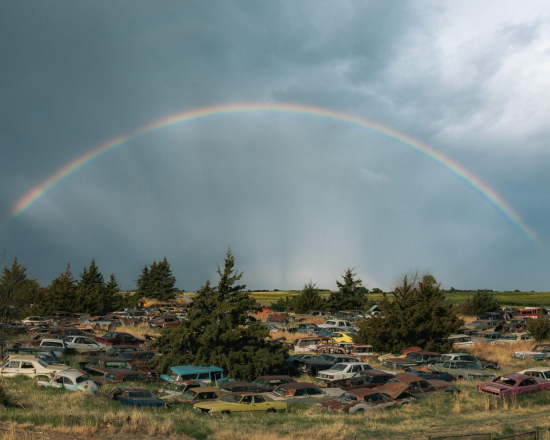




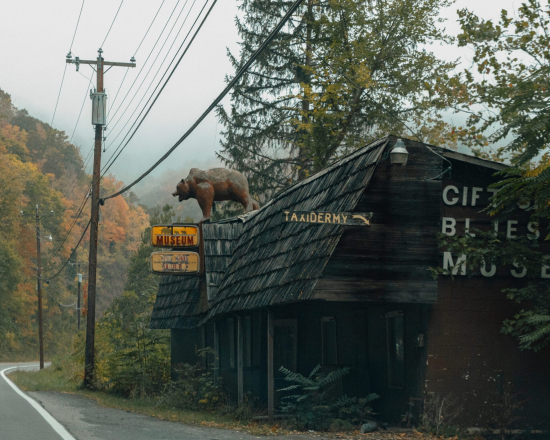



[Images © Brendon Burton]Burton previously – Standing alone, Interstices.
As ever, click to enlarge.
-
In December 2021 choreographer Rosie Kay was forced out of her dance company for stating that you can't change sex. She's since co-founded Freedom in the Arts,
She's interviewed at Spiked by Brendan O'Neill:
The art world definitely has a groupthink mentality. It feels very much like a bubble, regurgitating the same ideas with the same people. That makes artists terrified of being ostracised by the group for having the wrong opinions.
In the long-term, the arts will become a very destructive place. It’s going to continue alienating independent thinkers and driving away new ideas. That will only alienate audiences, too….
Gender, in particular, is one of those hot-button topics. But, more broadly, the arts are full of ideological landmines. Everyone is expected to have the same fashionable beliefs, such as transwomen are women, transmen are men, capitalism is bad, ‘Free Palestine’, and so on. Affirmative action is the norm. You’re not supposed to be in favour of meritocracy or hierarchies. You have to be anti-excellence, anti-skill and anti-expertise. Everything has got to be ‘accessible’. It’s got to have ‘community engagement’ at its core.
The big issue that’s also coming through in the arts right now is climate change. The Arts Council is already involved a little bit in that one – calling it ‘environmental responsibility’ – and has been for a few years. Artists are being told that we can’t fly anywhere anymore, which really harms international cooperation and touring. And now green ideology is being forced into the work itself. We’re told we need to start putting messages about climate change into our work – and those messages are being written into the missions of arts organisations themselves.
I recently came across one arts organisation that’s entirely rewriting its mission. Why? Because there’s a new round of funding and everyone has been told that, in order to succeed, climate change has to be their No1 priority. But how are we going to tour internationally? By rowboat?
These organisations need to be aware of the contradictions in their mission. But there just seems to be too much blindness and hypocrisy. I’m worried about how this is going to impact both art and artists. When you push creative people to put a particular message in their work, you end up with propaganda. And propaganda, by definition, isn’t art.
-
Something to look forward to:
An arts company based in Edinburgh is launching a new show about JK Rowling and her part in the transgender debate called TERF C**T.
Civil Disobedience, which has its roots in the Edinburgh Fringe and was launched by Barry and Josef Church-Woods in May 2016, described it as a "vital think-piece on Joanne, exploring just what could motivate a person with such privilege to take such a divisive stance on issues that affect her fans".
It has been written by Joshua Kaplan, a "queer screenwriter and playwright", and will be performed at The Actors Studio in New York City on Thursday, February 8. The plot involves Daniel Radcliffe, Rupert Grint and Emma Watson staging an "intervention" with Rowling….
A press release advertising the show claims: "Please note: TERF C**T is not a kill piece. It provides space for reflection and ultimately offers the audience time to explore some of the more contentious aspects of JK's life."
Of course: a space for reflection. That's why they're calling it TERF C**T. Non-judgemental.
The synopsis for the show continues: "Joanne led a blessed life – for a woman. Billionaire. Literary phenomenon. Natural ginger. And most importantly, beloved. Completely beloved. Until she blew it all to hell.
"Now, Joanne's surrogate children – Daniel, Rupert, and Emma – have had enough. It's time for an intervention. But Joanne isn't in the mood for one, especially not one held at a Shoreditch 'test kitchen' organised by three overentitled Judases who know nothing about the world into which they were born with platinum spoons (thanks to her).
"From book deals to divorces, family dysfunction to broken friendships, TERF C**T goes beyond the headlines to explore the woman that captivated a world with her books only to unravel a legacy with her tweets."
-
Edward Luttwak at UnHerd – Israel is still winning the political war:
The US, UK and European Union did not try to stop the Israeli counter-offensive against Hamas. The US found itself unimpeded in sending military supplies, while the Italian government came out in full support of Israel.
On the other side, in UN venues highly suited for empty words, Russia and China both ceremonially declared their support for the Palestinians. Yet Moscow has continued to co-operate smoothly with Israel’s air force as it operates over Syria to attack Iran’s Revolutionary Guards, while not one Chinese partner has withdrawn from any joint venture in Israel. Nor did the rising calls to reduce the bombardment of Gaza, led by Belgium of all countries and eventually backed by the White House, have any actual consequence — Israel’s bombing was reduced in any case by the diminishing supply of worthwhile targets.
Likewise, not one of the Arab countries with whom Israel has diplomatic relations has interrupted them in any way, while relations with Egypt have blossomed into a veritable security partnership over Gaza and Sinai. Even more important are the statements of Saudi Arabia’s Foreign Minister, who has made it clear that normalising ties with Israel will not long be delayed once the fighting ends. Even though intelligence exchanges and multiple technology joint-venture negotiations have been underway for some years without any need for official relations, such assurances cannot be overestimated: they are, after all, definitive evidence that Hamas’s assault on October 7 has failed.
The purpose of that deliberately horrific attack was precisely to stop any alliance between the Saudis and Israelis. That was certainly the goal of Iran, which has every reason to dread the fusion of Israel’s technology with Saudi Arabia’s financial resources: Tehran rightly fears this would entail some form of military co-operation, which in turn might bring Israeli air power within a short distance of its Iranian targets.
Take Iran out of the equation and everything changes. The Tehran mullahs – backing Hamas, Hezbollah, the Houthis – are behind every threat to Israel. They're the obstacle in the way of peace in the Middle East.
But, as Roger Boyes argues in the Times today, the regime is tottering:
The unwritten rules of engagement in the tight, hostile terrain of the Middle East are coming apart. One reason: Iran’s “red line” has been that any direct intrusion on Iranian soil must be met by a counter-punch. Earlier this month bombs ripped apart some 84 mourners near the tomb of the Islamic Revolutionary Guard Corps (IRGC) commander Qasem Soleimani. They had gathered to mark the fourth anniversary of the US drone strike in Baghdad that killed the general. Iran was shocked and immediately blamed Israel but it quickly emerged that the real culprit was Islamic State. So Tehran struck at the Pakistani hideout of the Jaish al-Adl terror group. And Pakistan replied in kind against separatists sheltering in Iran.
The implications were big and are still being digested by the strategic community. A near-nuclear Shia state had struck a relatively friendly nuclear-armed Sunni neighbour — and had been hit back. It was a sign of how the unchecked progression from the Hamas atrocities of October 7 to the Gaza war and on to the Houthi attempt to blockade maritime shipping routes could end up: under a mushroom cloud.
There was another important lesson, though. The Pakistani counter-strike showed it was possible to hit Iran without the world falling apart. And it demonstrated that Iran is no longer a coherent actor.
The ambition of the supreme leader, Ayatollah Ali Khamenei, may have originally been to control the immediate neighbourhood but as he has weakened (he’s 84 and ailing) so he has ceased to be an effective arbiter between competing interest groups. Iran was already on the way to becoming a garrison state rather than a theocracy. Now he rules essentially with the Revolutionary Guard.
The IRGC was originally set up to shield the theocratic revolution of 1979 from a coup d’état. But you cannot have a coup if there’s no état to topple. The state institutions are paralysed, the pillars of theocratic order are crumbling, and a middle class (squeezed by sanctions) increasingly sees the monopolistic hand of the IRGC and its corrupt cronies as being an obstacle to modernisation and prosperity. Urban women feel stifled, workers feel cheated, students repressed.
A power vacuum is opening up and Iran’s many international conflicts merely mask the domestic frictions. The IRGC draws its authority from the supreme leader but it resembles more and more the cynical remnants of the communist party in the dying days of the Soviet Union.
Wishful thinking? Possibly. Like all of these totalitarian regimes, it looks secure from the outside until, suddenly, it's gone. Then all the pundits who were saying how it'll last for years and years start saying, oh yes, the signs were all there….
Interesting times.
-
Found in Gaza: a children’s puzzle showing a cartoon Muslim world attacking the Jewish state. The depth of Israelophobic brainwashing must not be ignored. It is the very heart of the problem and the deep reason for the failure of a two state solution pic.twitter.com/XsCyURVK9T
— Jake Wallis Simons (@JakeWSimons) January 24, 2024
 Mick Hartley