• From Reduxx:

    A prominent Utah-based transgender activist has been arrested after allegedly abducting his 10-year-old son in order to take him overseas for “gender reassignment” surgery. Eric Ethington, 42, also known as “Rose Inessa-Ethington,” had reportedly “manipulated” the boy into identifying as a girl.

    Ethington, originally from Cache County in Utah, was deported from Cuba earlier this week after a joint investigation by the FBI and Cuban law enforcement. Ethington’s partner, Blue Inessa-Ethington, was also arrested and removed from the country. Both were charged with the international kidnapping of Ethington’s biological son, and are currently being held in Richmond, Virginia, on federal charges.

    According to court documents, Ethington and his partner took his son from his biological mother under the ruse of going on a camping trip to Canada. The 10-year-old’s biological mother shares joint custody with Ethington, and had given him permission to bring the boy into Alberta for what she believed was a short, safe adventure. But the group never arrived at the camping grounds where Ethington claimed they would be staying, and the child’s biological mother was unable to contact them from that point on.

    Disturbingly, Ethington’s 10-year-old son allegedly identifies as transgender. According the Department of Justice reports, this is believed to be “largely a result of manipulation” by Ethington, who himself only began identifying as “female” shortly after his son was born. Because of this, concerns were raised that Ethington’s intention may have been to subject the child to forced “gender reassignment” surgery in Cuba.

    Dad abducts 10-year-old son for the purposes of forced gender reassignment surgery. Lovely. At least the former Mermaids boss Susie Green waited till her son was sixteen.

  • Ashridge Estate in Hertfordshire, this morning:

  • And there’s more. Number five in Andrew Gilligan’s Green Party chamber of horrors, in the Spectator:

    A Green candidate who is also a GP has repeatedly attacked ‘Zios’ and called on people to ‘burn Zionism to the ground.’

    Rebecca Jones, a vegan activist and NHS doctor, is standing for the Greens in Blackheath, where she lives. She has the personal support of the party leader, Zack Polanski.

    Jones says on her Facebook page, ‘The Vegan Doctor’: ‘I’ve often said that Zios seem to use doublethink and doublespeak a lot… I’m still amazed by the way they, the media and the colonialists try to make us believe that anti-zionism [is]….extreme. There’s only one side showing hate here, and it’s definitely not from this love-filled, vegan anarchist.’

    For such a committed vegan and supporter of love, Dr Jones does occasionally seem a little too keen on violence, posting that Bob Vylan’s chant at Glastonbury (‘Death, death to the IDF’) was ‘amazing.’ A reel of her listening to them the next day is captioned: ‘When right-wing media helps you find your new favourite band that you didn’t even know you were looking for.’

    She posted a video of someone reading the purported last will and testament of Yahya Sinwar, the Hamas leader who masterminded the October 7 attacks. Her view: ‘This is so beautiful. It also reminds me of why the fight for Palestine is so important.’

    In 2024, Jones posted: ‘Burn Zionism to the ground.’ The image below the words, of a masked Palestinian holding a burning Israeli flag, was produced by a Plymouth-based graphic designer called Krime. This person also designed Jones’s own ‘Vegan Doctor’ logo, a balaclava-wearing figure with a stethoscope around her neck and a chicken cradled in her left arm.

    It’s not quite clear what role the IRA/bank robber headgear plays in either veganism or medicine but Dr Jones bravely attempts to make a previously-unsuspected connection between meat-eating and Zionism. She claims that ‘non-vegans and Zionists have something in common,’ namely ‘the discomfort they feel when I’m talking about animal rights or the rights of Palestinians… You feel angry with me because you know deep down something has to change.’

    In another ‘Vegan Doctor’ post, she says: ‘I can’t be a safe space for anyone excusing Israel’s actions. I’ll never be unsafe for/ towards anyone, but I can’t hold space for you if you think that Zionism and the resulting atrocities are ok.’ What, if anything, does this mean for a ‘Zionist’ or Israel-supporting patient who needs treatment from Dr Jones?

    She sounds insane. A perfect fit for the Greens, then.

  • While the world talks endlessly about Palestinian “refugees,” it has nearly erased one of the largest forced migrations of the 20th century – this is the story the media and academics almost never tell.

    At the moment of Israel’s birth in 1948, ancient Jewish communities existed across the Middle East and North Africa — some dating back more than 2,000 years, long before Islam arrived.

    Iraq: ~150,000 Jews
    Egypt: ~75,000–80,000
    Yemen: ~55,000
    Libya: ~38,000
    Syria: ~30,000
    Morocco: ~265,000
    Algeria, Tunisia, and others: tens of thousands more

    In total, nearly one million Jews lived in these lands.

    Within years, the vast majority were gone — driven out by pogroms, discriminatory laws, arrests, property confiscation, and open violence.

    The collapse began even before Israel’s independence. In 1941, the Farhud pogrom in Baghdad saw Arabs murder more than 180 Jews and destroyed hundreds of Jewish home. After 1948, the pressure became unbearable: Jews were stripped of citizenship, jobs, and property in country after country. Synagogues were bombed, businesses boycotted, and ancient communities faced mass arrests and executions.

    Iraq, Egypt, Yemen, Libya, Syria, Algeria, and Morocco all saw their Jewish populations virtually wiped out. By the 1970s these communities — some of the oldest in the world — had been reduced to a few hundred souls at most.

    Today the numbers are staggering in their smallness:

    Iraq: fewer than 5 Jews remain
    Egypt: fewer than 10
    Syria: fewer than 10
    Libya: none
    Yemen: virtually none

    Meanwhile, the financial cost was enormous. Jews fleeing Iran and the Arab world left behind an estimated $150 billion worth of property and assets (a conservative 2019 figure; some Israeli government analyses put the unadjusted total closer to $250 billion). Homes, businesses, synagogues, hospitals, schools — all confiscated by Arab governments. Not a single dollar has ever been repaid. Not one Arab state has offered compensation or even acknowledgment.

    Meanwhile, the UN has passed more than 115 resolutions specifically about Palestinian refugees.

    Not one UN resolution has ever mentioned the Jewish refugees from Arab lands.

    Israel absorbed ~586,000 of these refugees in the first few years — nearly doubling the young country’s population — with almost no international help. There was no UNRWA-style agency for them. No endless resolutions. No global outcry about a “right of return.” They were simply absorbed, rebuilt their lives, and became full members of Israeli society.

    The contrast is stark. The Palestinian refugee issue receives constant international attention and funding. The Jewish refugees from Arab lands — who suffered a genuine ethnic cleansing — have been almost entirely erased from the narrative.

    This was not a natural migration. It was the deliberate destruction of ancient Jewish communities that had lived in these lands for centuries before Islam even existed. Their stories deserve to be remembered.

  • May Golan, Israeli minister for social equality and women’s advancement, writes in the JC on How the UN and international aid groups abandoned Gaza’s women to Hamas:

    The ceasefire in Lebanon had barely taken effect when Hezbollah terrorists committed a despicable act: they opened fire on United Nations Interim Force in Lebanon (Unifil) soldiers. In this grave incident, a French soldier, Sergeant Florian Montorio, was killed. This is the same France that opposed the campaign against Iran and reportedly paid Tehran to secure safe passage for its ships through the Strait of Hormuz, only to receive gratitude in the form of bullets from the regime’s Lebanese proxy.

    UN Secretary-General António Guterres offered a rather vague response. “I strongly condemn Saturday’s attack on Unifil,” he said. A polite, formulaic condemnation – carefully stripped of the one detail that matters: who did it and what ideology drove them. Hezbollah, the Iranian-backed Shia terrorist organisation, went unmentioned.

    This was no oversight but part of a pattern. The very institutions and individuals who claim to defend human rights, women’s rights, morality and justice have long since abdicated responsibility when the culprits don’t fit the narrative. Instead, they offer a theatre of hypocrisy and craven appeasement.

    This weekend, the Daily Mail published harrowing testimonies from Gazan women who, for the first time, spoke about sexual crimes committed against them by Hamas. These were not Jewish women – who have been largely ignored by international aid organisations – but the terrorists’ own wives, sisters and daughters. Rape, sexual coercion in exchange for food or aid, underage pregnancies, and abuse of children have all surged since the war began. Hamas gunmen seize supplies, profiteer from them, and prey on the most vulnerable women and children.

    And who enables this? International aid organisations. UN Women – the agency ostensibly dedicated to fighting violence against women – responded with silence. Other aid organisations kept quiet as well, seemingly too afraid of Hamas to speak out. Another moral collapse, filed away under “too inconvenient”. What Guterres and these organisations refuse to acknowledge let alone confront is that within radical Islamist movements, violence against women is not incidental but embedded. Women’s bodies are treated as spoils of war. Those indoctrinated to view women as lesser beings will ultimately treat their own women the same way they treat the enemy population.

    Those who romanticise or legitimise groups such as Hamas, Hezbollah or the Muslim Brotherhood often display a corresponding erosion of basic moral standards – especially regarding women.

    Behind the humanitarian branding lies something far less noble. Not genuine concern for the people of Gaza, and certainly not for universal human rights, but a singular obsession: hostility to the Jewish state. If Israel is harmed, the mission is accomplished. If Gazans suffer as collateral damage, they are quietly ignored.

    As Matti Friedman notes, this sudden passion for Gaza has very little to do with actual Gaza and its people, and everything to do with demonising the Jewish state.

    Added: more here.

  • Matti Friedman at the Free Press, on the new genre of books that refashion the ruins of Gaza into a metaphor of Jewish evil:

    The origins of this essay lie in a recent visit to the Middle East shelf in a Washington, D.C., bookstore during a visit from my home in the actual Middle East. I was on a short break from the story I’ve been living and covering in Israel for three decades, and from the tragedies that have become routine for Israelis and for our neighbors since the war that began on October 7, 2023.

    As a longtime denizen of bookstores in Western countries, I knew that almost any shop would carry a few titles about the evils of Zionism and Israel, a venerable genre on the Marxist left. But this time I saw a change: The Gaza war had inspired a proliferation of these titles so intense that they now filled much of a shelf. I noticed the same phenomenon in other bookstores in other cities, where there were suddenly more “Gaza” and “Palestine” books, it seemed, than books about the rest of the entire Arab world combined. Humanity now inhabited a new age, according to one title, The World After Gaza. According to another, The Destruction of Palestine Is the Destruction of the Earth. There was Gaza: The Story of a Genocide, and Palestine and Feminist Liberation, and many more examples in the same vein, with more soon to be published. A new literary genre had been born.

    The Gaza war has been fought a two-hour drive from my Jerusalem home by people I know, and has claimed the lives of several of them. For me, reading the back covers of these books left the impression of a genre related to the actual territory of Gaza as the Dune novels are related to the actual NASA space program. At the same time, it wasn’t fringe work. Among the practitioners were authors who have recently won a National Book Award, the Pulitzer Prize, and additional accolades.

    After reading more in subsequent months, I came to think of the genre as “Gazology.” By this term I don’t mean the study of the real territory of Gaza, or of the terrible human tragedy caused by the Hamas offensive of October 7 and by the Israeli response in the war that followed—vast tracts of Gaza destroyed, tens of thousands of civilians killed along with tens of thousands of combatants, and aftershocks across the Middle East. Gazology is not reportage, and most of its practitioners are not in or even near Gaza or Israel. This is a Western literary genre with its own rules, tropes, and goals.

    It’s likely that much Western culture, journalism, and politics in the coming years will be downstream of these books and the ideology behind them. Students in disciplines from anthropology to medicine will be assigned these works and invited to see the world’s problems through the lens of “Gaza.” For this reason, the genre is important. What follows is a survey of five representative samples of the volumes in question, in an attempt to sketch the contours of this expanding body of writing and to understand what it is trying to say.

    For UK readers Pankaj Mishra is perhaps of special interest, as a regular contributor to the London Review of Books.

    The World After Gaza is the contribution from Pankaj Mishra, a writer who was born in India and lives in Britain. In keeping with the genre, the book’s subject is not Gaza. It’s about literature, and specifically Jewish literature, and more specifically Jewish literature related to the Holocaust. The words Holocaust or Shoah appear more than 250 times in The World After Gaza, four times as often as the word Gaza.

    The book begins with a blizzard of quotes from Jewish writers like Hannah Arendt and Sigmund Freud before proceeding to Isaac Babel and, eventually, to five whole pages about a novel by Saul Bellow. A reader gets the impression that Jewish writers are being stacked here like sandbags against the suspicion that the author may be engaged in something other than honest analysis when he describes the Israeli war in Gaza as “an act of political evil,” a “livestreamed mass-murder spree,” and a genocide to rival the Holocaust. There are other tragedies on Earth, to be sure: “Yet no disaster compares to Gaza—nothing has left us with such an intolerable weight of grief, perplexity, and bad conscience.”

    Once a Gazology reader realizes that the goal is not an analysis of an actual war in Gaza, the search begins for the real use to which “Gaza” is being put. Mishra’s project, as far as I can tell, is to replace the genocide of Jews in the Western mind with a genocide by Jews, and then to replace the Jewish writers whom the author admires with—well, with himself. He returns repeatedly to the celebrated Italian novelist and Holocaust survivor Primo Levi, who is mentioned dozens of times in a book that has “Gaza” in the title, in which the name Yahya Sinwar is not mentioned once. Mishra seems to want to be Primo Levi, and even if we understand this is impossible—because Levi is gifted and Mishra is not, because Levi is a witness and Mishra is a voyeur, because Levi’s Holocaust was real and Mishra’s is an ideological fantasy—one still finds something authentic and plaintive in this longing.

    The slipperiness of Mishra’s book made me miss the Swede who identifies as a PFLP commando, and who at least says what he means. Mishra regrets that the Palestinians have been outmaneuvered by “internationally connected and resourceful Zionists.” He sees “the insidious racism that had helped prioritize the interests of the West’s chosen nation in the Middle East while demeaning Palestinian suffering in Western eyes.” Getting insidious racism and chosen nation in one sentence is, a reader senses, what he considers daring. He quotes Roald Dahl: “Never before has a race of people generated so much sympathy around the world and then, in the space of a lifetime, succeeded in turning that sympathy into hatred and revulsion.” Mishra calls Dahl an “antisemite”, and seems to agree with him.

  • Quintin Lake, who photographed his walk around the British coast for his website, and in his book The Perimeter, picks ten images – “memorable moments” – in the Telegraph:

    The British coast is never one thing for long. It shifts between the elemental and the inhabited: cliffs and estuaries, industry and erosion, places shaped by centuries of departure and arrival. Seen at this pace, Britain feels less contained and more provisional, its edges constantly being remade.

    Spending so long moving along it on foot, often alone and carrying only what I needed, imposed a discipline and clarity that reshaped my sense of scale, both of the landscape and of my own place within it. These 10 photographs are fragments from that long unfinished edge.

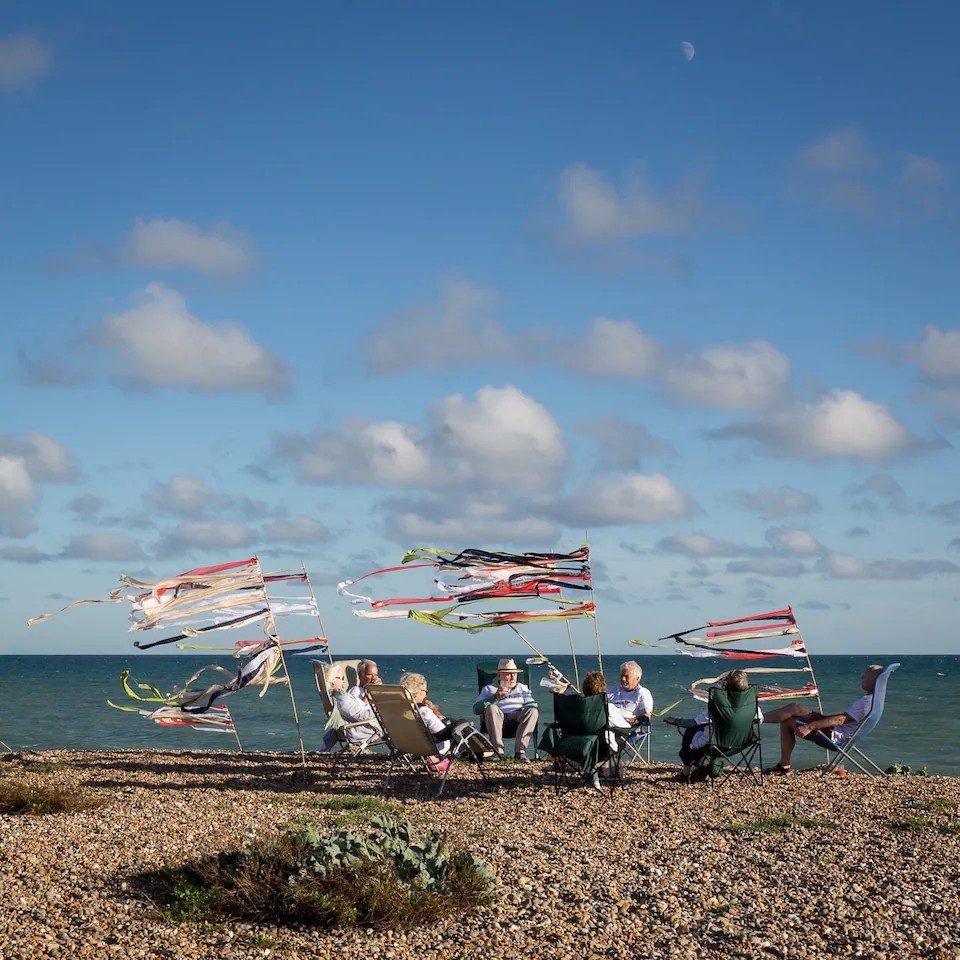
    Drinks on the shore in Ferring, Sussex

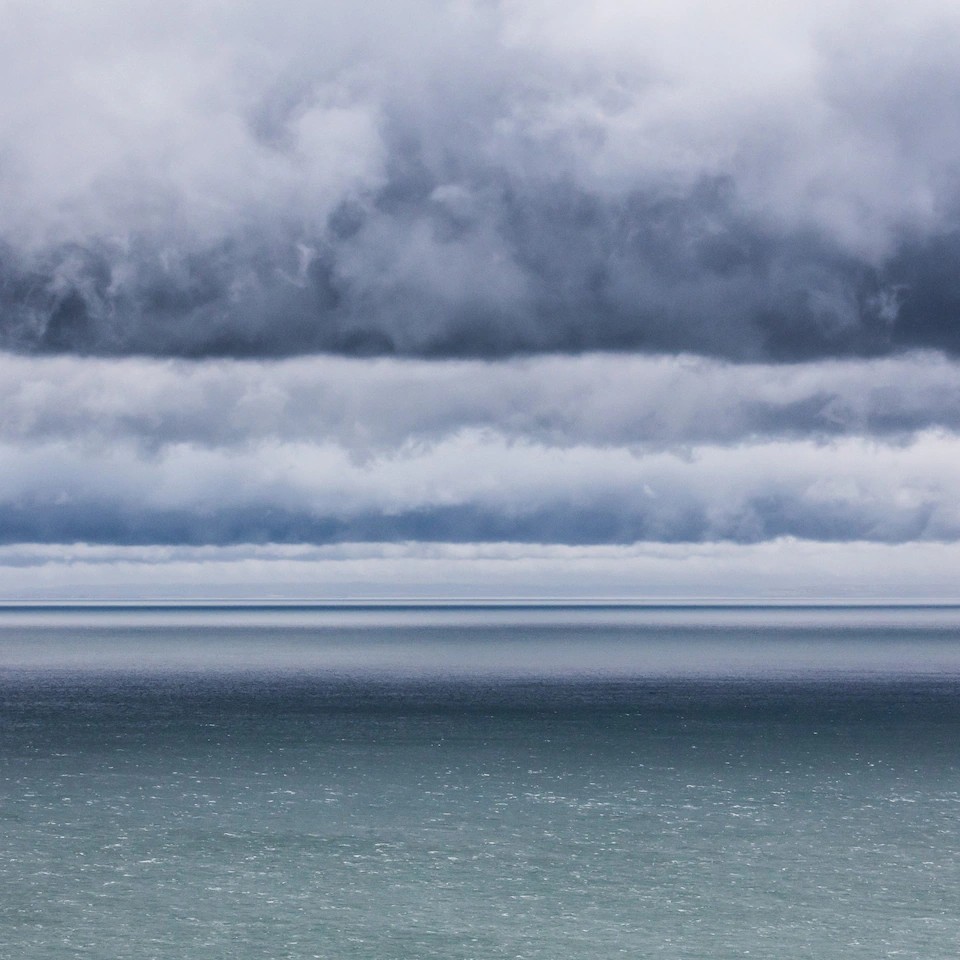
    A glimpse of Wales from Somerset

    Dylan Thomas’s boathouse

    Ynys Lochtyn from the coast path

    Farmer Hughes of Galloway

    Gourock Outdoor Pool

    Loch Hourn from Knoydart

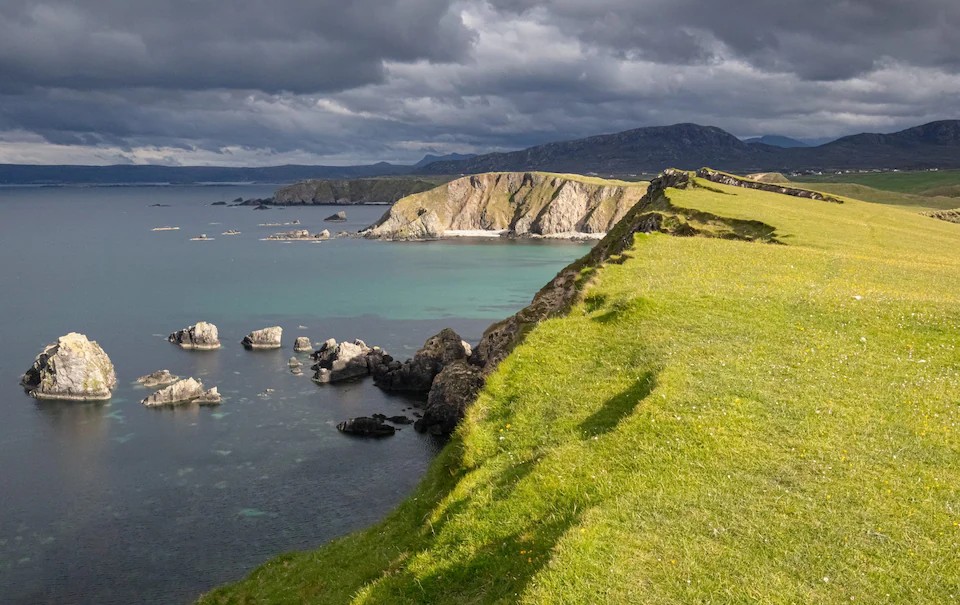
    Evening light at Faraid Head

    The Pilgrim’s Way to the Holy Island of Lindisfarne

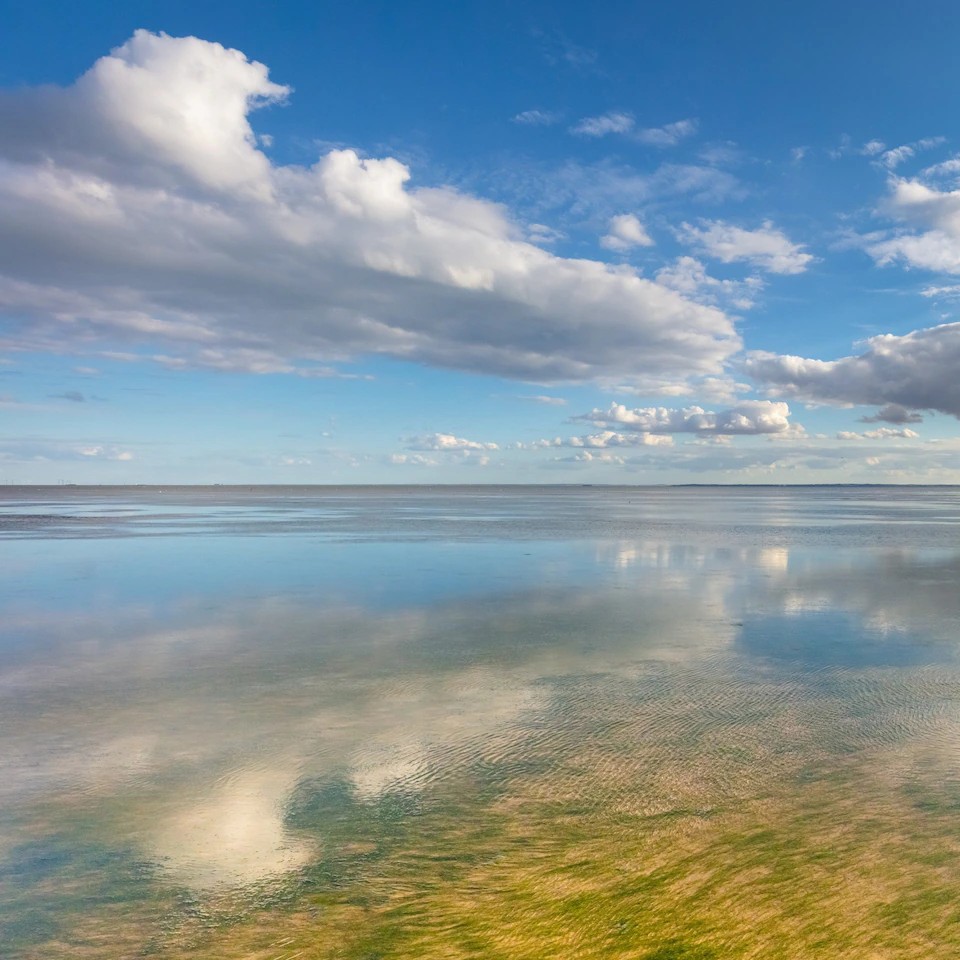
    The Broomway, Essex

    [Images © Quintin Lake]

    I’ve featured Lake and his journey before: Feb 2016, Apr 2017, Sep 2020, and May 2025.

  • With just 15 likes.

    No Jews no news.