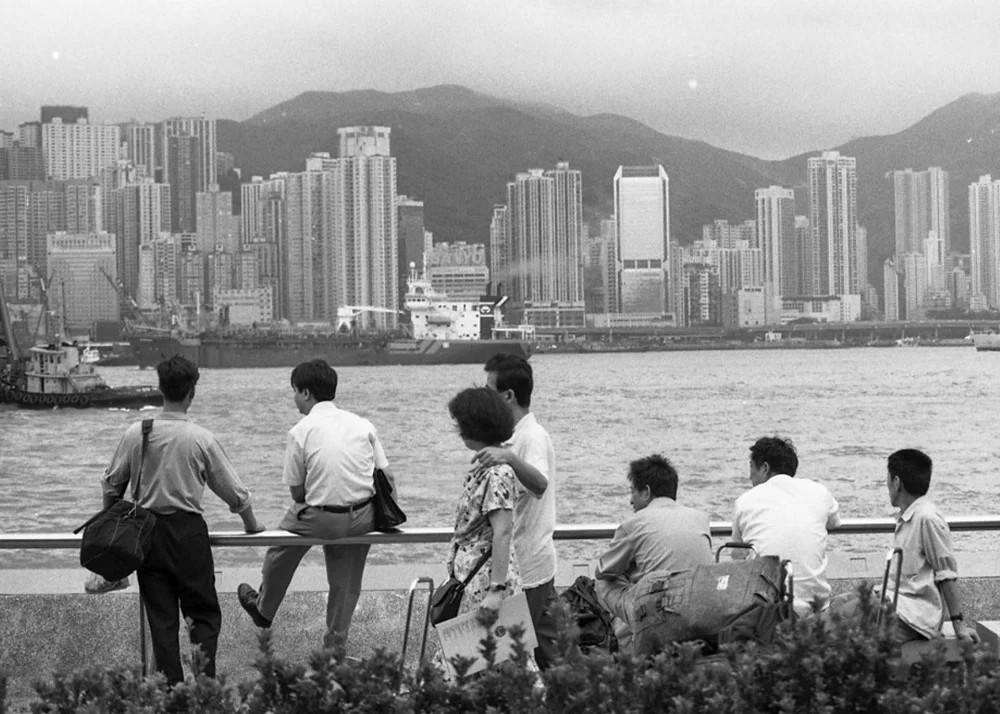
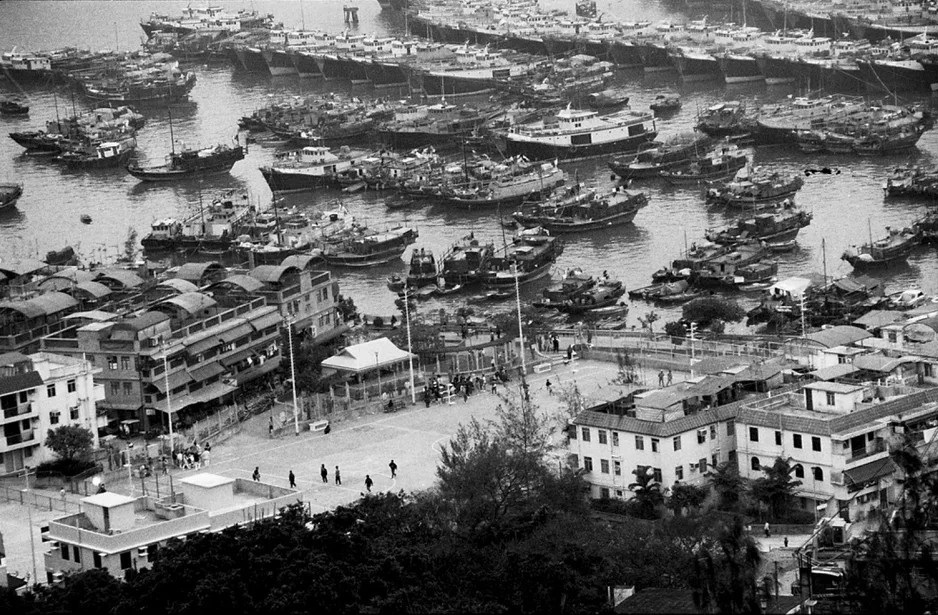
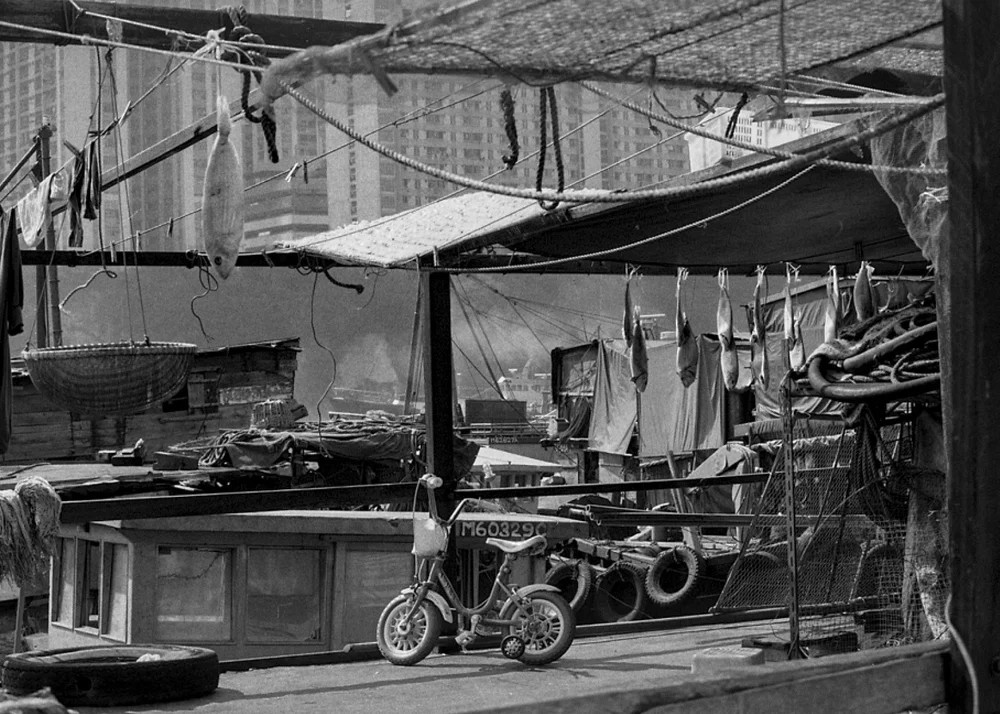
New from Cafe Royal Books, with photographer Michel Vermare:




[Photos © Cafe Royal Books/Michel Vermare]
Politics and Culture
New from Cafe Royal Books, with photographer Michel Vermare:
[Photos © Cafe Royal Books/Michel Vermare]
Article here.
From the Times:
Kim Jong-un has delivered an impassioned speech extolling the virtues of his country’s women despite what he described as their “weakness”, “plain faces” and “wrinkles”.
In an address delivered on International Women’s Day, Kim urged female citizens to “fulfil the sacred mission and duty … in achieving the prosperity and development of our country and promoting the harmony and unity of our society”.
“Though physically weak, they are obviously strong-willed, their plain faces assuming courage and the wrinkles on them denoting their strenuous exertion and thus arousing much greater respect,” he said. “So, they look incomparably beautiful, and I think this is a charm unique to our Korean women.”
Dripping with patronising condescension. As you’d expect. And yet:
His teenage daughter, Kim Ju-ae, is being groomed as his successor, according to South Korean intelligence assessments.
They keep pushing this, but it seems such obvious nonsense to me. The whole basis of the Kim dynasty is patriarchal. The appearance of his daughter at events is simply a way of emphasising Kim Jong-un’s fatherly devotion – extended, by implication, to all his people. The daughter is a figure in the Kim iconography, not a leader in waiting.
From the Daily NK in December 2023:
Upon being told that some analysts in South Korea believe that Kim Ju Ae will be the successor to her father, a high-ranking source in North Korea told Daily NK on Nov. 11 that “I don’t understand why they say that. If you let a woman take power in the fourth generation, the last name of the fifth-generation leader will be different. That doesn’t make sense. When you name a successor, you think of the future. Succession is establishing the fourth generation to serve as a basis for the fifth generation.”
In short, the source argued that Kim Ju Ae’s descendants would have a family name other than Kim, a family name associated with the country’s so-called Paekdu Bloodline, and that this would make a fifth generation succession impossible to achieve. The source’s argument puts on display the power of patriarchal beliefs in North Korean society; namely, that children must take their father’s last name and only sons may become successors to keep familial lines going.
In fact, some analysts say that North Korea’s leadership is not putting Kim Ju Ae on display at major events to establish her as successor but rather as part of a strategy to intensify idolization of her father.
“The North Korean leadership hasn’t finished bolstering Kim Jong Un’s unitary leadership system,” an expert at a South Korean policy think tank told Daily NK, speaking on condition of anonymity. “North Korea’s leadership is focusing on intensifying efforts to idolize Kim Jong Un, not establishing a succession. Even during the recent Fifth National Conference of Mothers, the propaganda focused on highlighting [Kim Jong Un’s] image as a loving father of the Socialist Grand Family.”
In fact, after that conference ended, Rodong Sinmun focused on promoting Kim’s image as a wise, warm father, writing, “Everyone cried and cried again, saying there were no other hardworking fathers of the people like our Supreme Leader [Kim Jong Un].”
There is, it’s presumed, a son. In time he’ll be presented, but they’re keeping him under wraps for the moment: keeping the mystique. He’s being trained up: probably past the pulling-wings-off-insects stage by now, on to the drowning cats. Hardening him for the tasks ahead. But Dad is still young – though perhaps not in the best health given his obesity – and there’s a long way to go yet.
Joan Smith at UnHerd – NHS pause on children’s cross-sex hormones doesn’t go far enough:
Terms such as “gender-affirming” are all over the NHS website, which hasn’t yet been updated to reflect the newly-announced pause in prescribing hormones to under-18s. It attaches outdated stereotypes to young people who “might feel their physical appearance does not match their gender identity”, a distinctly unclear term.
This is also because “gender-affirming” is a term which has no clear definition. The NHS claims that “treatment for gender dysphoria aims to help people live the way they want to, in their preferred gender identity or as non-binary”. What it actually meant, before the announcement, was life-altering treatments carried out at ages where children don’t really understand what they’re feeling. As a result, some boys were given oestrogen to develop breasts and girls testosterone to lower their voices. But, fundamentally, a 17-year-old boy with breasts is still a boy.
What’s happened to the NHS, under pressure from trans activists, is indefensible. The idea that “gender dysphoria” represents a genuine mismatch between biological sex and “gender” has gone unchallenged for far too long. It’s not unusual for anxious teenagers to hate their bodies, and some may need sympathetic counselling to establish why that is. What they don’t need is to be told that the NHS has a duty to affirm their feelings — in this case, prescribing drugs that will give their bodies some characteristics of the other sex.
Following the publication of the Cass review, the NHS has been forced into a series of announcements, including halting the prescription of puberty blockers to children. The pause on cross-sex hormones is welcome, but it doesn’t go anything like far enough. The practice of medicine should never have been warped by such unscientific ideas, especially not in a service funded by public money. Health Secretary Wes Streeting needs to acknowledge that the era of extreme medical treatments for children was wrong. He then needs to assure us that gender ideology will be expelled permanently from the NHS.
We’re heading that way – but it’s a long hard struggle.
And why they keep losing.
Why are the IRGC agents allowed to hold then captive in Australia?
From Maziar Bahari:
While comparing Khamenei 2.0 to his dead father, it’s important to remember that Ali Khamenei rose to power in 1989, at the age of 50, after 25 years of cultivating an image as an unworldly cleric, mainly interested in poetry and philosophy rather than political power. Even his fiercest critics recognise that Ali Khamenei was a good orator and knew how to read the room. He was a violent, manipulative, and brutal theocrat but knew how to use words, and did that very well in meetings with Revolutionary Guards commanders and hardline clerics in the first years after coming to power to gain their trust.
On the other hand, Mojtaba Khamenei has never (NEVER!) given a public speech. In one private video message sent to his students at the seminary, shared on social media and here, Mojtaba has difficulty putting two sentences together and getting to the point.
That will pose a problem for him and the regime. In a situation in which the “supreme” leader must live in a bunker for the foreseeable future, he and his regime will have a very difficult time working on his image, earning his followers’ trust, and finding new acolytes. The result will be an even more brutal rule than his father’s, with no need to pretend that his rule is legitimate or to reach a consensus with different parts of Iranian society.
Mojtaba may have outmanoeuvred his rivals to come to power, but years of operating in the shadow of his father will catch up with him soon. Dark days ahead for Mojtaba, his regime, and, sadly, for millions of innocent Iranians taken hostage by the Khamenei regime.
From Maurice Black – How Ireland’s Anti-Israel Obsession Became a Case Study in Collective Intellectual Dishonesty.
Long article. An extract.
In a polarized environment, complexity is the enemy. The history of Jewish indigeneity to the Levant, the existential threats faced by Jews and by Israel, and the complex nature of the conflict have all become flattened into a simple allegory of “colonialist vs. native,” mapped clumsily onto the historical template of “British vs. Irish.” This mapping requires a profound act of unseeing. To sustain the narrative that Israel is a uniquely evil colonial enterprise, Irish political discourse must unsee the violent extremism of terrorist groups such as Hamas, dismiss the security concerns of a state surrounded by hostile proxies, and even ignore the demographic reality that the majority of Israeli Jews are refugees from the Middle East and North Africa, not European “colonizers.” The Mizrahi majority in Israel, many of them descendants of those expelled from Arab and Muslim-majority countries in the twentieth century, simply does not exist in the Irish political imagination because their existence would shatter the colonial analogy.
Thread from Hannah Barnes on the banning of cross-sex hormones for under-18s.
England has – for a period at least – ended the medical transition of children on the NHS. This puts a stop to 20+ years of practice. (The former Tavistock Gender Identity Development Service [GIDS] referred 16 year olds for puberty blockers from around the year 2000.)
The precise trigger for the pause seems unclear. What is the “in-depth review of all available clinical evidence” referred to by NHSE in their statement? I have asked NHSE. NHSE’s statement says it was triggered by Dr Hilary Cass’s 2024 major report into children’s gender care…
But one of the systematic evidence reviews that informed that final report and its recommendations had already looked at CSH use in under 18s. It pointed to a “lack of high-quality research assessing the outcomes of hormone interventions in adolescents [with] gender dysphoria…”
The review noted that few studies undertook long-term follow-up. “No conclusions can be drawn about the effect on gender-related outcomes, body satisfaction, psychosocial health, cognitive development or fertility.”
Maybe the new ‘review’ refers to the findings of the expert ‘Working Group’ – asked to look into this by Wes Streeting in April 2025? (and which put a stop to legal action – see my copy below)? If so, that was completed in June 2025. Why the delay?
Expert evidence provided to the High Court last year, and which triggered the NHSE group, outlined multiple serious concerns about under 18s’ use of hormones. One expert explicitly criticised NSHE’s prescribing to 16- and 17-year-olds, saying there was no evidence behind it.
Prof James Palmer, national medical director for NHSE specialised services at NHSE says, “the available evidence does not support the continued use of masculinising or feminising hormones… for young people under 18.”
If so, why are private providers not included in the pause?
Finally, were the pause to be made permanent (after consultation), it has profound implications for any future trial of puberty blockers. The MHRA’s recent request for a minimum age of 14, was in part because of fears of being on PBs for too long before hormones were available.
That observation was when hormones were available at 16. What if they’re unavailable until adulthood? If the trial goes ahead with unchanged age criteria, it could mean children remaining blocked for up to eight years, with all the risks that brings.
A 90-day public consultation on a permanent policy of the NHS no longer routinely prescribing hormones for under 18s starts later today. Young people already receiving these treatments can continue, but will have to be reviewed individually by their clinical team. (ENDS)
As she notes, this all has serious implications for the puberty blocker trial.
If, as we’ve heard, Labour’s proposed new “anti-Muslim hostility tsar” aims to crack down on Islamist extremists, wouldn’t it make more sense to appoint a tsar directly charged with tackling Islamist extremism, rather than this Islamophobia-by-another-name nonsense? Rakib Ehsan at UnHerd:
Considering that the new cohesion strategy is clear on Islamism being the UK’s most serious extremist threat, the overall strategy may have benefited from a new anti-Islamist tsar. This could be someone who has a proven track record of challenging unquestionable forms of anti-Muslim hatred and tackling extremism in British Muslim communities. Instead, by specifically creating an anti-Muslim hostility tsar at a time where Islamist extremism represents the most significant domestic and global terror threat, Labour — quite ironically — risks reinforcing public perceptions that Muslims are the beneficiaries of preferential treatment.
Indeed. It comes across as a cynical effort to counter the Greens’ Islamist pandering
 Mick Hartley