• From the obituary of Times journalist Andrew Norfolk, the man who uncovered the grooming gangs scandal:

    Norfolk suffered a torrent of abuse, particularly from what he called “left-wing academics”, accusing him of racism. He also received two death threats, but having met the girls (some of whom had abortions as a result of being raped), he vowed to continue. His next big exposé was on the town of Rochdale, where a girl had gone missing from a children’s home 15 times in two months. She had been taken to a house in Greater Manchester, where 50 men raped her in one night. Norfolk was told of a case in Rotherham where police were called to a flat at 2.30am and found an almost naked and “blind drunk” 13-year-old girl and seven men. The girl was arrested and then convicted of being drunk and disorderly. The men were not even questioned.

    “I kept coming back to Rotherham,” Norfolk recalled. “It seemed extraordinary that the authorities knew so much and did so little.” Needing hard evidence, he got it when the Rotherham social worker Jayne Senior gave Norfolk two “very large” cardboard boxes crammed full of hundreds of confidential social services case files and police documents. He went on to publish a series of stories in 2012 and 2013 about how grooming gangs were acting with “virtual impunity” in the South Yorkshire town.

    South Yorkshire police knew exactly what was happening. They knew the girls, they knew the men, the places they were taking these children to and they shrugged their shoulders and did nothing. Rotherham metropolitan borough council sought to block his first story in May 2012 with a High Court injunction, but failed to turn up on the day of the hearing. It was published in The Times a day later. The police launched a criminal inquiry into the leak and accused The Times of “exploiting the victims”.

    Finally, Rotherham council ordered an independent inquiry in August 2013 because, its chief executive admitted, “The Times won’t leave us alone”. Professor Alexis Jay’s report in 2014 found that 1,400 girls had been groomed and abused in Rotherham since the late 1990s. Children had been trafficked to other cities. Some were doused with petrol and told they would be set alight if they told anyone. The council was placed in special measures. Heads rolled. Norfolk would win the Paul Foot award and the Orwell prize for his investigations and was named the 2014 Journalist of the Year at the British Journalism Awards.

    Not that there's been any kind of happy ending to the whole wretched saga.

    Julie Bindel on Norfolk at UnHerd – "a rare hero in the grooming gangs story".

  • A few days back the University of Strathclyde published a piece by Kenneth Norrie – Emeritus Professor and "expert in family law and LGBT rights" – under the title Gender Matters, on the Supreme Court Equality Act ruling. He was, as the title suggests, essentially accusing the Supreme Court judges of a "lack of basic kindness" towards trans people, which contributed to the vilification of a poor suffering minority. The piece was subject to much Twitter ridicule, and now Naomi Cunningham effectively hands the poor man his arse on a plate with her response: Gender doesn't matter.

    It's worth reading in full, but…

    Finally, Norrie claims that Court’s decision exacerbates bad relations between the trans community and those who insist that gender and sex are biological matters. Bearing in mind that this is chiefly a conflict between men and women — on the one hand, men who want access to women’s spaces, to bully or shame women into accepting opposite-sex intimate care, to elbow women aside in their own sports categories; and on the other, the women who say “no” to those men — the complaint that restoring women’s rights to them exacerbates bad relations is dismaying. If women would only be good and obedient, men wouldn’t have to get angry with them.

    Conclusion:

    The legal reasoning in Norrie’s blog post is surprisingly weak. In fairness to Professor Norrie, it should be remembered that this is in the nature of a “first pass” at a substantial Supreme Court judgment in an area of law in which he is not a specialist. What is more disquieting is his approach to a conflict between men’s wishes and women’s privacy, dignity, autonomy and safety which displays a tender empathy for men who want to be women while stereotyping women’s meticulously evidenced objections as feigned or hysterical. Norrie’s call for kindness is in truth a thinly disguised demand for submission. 

  • The latest on the gender front:

    The NHS is treating nursery-age children who believe they are transgender after watering down its own guidance, The Telegraph can reveal.

    The health service was previously set to introduce a minimum age of seven for children to be seen by its specialist gender clinics, claiming anything less was “just too young”.

    The limit was removed after the proposals were put out to consultation, with new guidance due to be published showing that children of any age are eligible.

    However, a source close to the consultation process said NHS England had “caved to the pressure” of trans activists to remove the limits.

    The children are not given powerful drugs such as puberty blockers at the clinics, but are offered counselling and therapy along with their family.

    Up to 10 children of nursery age are being treated, according to new data, while as many as 157 children aged nine or younger have been referred to the clinics.

    "Caved in" to pressure from trans activists. Well perhaps….but it's hardly a tidal wave of cases – "up to 10 children of nursery age" – and they're not giving out puberty blockers. And there are children who claim to have gender dysphoria. Or rather, whose parents claim their children have gender dysphoria, and have been fooled into believing the "born in the wrong body" nonsense.

    Stephanie Davies-Arai, the director of Transgender Trend, said: “Although it seems unbelievable that children under five are being referred to the new gender hubs, it was a recommendation of the Cass review that children are seen as early as possible.

    “This makes sense because parents have been given such bad advice for so long, and may believe their child is ‘transgender’.”

    She added: “Trans lobbyists have told parents that children know their ‘gender identity’ from age three and there is no harm in ‘affirming’ a child’s identity. It is important that these parents can get proper information and sensible advice from the gender hubs rather than listening to activists.”

    It's the parents rather than the children who need the counselling and therapy.

    Helen Joyce:

    “The question for the new NHS hubs is whether they perpetuate the failed ‘affirmation’ model of the now-closed GIDS clinic, in which case parents should keep their children well away, or whether they offer genuinely holistic care based on evidence, not ideology."

    Still the best:

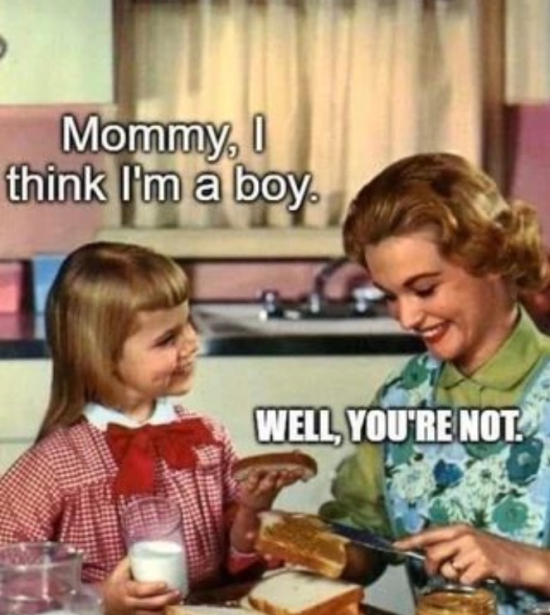
    Mommy...

  • Helen Joyce yesterday:

    https://platform.twitter.com/widgets.js

    https://platform.twitter.com/widgets.js

    Of course Robin Moira White was featured first, before Helen. And treated with more deference.

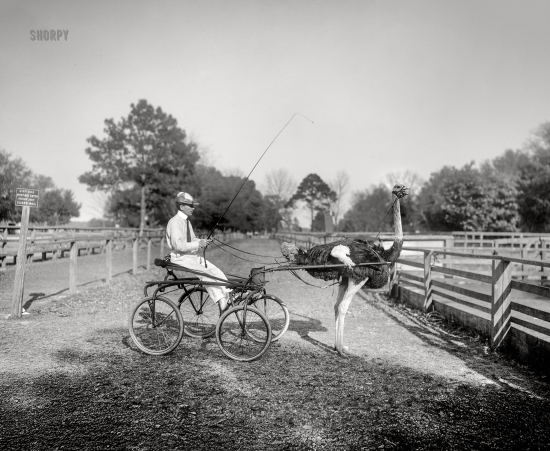
  • Florida ca. 1903. "Oliver W., the famous trotting ostrich, Florida Ostrich Farm, Jacksonville."

    image from www.shorpy.com
    [Photo: Shorpy/Detroit Photographic Company]

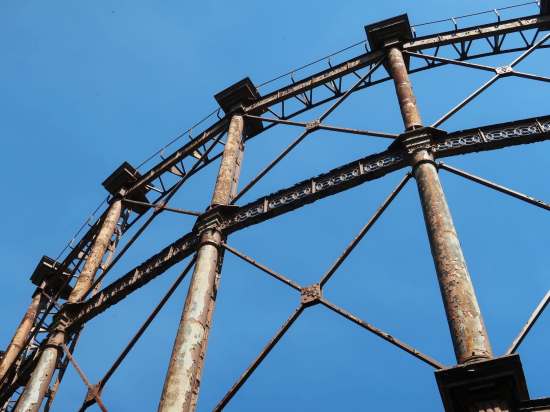
  • The Twelvetrees gasometers at Bromley-by-Bow, and the shopping trolley sculpture:

    IMG_3791s

    IMG_3792s

    IMG_3793s

    IMG_3797s

  • https://platform.twitter.com/widgets.js

  • Tomorrow is Nakba day – "a day of mourning and remembrance for the Palestinian people". Jonathan Sacerdoti in the Spectator:

    In 1948, following the Arab world’s rejection of the United Nations’ partition plan and their subsequent military assault on the fledgling State of Israel, around 700,000 Palestinians were displaced. While Israel accepted the partition and declared independence, the Arab states and local militias initiated a war they would lose. Yet the memory of the Nakba, though born from an aggressive campaign that ended in defeat, has been carefully curated into a narrative of pure victimhood, a perennial wound severed from the choices and actions that preceded it.

    The 700,000 displaced Arabs were more than matched by the 800,000 or so Jews displaced from Arab lands, but that, of course, is now largely forgotten because it's not a "perennial wound" so much as a tragedy overcome. Some people move on – and some don't.

    While descendants and popular memory often cling to romanticised accounts of loss, critical scholarship has tended to interrogate these stories, revealing how the work of mourning can shade imperceptibly into the work of myth-making. The Nakba, too, fits within this pattern: a war initiated, a defeat suffered, and a transformation of collective memory into grievance, increasingly unmoored from the question of responsibility. 

    Within the broader Muslim world, this pattern of interpreting political defeat as a sacred humiliation has been even more pronounced. The collapse of the Ottoman Caliphate following the first world war was not seen merely as the end of an empire but as a theological calamity.

    Movements such as the Muslim Brotherhood were born out of this moment, viewing the political subjugation of Muslims as divine punishment for collective moral decay. Their solution was not diplomacy, not secular nationalism, but a return to jihad and religious renewal to return glory to the Islamic empire. Saddam Hussein’s invasion of Kuwait and the swift international response were similarly reframed by many as yet another imperialist humiliation of the Muslim world, with little reflection on Iraq’s own culpability. The devastating defeat of Arab armies in the Six-Day War was likewise interpreted not as the fruit of reckless brinkmanship but as a profound insult to Islamic honour, fuelling a potent blend of grievance and religiosity that persists to this day. While these were not the only interpretations, time and again, when the secular project failed, the holy grievance reflex stepped in to explain why.

    At the heart of this theological reading of history is a deep conviction that military defeat signals divine displeasure. The Qur’anic verse ‘whatever misfortune befalls you is because of what your own hands have earned’ has been used to reflect this idea. In this line of thinking, losses are not accidents of geopolitics; they are cosmic verdicts. The proper response, in this view, is not compromise but repentance – and, crucially, the renewal of jihad as a sacred duty: only through Islamic governance and renewed piety can true victory be achieved.

    It is from this soil that modern jihadist ideologies have sprung. Hassan al-Banna, the founder of the Muslim Brotherhood, warned that Muslim dishonour flowed directly from abandoning holy struggle. Osama bin Laden, echoing the same logic, framed his war against the West as an attempt to restore the dignity of a humiliated Islamic world, not out of hatred but out of perceived religious obligation.

    Within this framework, the existence of Israel – and more specifically, the sovereignty of Jews over Jerusalem – becomes an unbearable theological insult. Under traditional Islamic rule, Jews had lived as dhimmis, tolerated but subordinated. Their rise to power, military success, and control over land once part of the Islamic ummah is experienced by many not merely as a political reversal but as a violation of divine order. Radical preachers have long invoked Qur’anic verses depicting Jews as cursed, weaponising ancient theological tropes to justify unrelenting hostility. Even the oft-repeated claim that ‘Al-Aqsa is in danger’, regardless of factual basis, taps into this deeper sense of cosmic disorder: that Muslim dignity itself has been defiled by the continued existence of Jewish sovereignty.

    In this eschatological vision, Israel is not a permanent state to be grudgingly accepted, but a temporary aberration destined for destruction. Islamic eschatology, particularly hadiths that predict a final apocalyptic battle between Muslims and Jews, fuels the belief that Israel’s eradication is both inevitable and divinely mandated. For groups like Hamas, the establishment of Israel is akin to the Crusader states of the Middle Ages: a foreign intrusion that will, sooner or later, be swept away by righteous force. No political agreement, no matter how carefully negotiated, can override what is believed to be the arc of sacred destiny.

    Thus, the Nakba is not merely a political grievance. It has been transfigured into a sacred wound, a living symbol of dishonour that demands redress through religious struggle. Under Islamic influence, the land of ‘Palestine’ is not just contested territory – it is a waqf, a sacred trust consecrated for Muslims until the end of time, inalienable by human agreement or negotiation. To recognise Israel’s legitimacy would be to acquiesce to a theological defeat as well as a political one.

    This is why the Israeli conflict with the Palestinian Arabs is not merely a struggle over borders, rights, or resources, but a confrontation rooted in existential and theological perceptions of justice, honour, and destiny. Understanding this deeper religious framework is crucial to grasping why the conflict resists conventional solutions. Until the theological dimensions of the Nakba and its aftermath are acknowledged, diplomatic efforts will continue to founder against the unyielding belief that compromise is not only a betrayal of the past but an affront to the divine.

    Yep – it's all about Islam.
  • Holland's Nieuw Israelietisch Weekblad (NIW), the world’s second-oldest still-running Jewish publication, is now published between blank sheets "for security reasons". From the JC:

    Likely the only Dutch publication receiving this treatment, the NIW’s concealment encapsulates the reality of its intended readership: Members of a proud and prosperous minority that is gradually being stripped of its voice and confidence by the resurgence of antisemitism.

    “I’ve always opposed this move whenever it came up in internal discussions because it’s symbolic: We’re proud Dutch Jews and we don’t want to hide,” Esther Voet, the paper’s longtime editor-in-chief, told JNS in a recent interview in her canal-side home in Amsterdam.

    But after October 7, “readers were afraid. They told us: ‘I don't want my neighbours to know that I'm Jewish at this time’,” she added.

    Some subscribers to the NIW worried not only about their neighbours, but also the postal carriers.

    “That’s the reality we live in, and the cover concealment is the least of it,” Voet said.

    Then there was the violence last November, when Israeli soccer fans returning from a Maccabi Tel Aviv match in Amsterdam, in what NIW and others termed the first antisemitic pogrom in the Netherlands since the Second World War, were set on by gangs of youths – a pogrom widely blamed across the left media on those nasty football fans stirring up trouble.

    On the night of the violence, Voet opened up her centrally located home and turned it into a safehouse for Israelis who were looking for sanctuary. Jewish community volunteers brought them to Voet or directed them to her via WhatsApp messages. Bart Schut, the newspaper’s deputy editor in chief, also brought Israelis in need to Voet’s home.

    Not far from her home, which is in the same neighbourhood as the Anne Frank House, anti-Israel gangs patrolled the streets, some of them pushing victims into the icy canal waters and conducting passport checks that ended in savage beatings of anyone deemed to be Israeli.

    “You know, I was always aware that a time like this could come. Any Dutch Jew with any historical awareness must be,” Voet told JNS, referencing how, during the war, the Nazis and their collaborators murdered at least 75 per cent of Dutch Jewry.

    “But to actually see the fear in the eyes of Jews hiding in my home, nothing prepares you for that,” she said.

    This, and other experiences with antisemitism, has made Voet “very pessimistic about the future of Jews in Europe. Because, clearly, the silent majority has expressed itself: It has chosen to remain silent”.

  • Christians in Nigeria continue to suffer at the hands of Islamist groups, with killings reported almost every day:

    Nigeria remained among the most dangerous places on earth for Christians, according to Open Doors’ 2025 World Watch List of the countries where it is most difficult to be a Christian. Of the 4,476 Christians killed for their faith worldwide during the reporting period, 3,100 (69 percent) were in Nigeria, according to the WWL.

    “The measure of anti-Christian violence in the country is already at the maximum possible under World Watch List methodology,” the report stated.

    In the country’s North-Central zone, where Christians are more common than they are in the North-East and North-West, Islamic extremist Fulani militia attack farming communities, killing many hundreds, Christians above all, according to the report. Jihadist groups such as Boko Haram and the splinter group Islamic State in West Africa Province (ISWAP), among others, are also active in the country’s northern states, where federal government control is scant and Christians and their communities continue to be the targets of raids, sexual violence, and roadblock killings, according to the report. Abductions for ransom have increased considerably in recent years.

    The violence has spread to southern states, and a new jihadist terror group, Lakurawa, has emerged in the northwest, armed with advanced weaponry and a radical Islamist agenda, the WWL noted. Lakurawa is affiliated with the expansionist Al-Qaeda insurgency Jama’a Nusrat ul-Islam wa al-Muslimin, or JNIM, originating in Mali.

    Nigeria ranked seventh on the 2025 WWL list of the 50 worst countries for Christians. 

    Nothing on BBC News. There is this, though: 'I screamed': Nigerian Doctor Who fan thrilled show is coming to Lagos.