A sorry tale from Madison, Wisconsin:
Early in 2020, an Indigenous artist urged the owners of a new music venue in town to change its name.
It was called The Winnebago, after the street on which it stands. Many Indigenous people and allies let the owners know that wasn’t the best name for a white-owned music venue. One of them was nibiiwakamigkwe, also known as Kay LeClaire, a founding member and co-owner of the queer Indigenous artists’ collective giige, and budding leader of Madison’s Indigenous arts community.
It took several months, but the venue eventually relented and rebranded as The Burr Oak.
“I’m glad the owners have decided to no longer profit from the identities of Indigenous peoples,” LeClaire wrote in an editorial for Our Lives Wisconsin.“I’m glad the name is going, but I’m not happy the institutions that allowed it to be stolen in the first place remain. For over 500 years, Indigenous Peoples have not controlled our narratives and representations. Our exclusion has been built into inclusion for others.”
And Indigenous Peoples are still not controlling their narratives. Yes, what we have here is a variation on the old Rachel Dolezal syndrome, with bonus gender woo.
One problem with that narrative: LeClaire wasn’t Indigenous, and was, in fact, profiting from the identities of Indigenous peoples.
Since at least 2017, Kay LeClaire has claimed Métis, Oneida, Anishinaabe, Haudenosaunee, Cuban and Jewish heritage. Additionally, they identify as “two-spirit,” a term many Indigenous people use to describe a non-binary gender identity. In addition to becoming a member and co-owner of giige, LeClaire earned several artists’ stipends, a paid residency at the University of Wisconsin, a place on the Missing and Murdered Indigenous Women Task Force and many speaking gigs and art exhibitions, not to mention a platform and trust of a community – all based on an ethnic identity that appears to have been fully fabricated.
LeClaire declined to be interviewed, but provided a statement by email to Madison365.
“I am sorry,” they wrote. “A lot of information has come to my attention since late December. I am still processing it all and do not yet know how to respond adequately. What I can do now is offer change. Moving forward, my efforts will be towards reducing harm by following the directions provided by Native community members and community-specified proxies. Currently, this means that I am not using the Ojibwe name given to me and am removing myself from all community spaces, positions, projects, and grants and will not seek new ones. Any culturally related items I hold are being redistributed back in community, either to the original makers and gift-givers when possible or elsewhere as determined by community members. Thank you.”
Before and after:
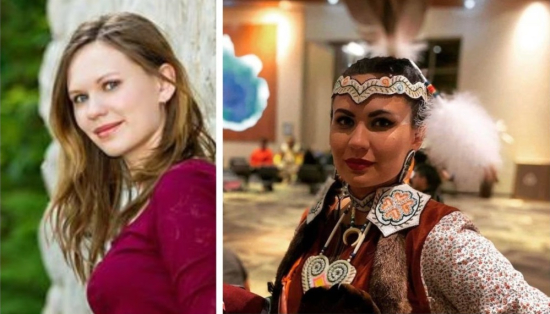
Katie Le Claire in 2012, discovered by AdvancedSmite; nibiiwakamigkwe Kay LeClaire in 2021, provided by Nipinet Landsem.


 Mick Hartley
Leave a reply to TDK Cancel reply