Pictures of the old working class Newcastle area before its redevelopment, by Finnish photographer Sirkka-Liisa Konttinen:
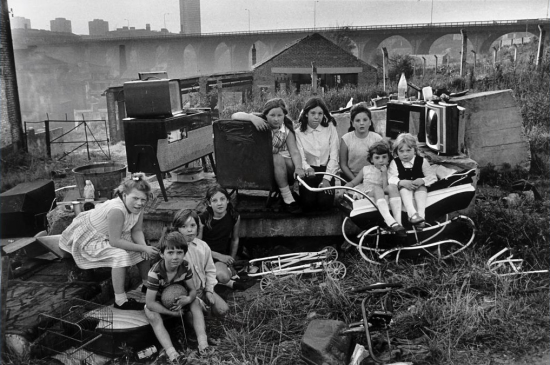
Kids with Collected Junk Near Byker Bridge, 1971
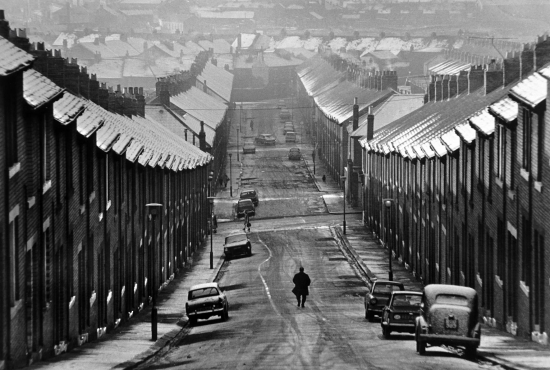
Kendal Street in Snow, Byker, 1969
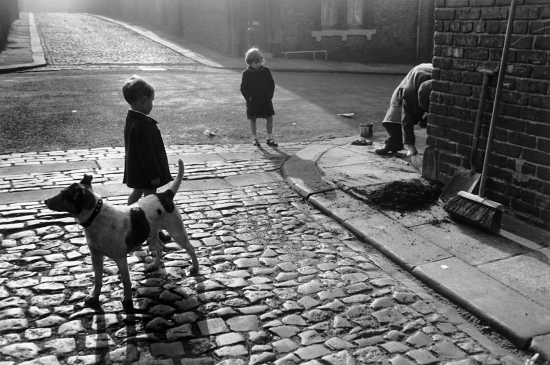
Mending the Pavement, Byker, 1969
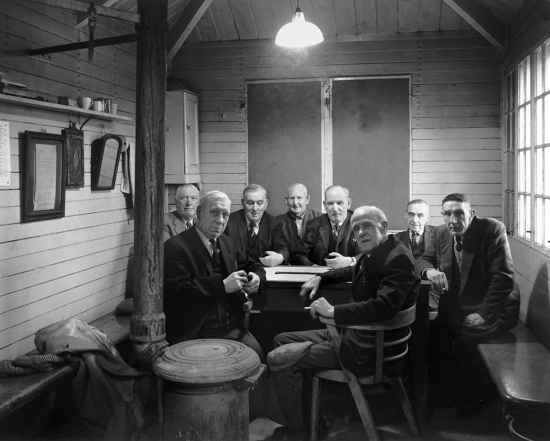
Byker Park Dominoes Club, 1974
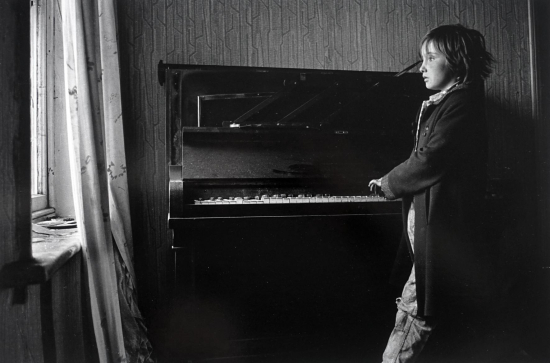
Girl Playing a Piano in a Derelict House, Byker, 1971
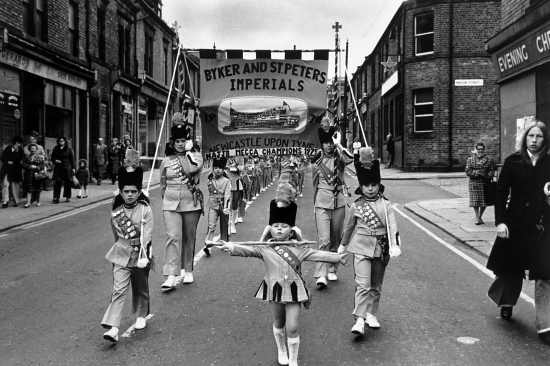
Byker & St. Peter's Imperials Juvenile Jazzband, 1975
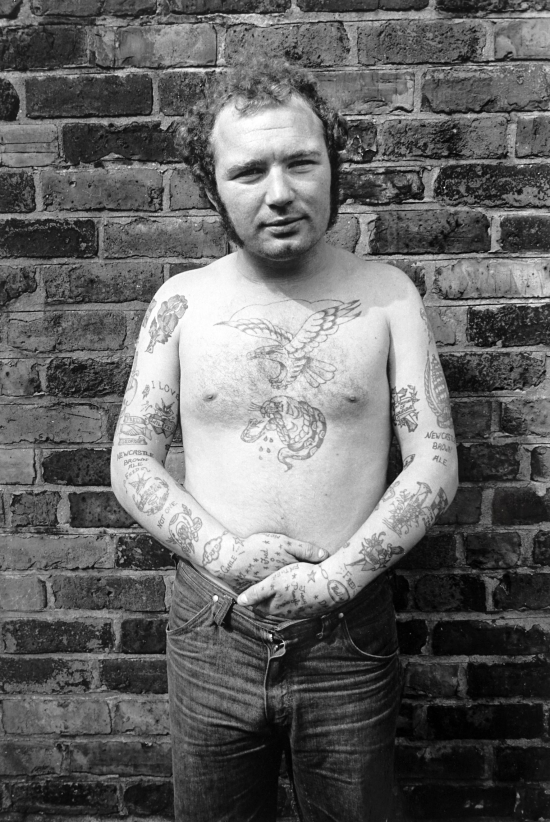
Fred in Raby Street Backlane, Byker, 1971
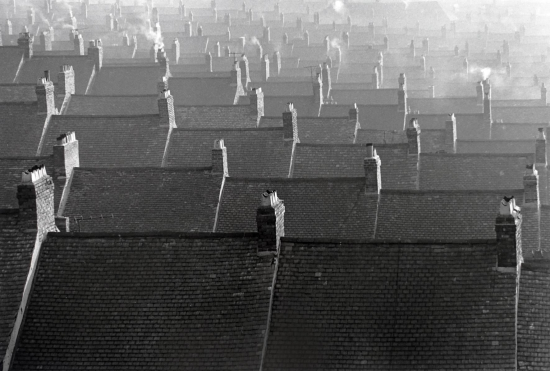
Byker Rooftops, 1975
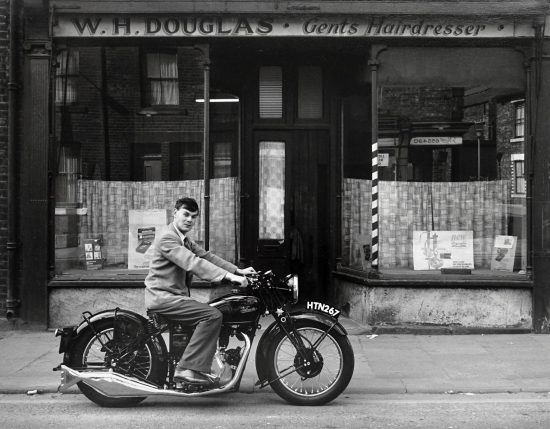
Customer Leaving Gents Hairdresser, Raby Street, Byker, 1974
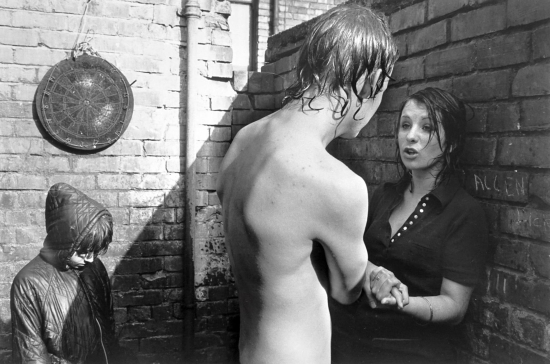
Young Couple in a Backyard on a Summer's Day, Byker, 1975
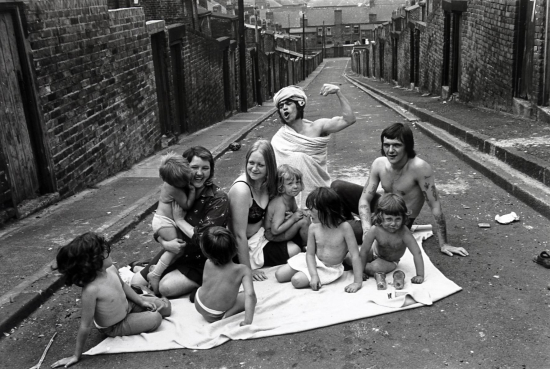
Two Families Sunbathing in Carville Road/Mason Street Backlane, Byker, 1975
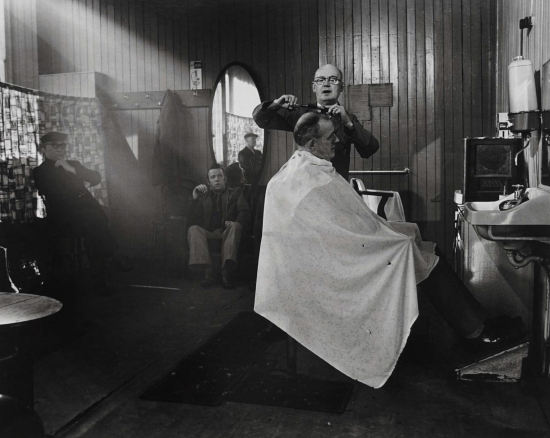
Mr Douglas at Work, Gents’ Hairdresser in Raby Street, Byker, 1974
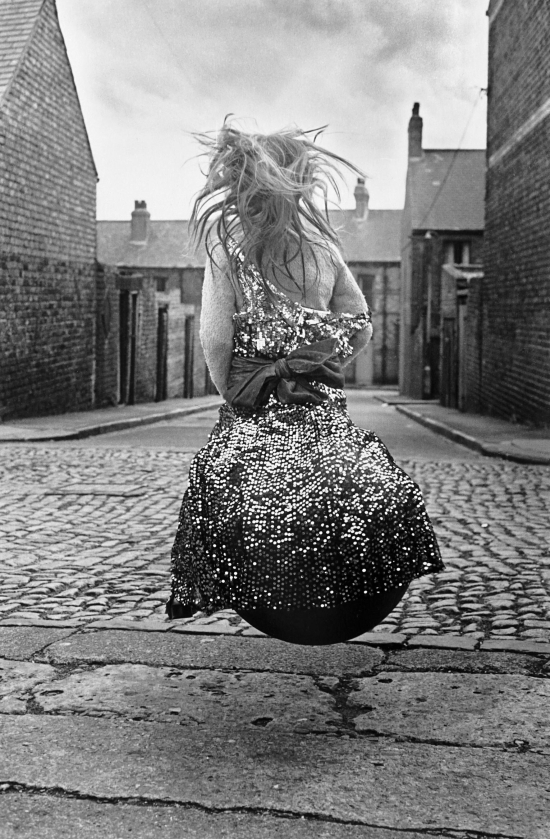
Girl on a 'Spacehopper', Janet Street Backlane, Byker, 1971
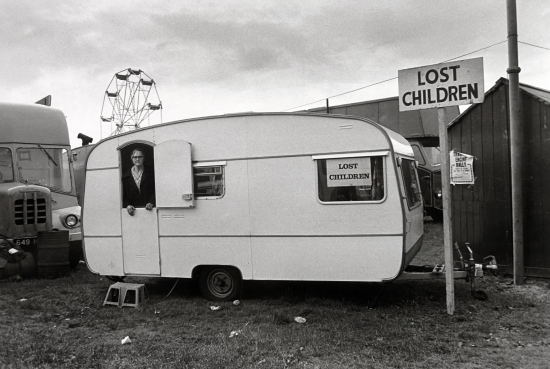
Lost Children, from The Hoppings, 1971
[Photos: Sirkka-Liisa Konttinen/Michael Hoppen Gallery]
From Wiki:
Until the 1960s, Byker was a Victorian working-class area of densely built terraces. Much of the housing needed major repair and some was considered unfit for human habitation (many houses lacked bathrooms), yet most residents wanted to stay in Byker, an area close to industry on the riverside. In 1966 Newcastle City Corporation took the decision to redevelop the Byker area. The council aimed to clear the slums but keep the community.
Byker was extensively photographed before its demolition, primarily by Sirkka-Liisa Konttinen, who lived in Byker from 1969. The photographs that Konttinen took toured China in 1980 and later appeared in the book Byker.
Ralph Erskine was appointed as the architect in 1969 for the new Byker. The development was run as a "rolling programme" so local people could continue living in the area during the building work. Residents were involved in the design process and it is thought[who?] the outstanding success of Byker was as much to do with this as its innovative [vague] architecture which used a Functionalist Romantic style, differentiating the Estate from the Brutalist approach which was more common at the time.
New leisure and shopping facilities have been brought to the Shields Road area, while community led initiatives have encouraged the growth of local enterprise and enriched the social fabric of the estate. Byker and the Ouseburn area to the south have seen investment in recent years, becoming a cultural hub for the city. Byker Estate itself received a Grade II* listing in 2007 due to its architectural significance, and has since undergone a £25 million regeneration with a further £4 million of environmental upgrades to the area taking place in 2020.
In 2017 the Byker Wall estate was named as the best neighbourhood in the UK by the Academy of Urbanism's 'The Great Neighbourhood' award.
So there you go.
Photos available for viewing by appointment between 25th February-25th March at Michael Hoppen Gallery.
I featured that shot of Kendal Street a while back.
Sirkka-Liisa Konttinen's book Byker is now out of print, but her Byker Revisited – a report of her return to the area – is still available.
 Mick Hartley
Leave a comment