The slow death of Greenland's small rural communities. Photographs by Jonas Bendiksen:
Oqaatsut’s population, like that of many of Greenland’s rural settlements, has been shrinking for decades. Many young Greenlanders are leaving small villages for more urban centers, both in Greenland and abroad, in search of educational and occupational opportunities that don’t exist in rural areas. Far more women leave than men.
The trend began after World War II, when Denmark, which first claimed Greenland in 1721, kicked off its efforts to modernize its Arctic colony. Danish men arrived in Greenland as civil servants and construction workers, and many returned to Denmark with Greenlandic wives. At its most extreme, the Danish plans to modernize the country involved forced urbanization. Entire communities were uprooted and resettled in larger towns like Nuuk (then known as Godthab), the capital city of Greenland. Today, many trace Greenland’s soaring rates of suicide and alcohol abuse back to this social upheaval.
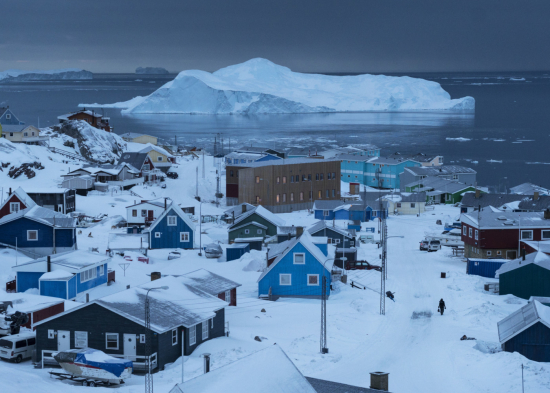
View of the town of Ilulissat, Greenland's third largest town (pop 4,400) with an iceberg floating in the fjord. The town is a major hub for Greenlandic fisheries. Ilulissat. Greenland. 2018. © Jonas Bendiksen | Magnum Photos
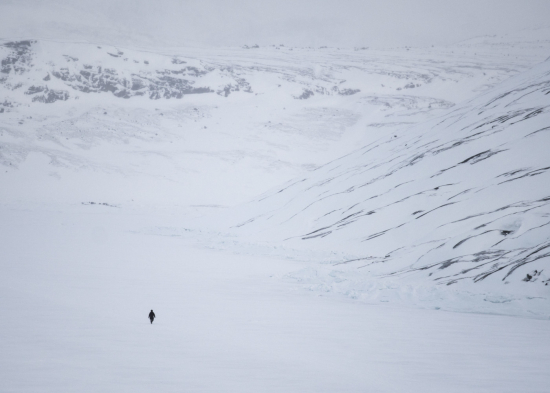
A woman takes her daily exercise walk across the frozen bay next to Oqaatsut, a small village of about thirty inhabitants. The village faces the same existential question as many of Greenland's smaller communities – can the community survive if the younger generation leaves for the city? Oqaatsut. Greenland. 2018. © Jonas Bendiksen | Magnum Photos
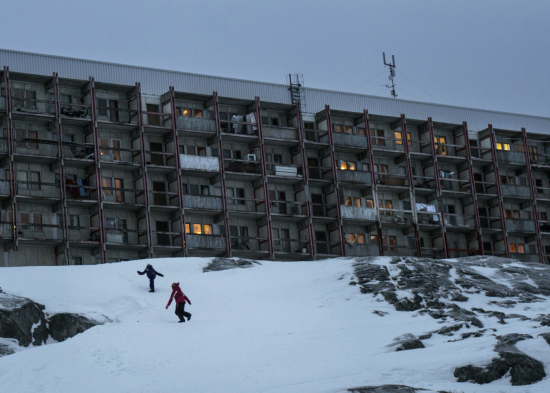
One of the older apartment buildings of Nuuk. Greenland's population is becoming more and more urbanized, as more people leave a traditional lifestyle and move to the city. Nuuk. Greenland. 2018. © Jonas Bendiksen | Magnum Photos
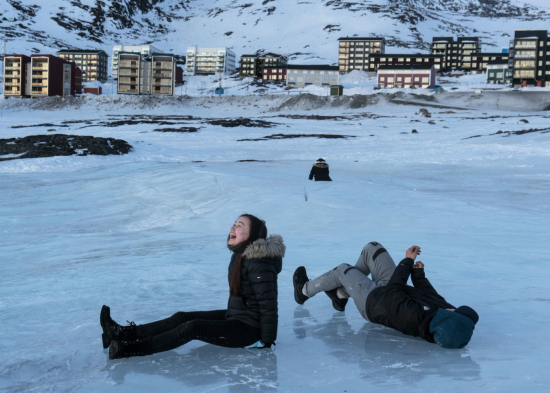
Young people play around on an iced-up hillside with one of Nuuk's newer apartment neighborhoods in the background. Nuuk. Greenland. 2018. © Jonas Bendiksen | Magnum Photos
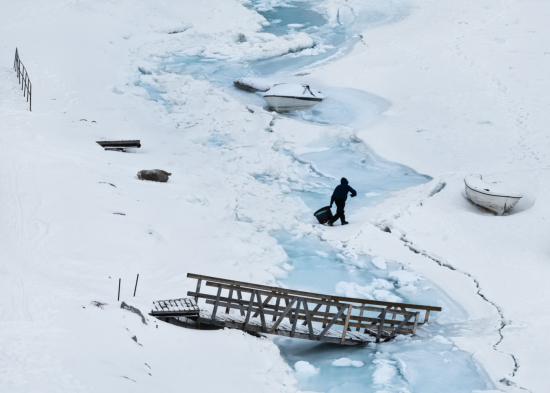
A man crosses a crack in the ice in the inner harbor of Ilulissat. Ilulissat. Greenland. 2018. © Jonas Bendiksen | Magnum Photos
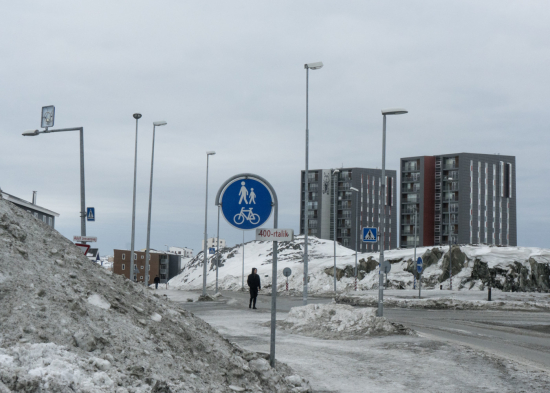
Greenland's population is becoming more and more urbanized, as more people leave a traditional lifestyle and move to the city, which now has around 17,500 inhabitants. Nuuk. Greenland. 2018. © Jonas Bendiksen | Magnum Photos
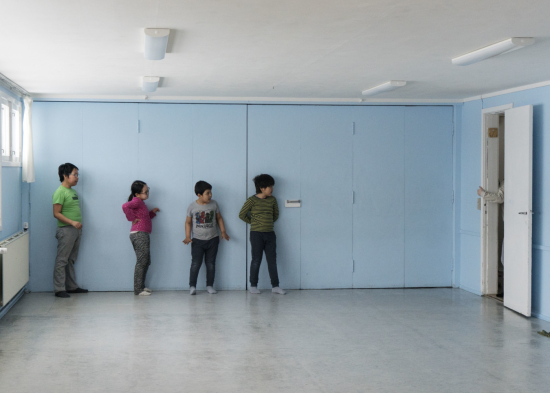
All the four pupils at Oqaatsut's school, during recess. Oqaatsut, a small village of about thirty inhabitants faces the same existential question as many of Greenland's smaller communities – can the community survive if the younger generation leaves for the city? Pupils left to right: Inunnguaq (12), Marie (9), Malik (6) and Aka (6). Oqaatsut. Greenland. 2018. © Jonas Bendiksen | Magnum Photos
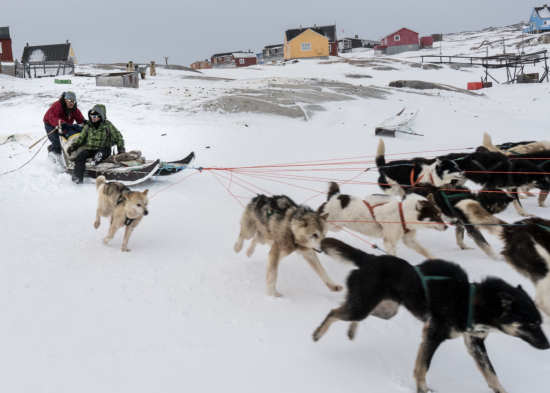
Two men leaving by dogsled for the nearest town of Ilulissat, a two-hour dogsled ride away. Oqaatsut. Greenland. 2018. © Jonas Bendiksen | Magnum Photos
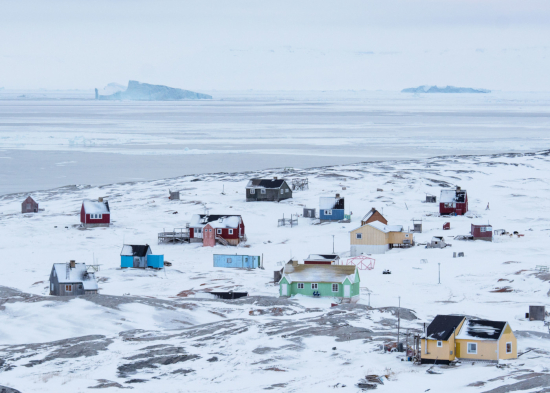
Oqaatsut. Greenland. 2018. © Jonas Bendiksen | Magnum Photos
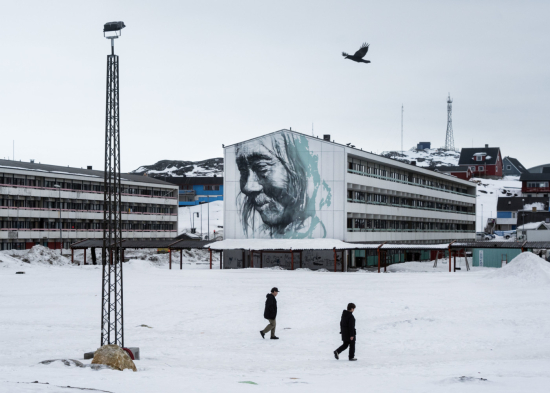
In Greenland's capital Nuuk (pop. 17,500), newer apartment buildings catch the last rays of sunset. Nuuk. Greenland. 2018. © Jonas Bendiksen | Magnum Photos

 Mick Hartley
Leave a comment