From Dutch photographer Jan Banning's book Red Utopia, a look at what's left of Communism, after 100 years and millions of corpses:
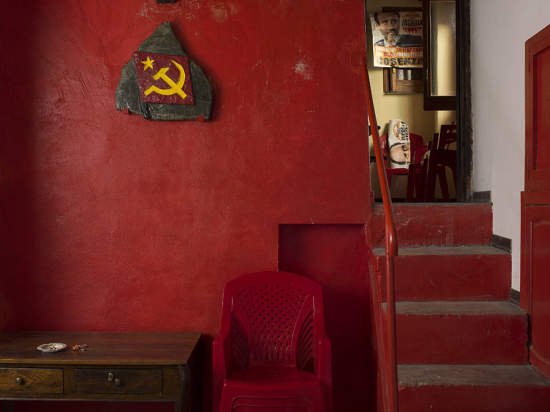
Italy, communism. Partito della Rifondazione Comunista, aka PRC: Circolo Che Guevara, Verbicaro, Calabria. © Jan Banning
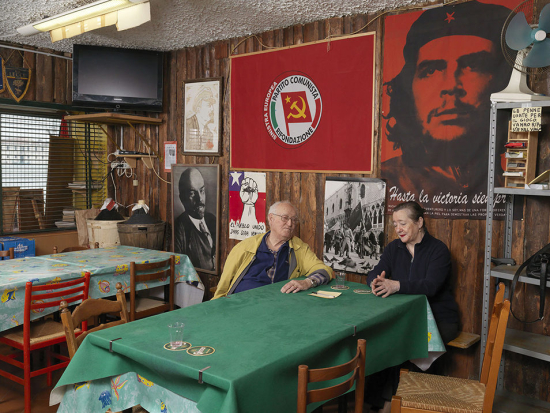
Italy, communism. PRC (Partito della Rifondazione Comunista) circolo Giudecca, Venezia. Two party activists. © Jan Banning
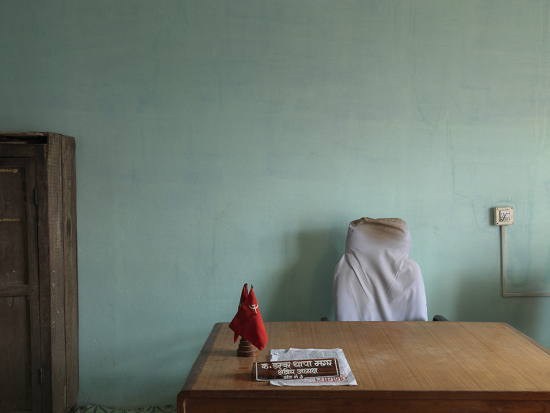
Nepal, communism. Communist Party of Nepal (Unified Marxist Leninist): district office for constituency #3 in Banke district of Nepalgunj city, Bheri zone. © Jan Banning
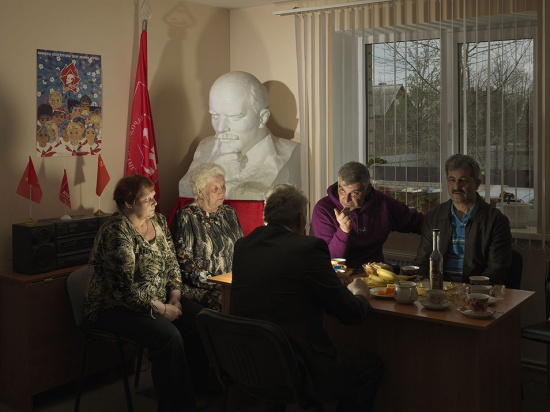
Russia, communism. KPRF Raikom (Rayon Committee) office in Borovichi, Novgorod Oblast. L to R: two ladies running Children of the War Council; First secretary Valery Ivanyushko (seen from the back); two party members. © Jan Banning
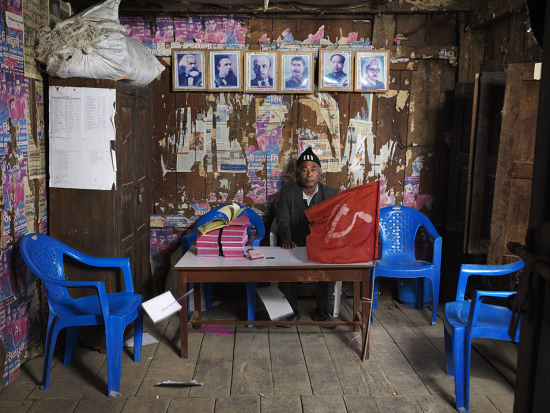
Nepal, communism. CPN (Marxist), a marginal party which did not win seats in the 2013 elections. Sindhuli district office, Sindhuli town. Office secretary and Central Committee member Lila Shrestha. © Jan Banning
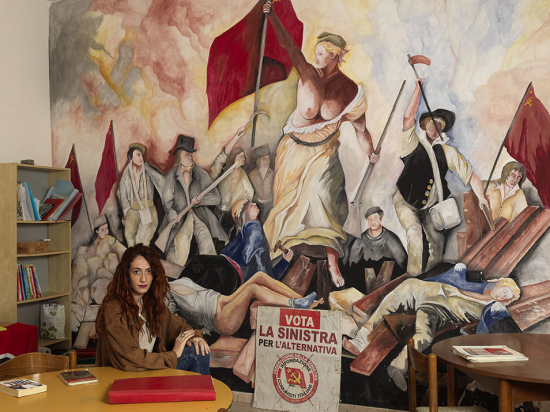
Italy, communism. Acerra (near Napels). PRC (Partito della Rifondazione Comunista) office: sede Acerra "Emiliano Zapata." With party activist Maria. © Jan Banning
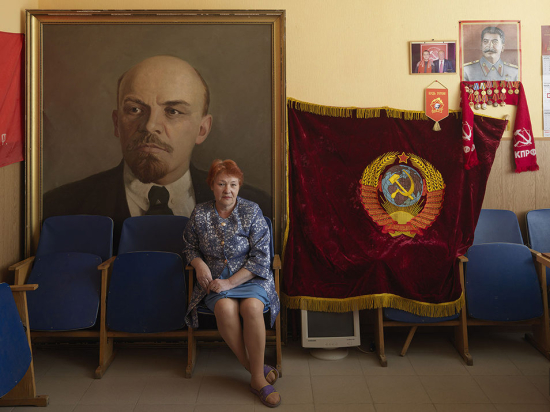
Russia, communism. KPRF Local Committee office in Torzhok, Tver Oblast. First Secretary Olga Volnina. © Jan Banning
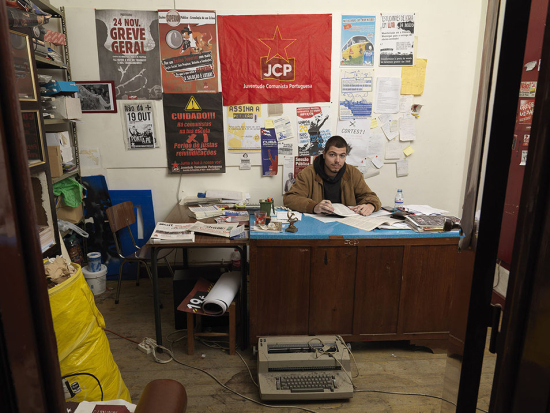
Portugal, communism. PCP office in Evora. Pedro Grego, "responsable de distrito" van de JCP (youth movement). © Jan Banning
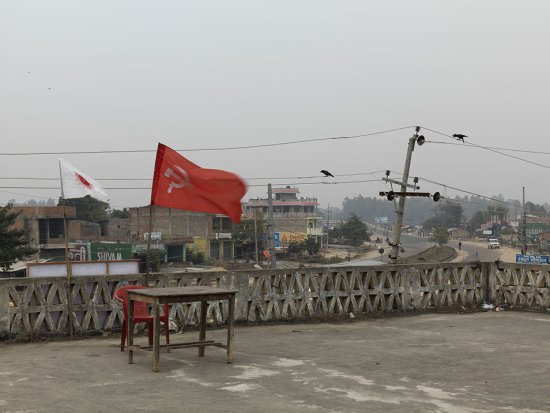
Nepal, communism. Communist Party of Nepal (Unified Marxist–Leninist), also known as CPN–UML or CPN (UML): District office in Danusha (Janakpur zone). © Jan Banning
From his website:
For me (Jan Banning) – a non-party progressive – Red Utopia is a non-propagandistic search for what is left of communism, 100 years after the Russian Revolution. The book will contain photos of interiors of communist party offices: “museums of a future from the past,” as one young Italian communist said. It also presents environmental portraits of officials and activists in five countries: India, Italy, Nepal, Portugal and Russia.
For more than a century, communism was a source of inspiration for idealists and revolutionaries who sought a more just society. The struggle between communism and capitalism was a mayor theme in recent history, certainly between 1917 and 1989.
In its practice of Real Socialism, the communist ideology turned out to be surely less than ideal; the Moscow trials in the late 1930s already shocked many believers; and the fall of the Berlin Wall in 1989 seems to have delivered it a final blow. Neoliberalism, with its worshipping of the Free Market, now appears to be the only remaining ideology. Even most of the five remaining dictatorships of the proletariat are communist in name only. With the demise of this competing ideology, the need for capitalism with a human face has disappeared and the gap between rich and poor has widened in many countries. Since the crisis, which started in 2008, there has been a reappreciation of Karl Marx as a political economist and one may wonder: how dead is communism really?
Hmm.
Without wishing to detract in any way from Banning's photographic skills, I have to say that for me the image which best sums up the state of Communism now, and those who continue to support it, is this photo of Dermot Hudson, dedicated propagandist for North Korea, demonstrating back in 2015 against the "fascist puppet regime" of South Korea:
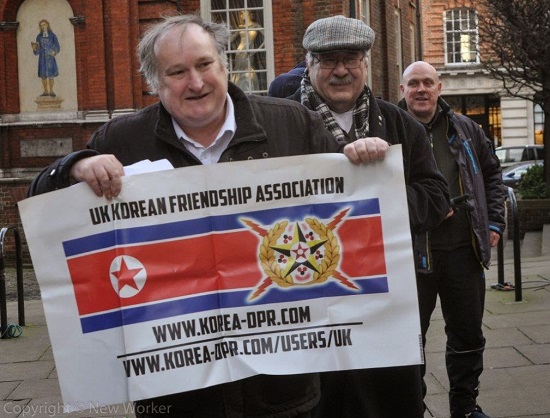
A classic.
 Mick Hartley
Leave a comment