Another winner at the 59th annual World Press Photo Contest was photographer Brent Stirton, with Ivory's Human Toll, at National Geographic:
[Photo: Brent Stirton/National Geographic]
From the In Focus gallery:
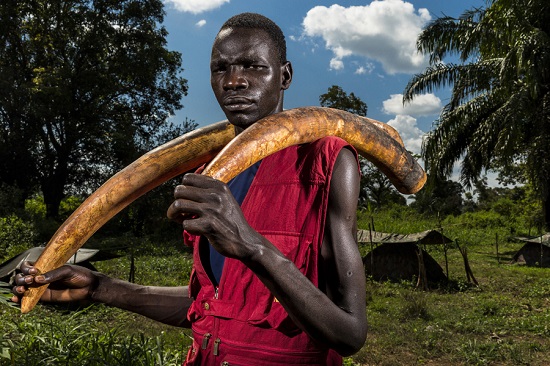
Nature, second prize winner, stories. From “Ivory Wars,” a Lord’s Resistance Army (LRA) fighter holds two ivory tusks on November 17, 2014. Ivory is a means of financing the LRA and is used for both food and weapon supplies. Series portraying the armed groups that profit most from the illegal ivory trade and the people at the frontline of the war against them, as well as others affected. In the case of the specific armed groups, the sale of ivory benefits the Lord’s Resistance Army, The Seleka Rebels of Central African Republic, the Janjaweed of Sudan and the F.D.L.R rebels who base themselves inside Virunga National Park in the DRC.
In fact, as is clear from this Telegraph piece, the man is a defector from the LRA. It's hardly likely that Stirton, brave and intrepid though he may be, could take such photographs inside an LRA camp:
Michael Oryem, a recently defected member of the Lord’s Resistance Army (LRA), who has joined the Ugandan forces fighting Joseph Kony’s militia, poses in Nzara, South Sudan, with two of six ivory tusks poached by the LRA in their former stronghold, the Democratic Republic of Congo’s Garamba National Park. Oryem had hidden the ivory in the park’s border region with the Central African Republic, before leading Ugandan forces to them. ‘Given they’ve lived in the bush and worked for Kony, former LRA guys are the perfect soldiers: they know what the Ugandans are fighting against,’ Stirton says. ‘I had to go to a remote area to meet Michael, then have him come to a Ugandan military base with the tusks. They’re dirty from being buried in the ground for safekeeping. It’s how most ivory looks before it’s exported.’
 Mick Hartley
Leave a comment