• Added:

  • UK unions have a grim record on trans rights, being in general fully on board with the gender cult and “trans woman are women”. Unison are particularly noteworthy here, representing more than 1.3 million members, mostly in the public sector, of whom more than 70% are women. Yet in the case of the Darlington nurses, for instance, union president Steve North expressed his horror that health secretary Wes Streeting was actually meeting them – “pandering to anti-trans bigotry”. Far from supporting the women, their union was supporting the bosses.

    Now there’s an election for Unison general secretary coming up, with one Andrea Egan challenging incumbent Christina McAnea. So what are her views?

    While Unison officially backed Bridget Phillipson for Labour’s deputy leadership, Egan favoured neither her nor winner Lucy Powell: “I’m not going to be drawn into lesser evils, because I spent years doing that when we used to go door-knocking.” Having joined Labour about 15 years ago, she says, Egan is no longer a member after being expelled for sharing articles from the proscribed Marxist group Socialist Appeal.

    Nor is she a member of any other party, she clarifies, though she is personally enthusiastic about ‘Your Party’, the new one being started by former Labour MPs Jeremy Corbyn and Zarah Sultana, as well as pro-Gaza Independent MPs. It has been a chaotic endeavour so far but when we talk – before its founding conference – Egan says she will have to “see how it develops”: “I do feel that it gives people hope again.”

    Hmm. And what are her other priorities?

    Another is standing up for trans workers. I wonder what she makes of Sandie Peggie, the NHS nurse who complained about having to use the same hospital dressing room as a trans colleague. She has launched legal action against her trade union, alleging that the Royal College of Nursing failed to support her. How would Egan react if a similar case came to Unison?

    “I haven’t followed that case. But what were the real issues within that? I have trans friends, trans women friends; my nephew is a trans man. I wouldn’t have an issue. I’d want to understand. Because the argument can then develop to anybody saying… ‘Well, I don’t want you there because you’ve got blonde hair’ or ‘I don’t want them there because they’ve got blue eyes’,” Egan says.

    Oh boy. Victoria Smith: “If we ban men from women’s changing rooms, next thing we’ll be banning people with blue eyes” is so profoundly stupid it’s almost genius”.

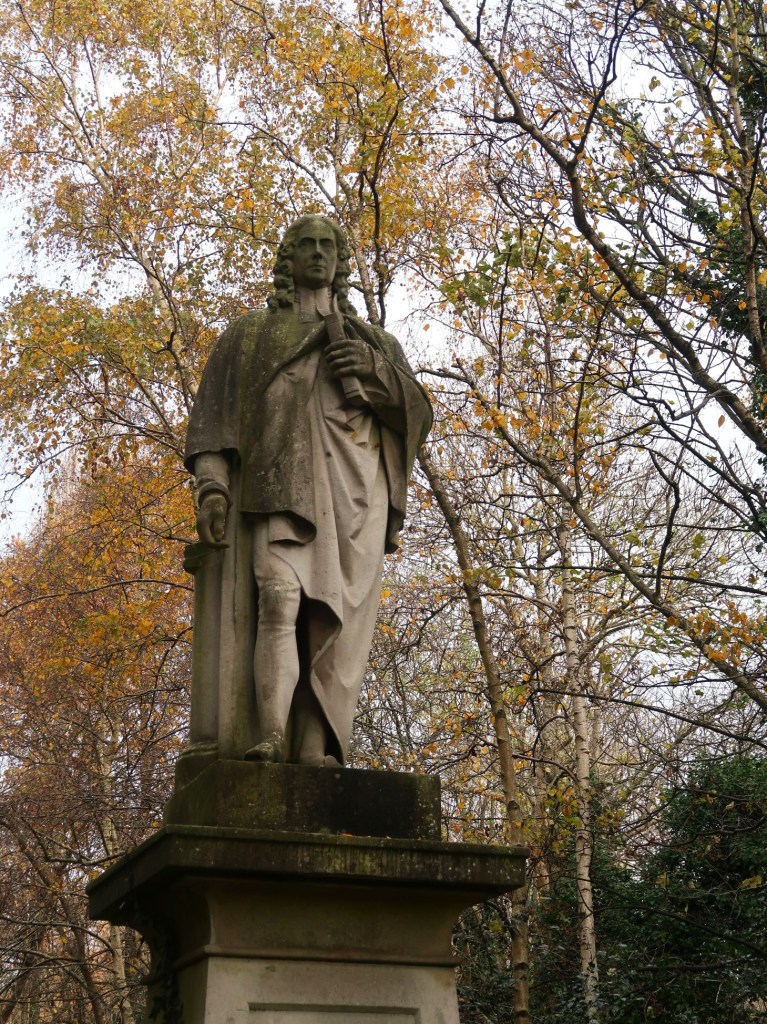
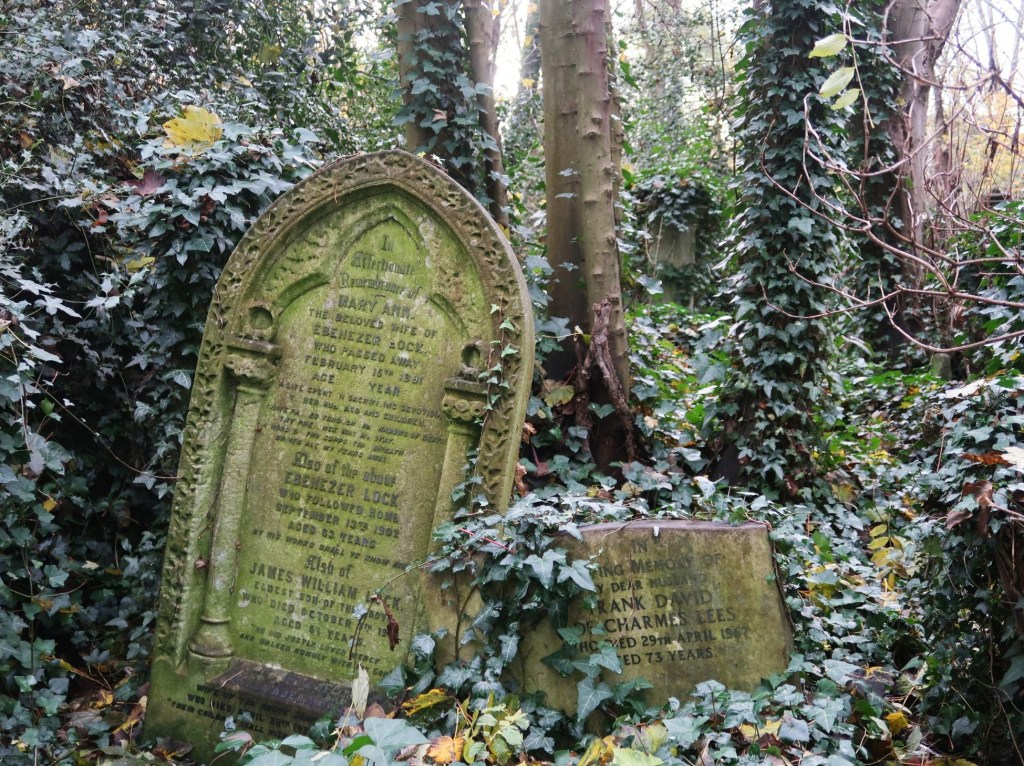
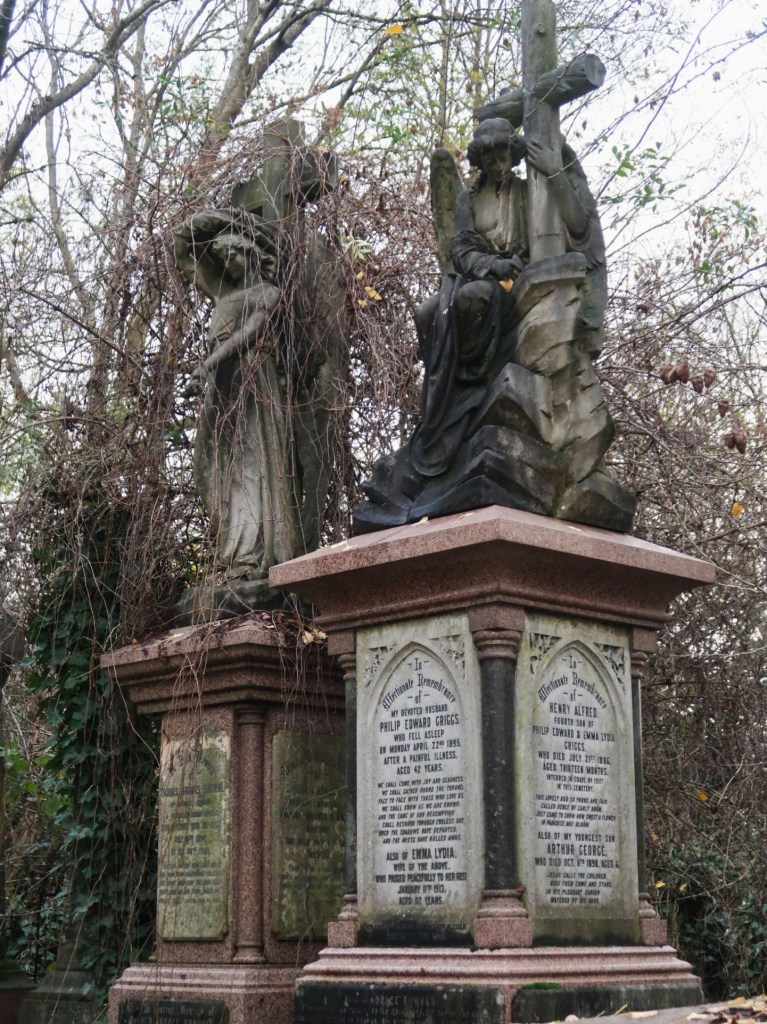
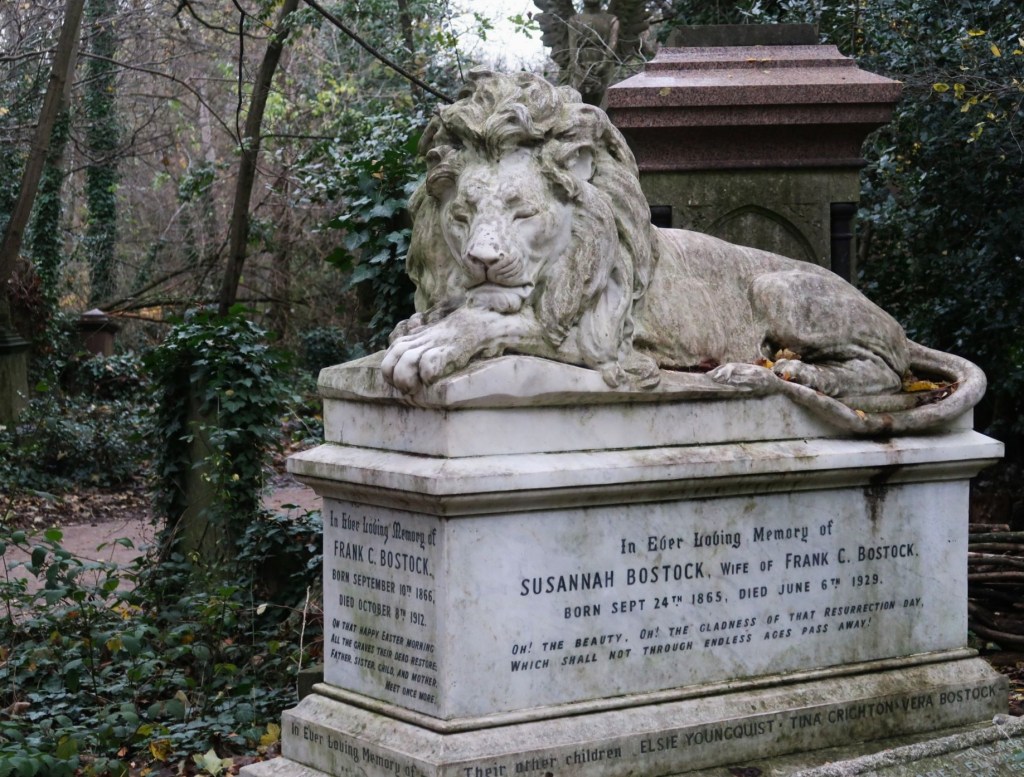
  • One of London’s Magnificent Seven cemeteries. Stoke Newington, this morning:

    The big geezer fifth photo down is hymn writer Isaac Watts.

  • The BBC news headline – Trans women will not be allowed to attend main Labour Women’s Conference events.

    It’s not because they’re trans: it’s because they’re men. Jesus.

  • Hannah Barnes at the New Statesman takes a detailed look at the puberty blocker trial:

    ​​​​​Strange as it may sound, there is not one agreed view on what the primary purpose of puberty blockers is when used in gender medicine. Cass summarised in her interim review in 2022, that depending on who you ask, the answer to the question “what is the intended outcome of puberty suppression?” varies. Responses include: providing time/space for the young person to decide about continuing with transition; reducing or preventing worsening of distress; improving mental health, and stopping potentially irreversible pubertal changes which might later make it difficult for the young person to ‘pass’ in their intended gender role.​​ The L​abour ​g​overnment​ summarised Cass’s final review as concluding that “the rationale for early puberty suppression remains unclear”. 

    ​​The team undertaking the Pathways trial told the New Statesman: “The primary function of puberty suppressing hormones is to pause pubertal progression, allowing continuing psychosocial interventions and exploration of identity without the distress of irreversible physical changes.” ​​​Yet this interpretation, which provides the foundation of the new trial, was rejected by the Cass Review. “Given that the vast majority of young people started on puberty blockers proceed from puberty blockers to masculinising ​[or]​​ feminising hormones, there is no evidence that puberty blockers buy time to think, and some concern that they may change the trajectory of psychosexual and gender identity development,” Cass wrote.  

    One researcher, who is no longer part of the trial team​, tol​​​​d​​ me​, “the early planning meetings were unlike any other clinical trial I’ve encountered. We could easily list all the potential harms to monitor and how to test for them, but we didn’t have a clear rationale for giving the drug in the first place”. Normally, they said, “you start with a strong rationale for how and why a treatment might help someone, and then think carefully about the possible downsides.​ ​​     ​It’s very unusual to start planning a trial without a well-defined outcome, especially in children.​​​​​​​​​​​”

    Very unusual – and very unethical.

    These children will be receiving therapeutic support, as well as the puberty blockers. How will the study disentangle the effects of the psychological approach from the medical affects of the blockers? Answers came there none.

    It’s a mess. Turns out it’s easier to get ethics approval to experiment on children than to use the results of previous experiments.

  • That’s Baroness Falkner’s view of the Labour Party. She’s no longer the head of the EHRC, and is therefore free to speak her mind – which she now does in the Times:

    The past five years have been, as Baroness Falkner of Margravine puts it, a white-knuckle ride. As chairwoman of the Equality and Human Rights Commission, she has found herself at the centre of one of the most toxic and politically charged debates in Britain.

    Falkner, 70, whose tenure at the EHRC came to an end last week, was responsible for trying to draw the line between women’s rights and trans rights.

    At times, the hostility has been overwhelming. Falkner was on the receiving end of relentless abuse from trans activists, and eventually had to leave social media entirely.

    Some of the messages directed at her and others were so extreme that she became afraid that she was going to be attacked on her way to work, and began changing her daily route. “You’re afraid that somebody will flip and attack you, knife you, do whatever,” she says.

    But the Labour government is her main source of frustration.

    She has unfinished business, however. Three months ago she submitted, with the support of the board, what she views as her legacy — statutory guidance on how public bodies, businesses and employers should interpret a seismic ruling by the Supreme Court. The ruling, on April 16, clarified that under the Equality Act 2010 the terms “women” and “sex” referred to “biological” sex, not acquired gender.

    Since then, however, the guidance has gone nowhere. It is now somewhere in the bowels of the Department for Education, and there is no indication of when it will be published. The EHRC, Falkner says, has been told by the government that it is “all very complex and we need to take our time over it”.

    She doesn’t buy it. “We’ve had external counsel, internal counsel, everybody’s looked at it. I mean, I’m so certain of the lawfulness of our code that I don’t think I’ve ever been so certain about anything before,” she says. “The other explanation simply is that they’re terrified of their MPs who would wish for trans self-identification or trans inclusion to prevail across all areas of society, including Section 3 of the Equality Act, and would wish for the exemptions not to exist.”

    Falkner believes the party has lost touch with its fundamental values. “What really depresses me about the current state of the Labour Party is that they seem to have completely abandoned women’s rights,” she says. “The traditional party of rights, in my 40 years in this country, was the Labour Party. The party of feminism.

    “I was mentored by a former, very senior, Labour woman, Shirley Williams. I was aware of women like Harriet Harman, Margaret Jay and Hilary Armstrong, Labour women who were committed to feminism in a manner which carefully asserted equality, true women’s equality. And I think they’ve lost it. This particular generation of Labour MPs have lost it.”

    Coming from her, with her history, and her obvious integrity, that’s an extraordinarily damning judgement. She’s right, though.

    “When you casually dismiss the reality of more than 51 per cent of your population in favour of what you think is the right way forward to protect a very, very, very small group of — albeit very vulnerable — people, then you need to do a stock take. Is that proportionate?”

    Of course it’s not just the trans issue.

    Labour’s failure to defend women and girls, she says, goes well beyond the debate over trans rights. The battle to get a national inquiry into grooming gangs shows the scale of the problem.

    It’s a sorry record, though it has to be said that this reflects the thinking of much of the media and academic class who are now Labour’s main constituency – plus what Falkner calls “the lanyard class”, the “progressive” managerial bureaucrats running so many of our institutions.

    They’re followers, not leaders, these Labour politicians: terrified of offending the wrong people,.

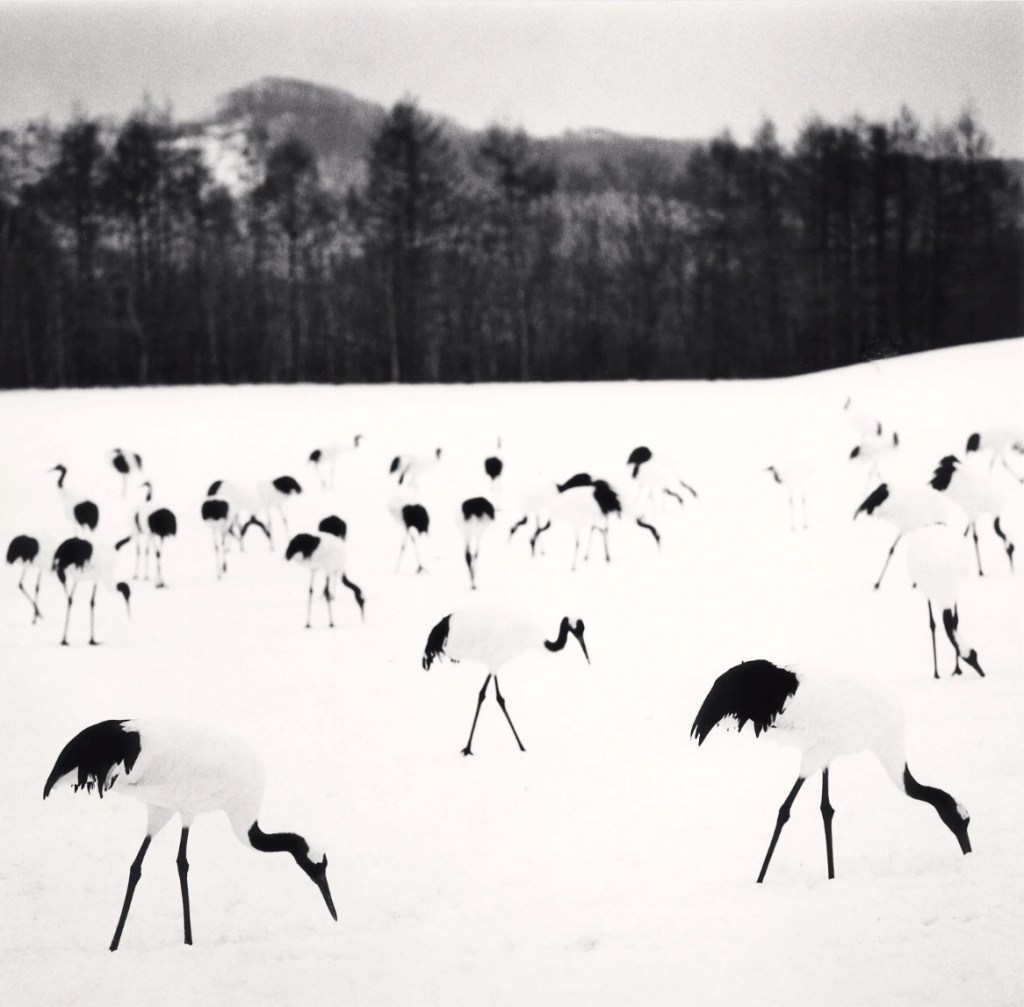
  • At the Print Sales room downstairs at the Photographers’ Gallery. Shin Shin from Michael Kenna:

    Drawing on the quiet stillness of shin shin, the silence of falling snow, this exhibition presents Michael Kenna’s refined, long-exposure analogue landscapes.

    Shin Shin しんしん  is a Japanese onomatopoeia that describes the quietness or silence of falling snow. This sensory word captures the meditative stillness that runs through Michael Kenna’s work, and his reverence for the natural world.

    Alley of Trees, Damyang, Jeollanamdo, South Korea, 2012

    Flock of Red Crown Cranes, Tsurui, Hokkaido, Japan, 2005

    Wanaka Lake Tree, Study 2, Otago, New Zealand, 2013

    Seaweed Farms, Study 3, Xiapu, Fujian, China, 2010

    Kussharo Lake Tree, Study 16, Kotan, Hokkaido Japan, 2009

    Two Harbor Piers, Kyushu, Japan. 2024

    Pine Tree and Snow Clouds, Goseong-ri, Jeju City, South Korea. 2025

    Torii, Study 3, Takashima, Honshu, Japan. 2007

    Old Landing Stage, Kinki, Honshu, Japan. 2023

    Ouo Shrine, Study 2, Kyushu, Japan. 2024

    [Photos © Michael Kenna]

    The top five images are from the Photographers’ Gallery: the bottom five from Michael Kenna’s website.

    Michael Kenna previously: Form and Light, The Rouge.

  • Jo Bartosch at Spiked picks up that case of the nurse racially abused by an aggressive trans paedophile

    Nurses are as close as we get to a universally beloved profession. We trust them with our newborns, our dying parents, and quite a lot of the bits in between. So when nurse Jennifer Melle was verbally abused at work by a racist paedophile, you might imagine everyone from her managers to her union would be proud to stand with her. Not so. Instead, it was Melle who found herself punished, disciplined by her employer and nursing’s professional body, and finally hung out to dry by her union.

    Why? Well, we know why. She refused to play along with his fantasies and call him a woman.

    Melle is not the only woman who has been let down by the RCN. Scottish nurse Sandie Peggie, who objected to the (as it transpired, unlawful) presence of a man in a women’s changing room, is now suing the union for failing to support her. The Darlington Eight, a group of nurses ordered to ‘reeducate’ themselves after they also complained about a male colleague changing alongside them, were similarly abandoned. They subsequently left and formed their own union. When nurses are resorting to DIY unionisation, something has gone very wrong.

    Melle did, eventually, secure a meeting with the RCN’s leadership, attended by its general secretary, Professor Nicola Ranger. According to Christian Concern, the advocacy group supporting Melle’s case, Ranger excused herself midway through the discussion to take a phone call and simply never returned. Shamefully, the head of a union representing over half a million members had vanished like a teenager sneaking away from the dinner table. Afterwards, the RCN sent Melle a thin, consolatory letter acknowledging the ‘impact’ the incident must have had on her, but confirming that it would be taking absolutely no action. Melle was, however, welcome to access ‘other member-support services’. Perhaps a mindfulness app…

    Under Ranger, the RCN has instead devoted much of its energy to fetishising LGBTQ+ inclusion, rolling out hate-crime training, allyship campaigns and Pride celebrations. Ranger herself calls equity and inclusion a ‘moral imperative’. It seems odd that a fixation with gender ideology has entirely eclipsed the union’s actual moral imperative: defending and advocating for its members.

    Outside of union AGMs and diversity webinars, racists and child abusers are people civilised societies recoil from. Yet here we are: a senior nurse racially abused at work, disciplined for refusing to pretend a male child abuser is a woman, and still the RCN cannot muster even a sternly worded email in her defence. It is clear the union has put the feelings of a racist paedophile above the rights of the woman caring for him.

    If even nurses with perfectly ordinary Christian beliefs are now too politically radioactive for the RCN to defend, then what exactly is the point of the organisation? A union that bows to the feelings of dangerous convicted criminals while abandoning its own member has not merely lost its way; it has handed its spine, its mission and its conscience to trans-ideological lunacy.

  • Bristol city council, under the Greens, has criticised the Supreme Court ruling that, for the purposes of the Equality Act 2010, the words “woman” and “man” refer to sex at birth. Last month a number of Green councillors paraded out of a public meeting clutching their trans placards, after concerns were raised about women’s safety in single-sex spaces. They’re councillors – they’re the ones in power who should be listening to the public – but when it comes to trans rights there can be no debate.

    And now:

    Bristol city council has banned two gender-critical women from stepping foot in City Hall after they asked Green Party councillors if the Supreme Court judgment on trans identity was “offensive or transphobic”.

    The council alleged the questioning of the two councillors in the public lobby after a heated council meeting last month, in which Green councillors staged walkouts and held trans rights placards, was carried out “in a way that they found intimidating”.

    It’s always this snowflake defence. Trans supporters can’t deal with any questioning of their beliefs. No debate.

    The council has banned Wendy Stephenson, chair of the council’s independent remuneration panel, and Phoebe Beedell, a retired academic researcher, from attending any council meetings for six months because of their “unacceptable behaviour”.

    Unacceptable? Asking questions of elected council members? Did they threaten them with big sticks or shout obscenities? I don’t think so. These are two responsible elderly women.

    Stephenson was told she had failed to “uphold the highest standards of behaviour” and had her appointments terminated as chair and panel member of the remuneration panel, a position she had held for seven years.

    Beedell and Stephenson, who are members of The Women of Wessex campaign group, are threatening legal action against the council unless the action taken against them is revoked.

    Good luck to them.