Trump’s dream – but can he build a golf course here? That’s the real challenge.
Aerial photos by Dennis Lehtonen:

Kullorsuaq
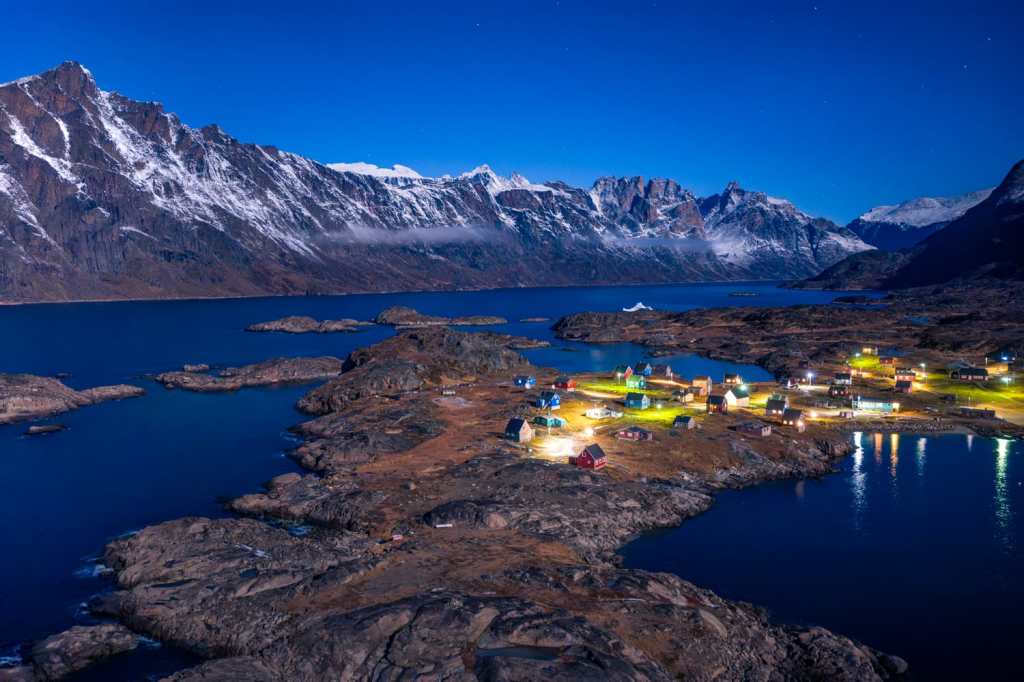
Narsamijit
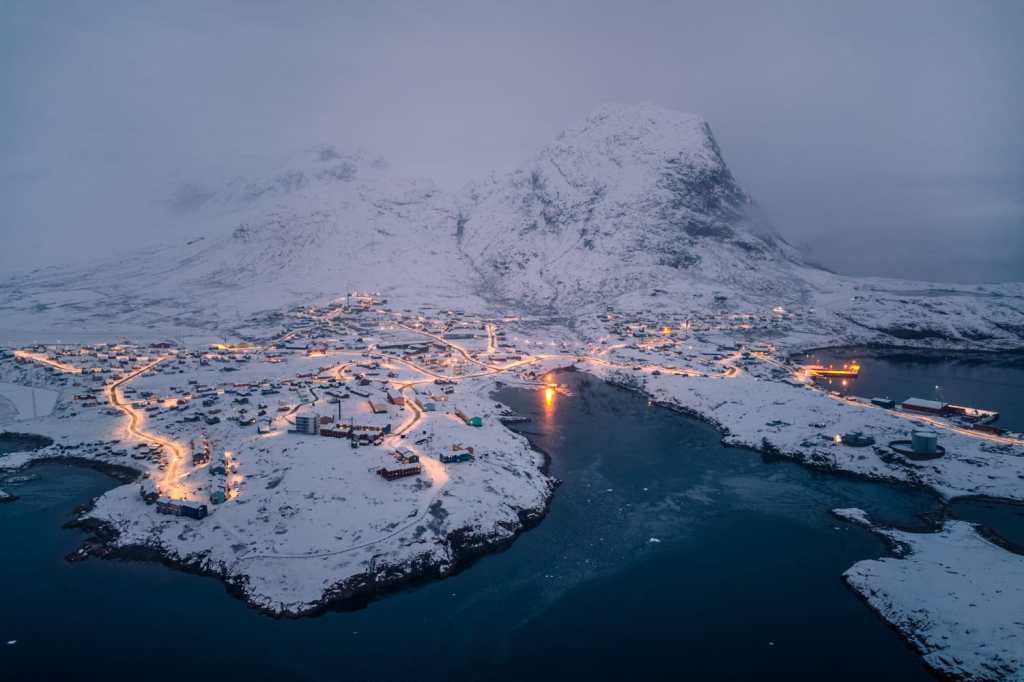
Narsaq
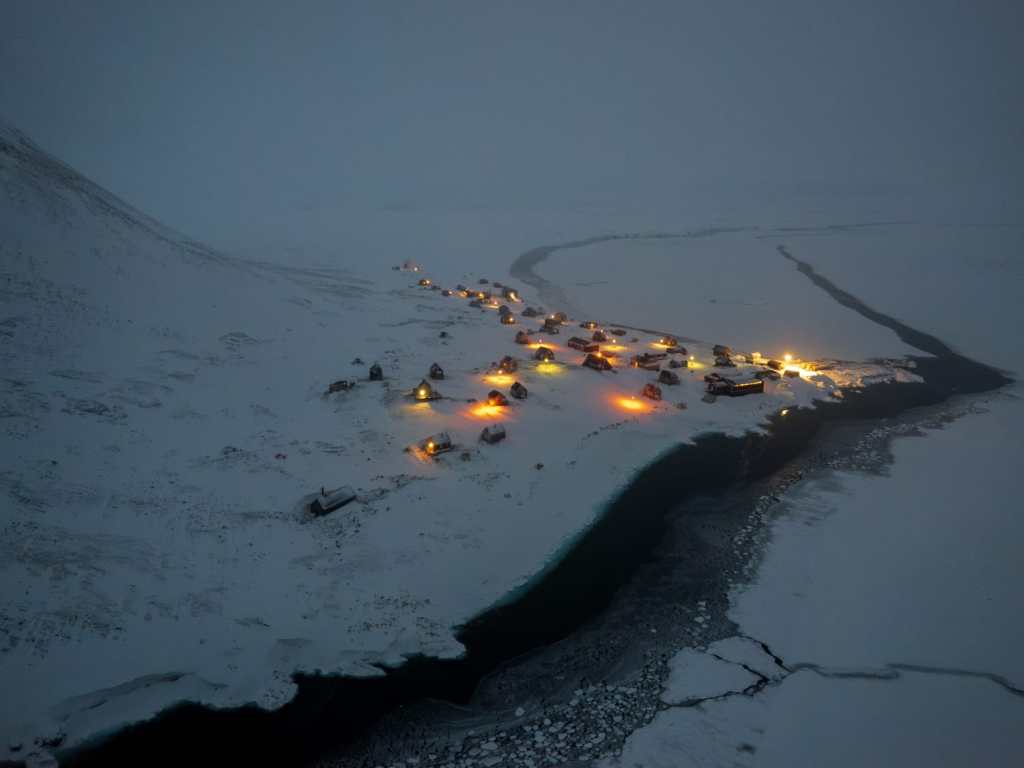
Savissivik
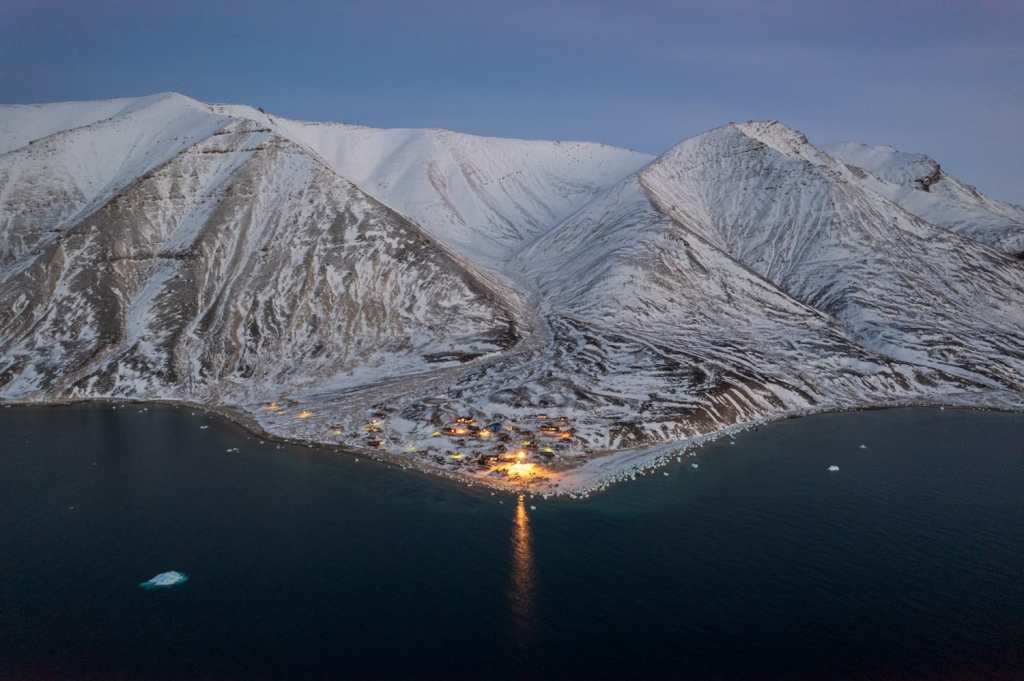
Siorapaluk
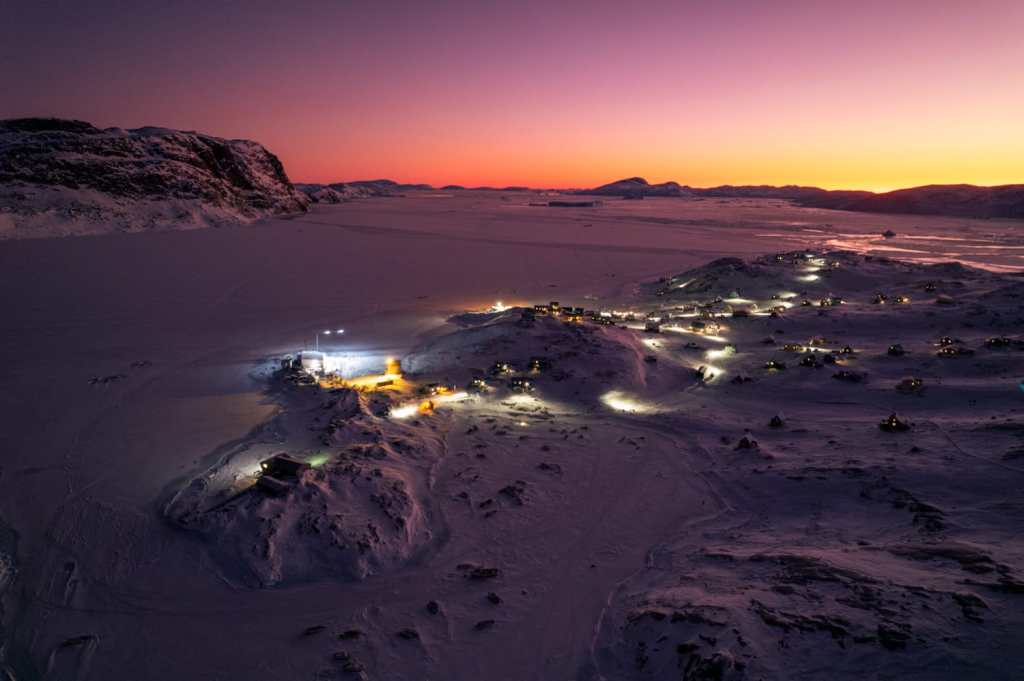
Tasiusaq
[All images © Dennis Lehtonen]
Politics and Culture
Trump’s dream – but can he build a golf course here? That’s the real challenge.
Aerial photos by Dennis Lehtonen:
Kullorsuaq
Narsamijit
Narsaq
Savissivik
Siorapaluk
Tasiusaq
[All images © Dennis Lehtonen]
On the subject of that ban on the Jewish MP – Stephen Daisley:
Ruth Wisse defines anti-Semitism and anti-Zionism as ‘the organisation of politics against the Jews’, and in Britain it is striking just how openly the organisers operate. During his remarks to Sunday’s Jewish Labour Movement conference, Communities Secretary Steve Reed revealed that a Jewish colleague was ‘banned’ from visiting a school in his constituency ‘in case his presence inflames the teachers’. Reed described this as ‘an absolute outrage’.
The Jewish News reports that the politician in question is the Jewish MP Damien Egan and alleges that members of the National Education Union and the Palestine Solidarity Campaign were behind the effort to block the Bristol North East MP. The newspaper points to social media posts from pro-Palestine activists which allegedly celebrated Egan being rejected for a constituency visit last September. The posts reference Egan’s involvement in Labour Friends of Israel.
Egan is no kind of firebrand. He certainly wasn’t going to launch into a pro-Israel tirade at the school. He was banned, simply and obviously, because he’s a Jew.
Members of Parliament visit their constituency schools, talk with staff and pupils, and typically pose for photographs for the local paper. This is a well-established civic tradition in our country. MPs do not electioneer or make political speeches and headteachers welcome them regardless of party or ideology. At least that’s how we did things under the old order, and teachers and parents understood why school visits had to be open to MPs of all parties. They might have approved of this MP and disapproved of that. They might have regarded the visits as pointless and a waste of time, but they persevered. Observing the customs and processes of representative democracy, however grudgingly, is an innately British instinct.
Not any more. Not if the MP is Jewish.
Gareth Roberts, in the Spectator, on our “fascinatingly awful” Labour government:
Right now, Starmer is spluttering about X, accusing Elon Musk’s platform of ‘protecting their abusive users’ rather than ‘the women and children who are being abused’, which apparently ‘shows a total distortion of priorities’. He is pronouncing loftily from that hillock of the moral high ground occupied by people disgusted by fake bikini pics, but who didn’t do much more than shrug and change the subject when hundreds of actual girls were being systematically raped, because it was politically embarrassing. The artless transparency of Labour’s faux-outrage is contemptuous. Even with their rock bottom approval ratings, they seem to think we’ll swallow this huffing….
After the murderous attack on the Heaton Park synagogue in October last year, Starmer said, ‘To every Jewish person in this country: I promise that I will do everything in my power to guarantee you the security you deserve.’
After this, we discover that West Midlands Police colluded with Islamists to ban Jewish football supporters from Britain. And also that Jewish Labour MP Damien Egan was barred from visiting Bristol’s Brunel Academy, a school in his constituency, due to ‘safeguarding’ concerns, allegedly following a campaign by staff and union activists.
I don’t know about you, but if I made such bold statements and then things like this occurred, and I did nothing about them, I would expect to shortly afterwards burst into flames.
Do Starmer and co. really want the Chinese mega-embassy? Do they want the economy to tank? Do they want to be the most detested government of all time?
Answers on a postcard…
About those Iranian Revolutionary Guards:
Sir Keir Starmer has refused to proscribe the Iranian Revolutionary Guard because he believes that doing so would have no effect on the group and would serve only to make Britain feel “better about ourselves”.
And we can’t have that. Feeling better about ourselves? Whatever next.
The prime minister “utterly condemns” the violence being used by the Iranian authorities, which has resulted in the deaths of more than 500 people in anti-government protests, Downing Street said.
However, Starmer has chosen not to proscribe the Islamic Revolutionary Guard Corps (IRGC), which would make it illegal to support the group in the UK.
The IRGC has been accused by western intelligence agencies of directing covert operations in Britain, including surveillance of dissidents, intimidation campaigns and planned kidnappings. It also has a central role in funding militant groups, including Hamas and Hezbollah, and has been proscribed in Canada, Sweden and the US.
No 10 said that on the “issue” of proscription, it would refer people to comments by Sir Richard Moore, the former head of MI6.
Moore told the BBC: “The danger is that something like that is mostly about us feeling better about ourselves, it’s not actually something that will have an impact on the IRGC precisely because that instrument is designed for non-state terror groups, not for parts of the state like the IRGC.”
Not sure I get the distinction here. And Iran certainly doesn’t. Parts of the Iranian state, like the IRGC, are terror groups. No one imagines proscribing the IRGC would miraculously solve all our problems with Iran, but it’d be a start. It’s obviously the right move to make, especially now. But the lawyers, of course, have been busy – and they’re the people Starmer listens to.
The government has accepted the recommendation of Jonathan Hall KC after a review into how to strengthen powers against state threats.
One of the recommendations was a “state threats proscription-like tool”. This would result in the introduction of a new Statutory Alert and Liability Threat (Salt) notice that could be invoked by the home secretary against a foreign intelligence agency and a new offence of “inviting support” for agencies subject to the notice.
A new Statutory Alert and Liability Threat (Salt) notice! Of course. Why did no one think of this before?
Meanwhile.
“You will see we are not in any particular animosity with the Americans,” said Khomeini, pledging his new state – the one that became the repressive Islamic Republic – will be “a humanitarian one, which will benefit the cause of peace and tranquillity for all mankind”.
The Americans were convinced that Khomeini was a Gandhi figure.
This was always suspected but it is so interesting to see the actual messages in this BBC story. And the naivete and gullible folly of the Carter administration is on full display – just a part of Khomeini’s cunning campaign to hold together a broad coalition of Iranian leftists, radicals, many of them secular, and his conservative Islamists along with a large constituency of credulous Western media including the BBC. We are seeing the Western part of that coalition refusing to condemn the Islamic dictator today – even as its killers shoot girls and boys in the streets overnight….
BBC story, from June 2016, here.
….the moral framework through which these institutions understand the world.
Ideally, to cover an uprising is not just to show crowds and slogans. It requires answering a basic question: why are people risking death? In Iran, the answer is simple and unavoidable. The people are rising up because the Islamic Republic of Iran has spent decades suffocating every aspect of life—speech, work, family, art, women, and economic survival—under a clerical system that treats liberty as a crime. There is no way to tell that story without confronting the nature of the regime.
Western media refuses to do so because it has fundamentally misunderstood Islam. Or worse, it has chosen not to understand it.
Islam, in Western progressive discourse, has been racialized. It is treated not as a belief system or a political ideology, but as a stand-in for race or ethnicity. Criticizing Islam is framed as an attack on “brown people,” Arabs, or “the Middle East,” as if Islam were a skin color rather than a doctrine.….
Scotland is leading the way in promoting trans rights – again, and long after the debate was assumed to be over. It pays lip service to the Supreme Court ruling that sex means real biological sex, while doing its best to thwart it in practice. Not unlike Starmer’s Labour government, in fact.
Alex Massie in the Times:
Once upon a time and not so very long ago, Sir Keir Starmer viewed Scotland as a place of cautionary tales. Sure, he had once been an unthinking supporter of allowing anyone to identify as whatever sex they might choose but Nicola Sturgeon’s experience had persuaded him this might be more trouble than it could possibly be worth.
“I think that if we reflect on what’s happened in Scotland,” he said in the summer of 2023, “the lesson I take is that if you’re going to make reforms, you have to carry the public with you.” Consequently, Labour consigned its own enthusiasm for self-ID to the memory hole of politically disadvantageous policy. Only unkind people would insist on remembering that Labour ever believed any of the things it really did believe.
But the issue will not go away. Indeed, it is returning to court right now. For Women Scotland, the campaign group whose efforts established that the law is, and always was, that the meaning of sex as it pertains to the Equality Act only makes sense if defined in strictly biological terms, are at it again. For the third time, FWS is taking the Scottish government to court. The Scottish government said it “accepts” and “respects” the Supreme Court’s judgment before stonewalling attempts to actually implement it. As a result, FWS is demanding that the government in Edinburgh actually enforce the law, especially with regard to prisons where, remarkably, male inmates are still routinely housed in the female prison estate.
In response, the SNP government argues that strict “segregation” of prisoners by biological — and legal — sex risks leaving trans inmates “in an intermediate zone of neither one sex nor the other”. This is physically impossible and, quite possibly, legally absurd. Nevertheless, this is the rabbit hole down which the authorities have chosen to scurry.
John Swinney’s ministers say insisting that single-sex prisons should be precisely that would leave the government in breach of the European Convention on Human Rights. This is the ditch in which the Scottish government is preparing its last stand. It wishes the Court of Session to issue a “declaration of incompatibility” which, if granted, would complicate and quite possibly compromise the Supreme Court’s ruling.
This is not just a Scottish problem. Starmer’s government also “respects” Lord Reed’s ruling in public while privately arguing against it in court. Channelling Augustine, both governments say “Lord, allow us to follow the law, but not yet”. Bridget Phillipson, the minister for women and equalities, still refuses to publish new guidance from the Equalities and Human Rights Commission. Bravely, she seems to think no one is paying attention to this.
Prisons might seem an unlikely arena for a fight of this sort. But that was precisely the point. Trans activists were commendably open about this. In 2018 James Morton, then head of the Scottish Trans Alliance, boasted that prisons were a gateway for other areas of public policy: “We strategised that by working intensively with the Scottish Prison Service to support them to include women as women on a self-declaration basis within very challenging circumstances, we would be able to ensure that all other public services should be able to do likewise.” Prisons today; schools and hospitals and everywhere else tomorrow.
It didn’t work the first time round, but they clearly haven’t given up. Maybe if we keep quiet about it, they thought. But For Women Scotland saw what was happening.
Even the keenest advocates of self-ID understand that the public will look askance at those who claim male rapists become women by declaring themselves such. Yet even now they cannot bring themselves to acknowledge that while self-ID may well be absurd if accepted on a universal and unilateral basis it is unavoidably a nonsense if it is not universal.
This is something for a prime minister who once suggested it was “not right” to say only women can have cervixes to ponder too. And so is this question: Is Scotland still a cautionary tale or is it now an example to be followed?
Over to you, Bridget Phillipson. And Keir Starmer.
Over the past few days.
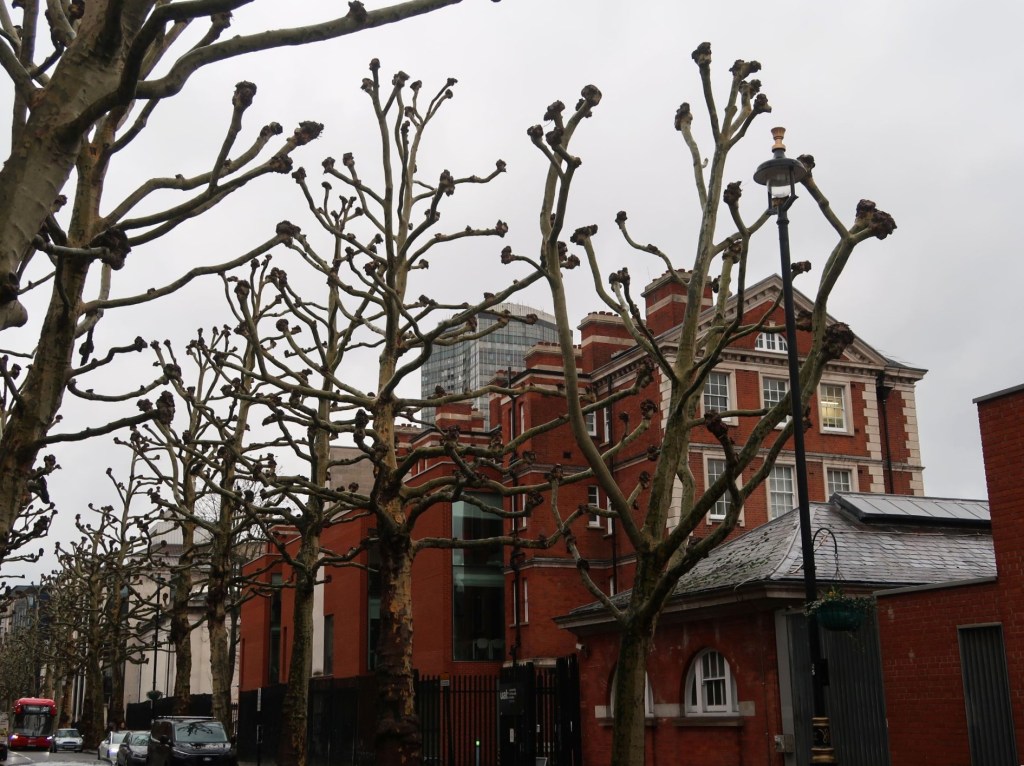
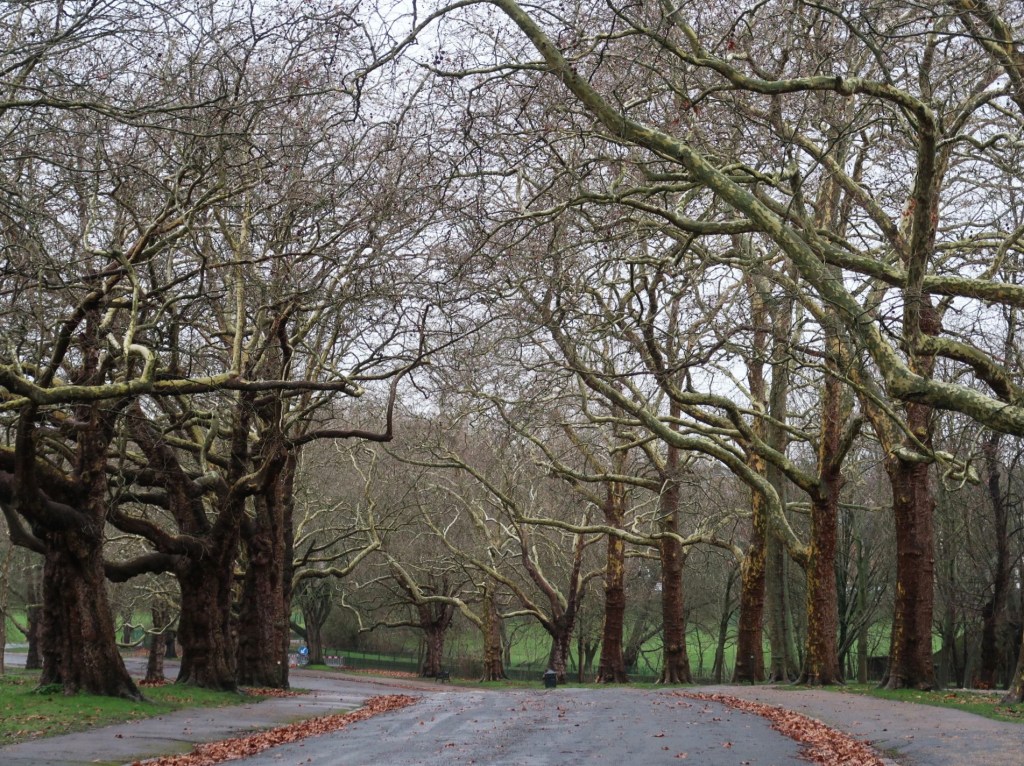
Thursday: pollarded plane trees on John Islip Street, behind Tate Britain.
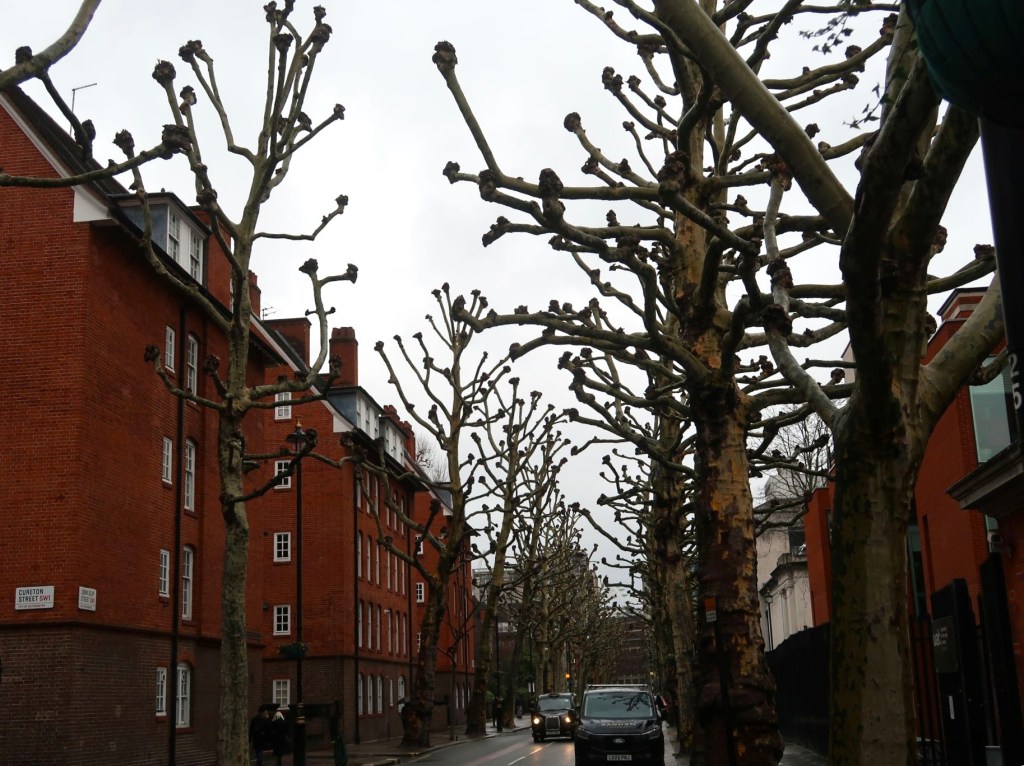
Yesterday: dancing hornbeams in Queen’s Wood.


This morning: planes in Finsbury Park.
In the popular imagination, revolutions are made by brave crowds that storm palaces and fortresses, but that is an illusion. It is extremely hard for popular movements to overthrow tyrannies that command loyal and brutal security forces – as long as they are willing to use maximal violence.
There are fewer examples of that happening that one might expect. The Russian revolution in February 1917 is often cited as the classic case of a spontaneous uprising that brings down an autocrat; but the street protests in Petrograd were only a part of the story. The Tsar sent loyal troops to the city to crush the protests and that might have been achieved but before those troops arrived, he found himself isolated in a railway carriage and, after consulting his army, he was effectively deposed by his generals – a military coup in the shadow of popular protests.
The Iranian dictator commands between 90,000 and 300,000 Basij paramilitaries, around 150,000 Revolutionary Guards. Then there is the conventional army. If the security forces remain loyal and willing to kill to maintain their position, it is incredibly hard to overthrow any regime.
The real coup de grace is almost always delivered within the palace, not the streets. The streets exert the pressure but the courtiers wield the dagger.
If the Revolutionary Guards commanders may be totally committed to the regime, what about the generals of the regular army? What if a Caesaresque Bonapartist leader emerged from the military?
It has happened before in Iran. That was how Reza Shah rose to the throne.
 Mick Hartley