• Full interview on YouTube.

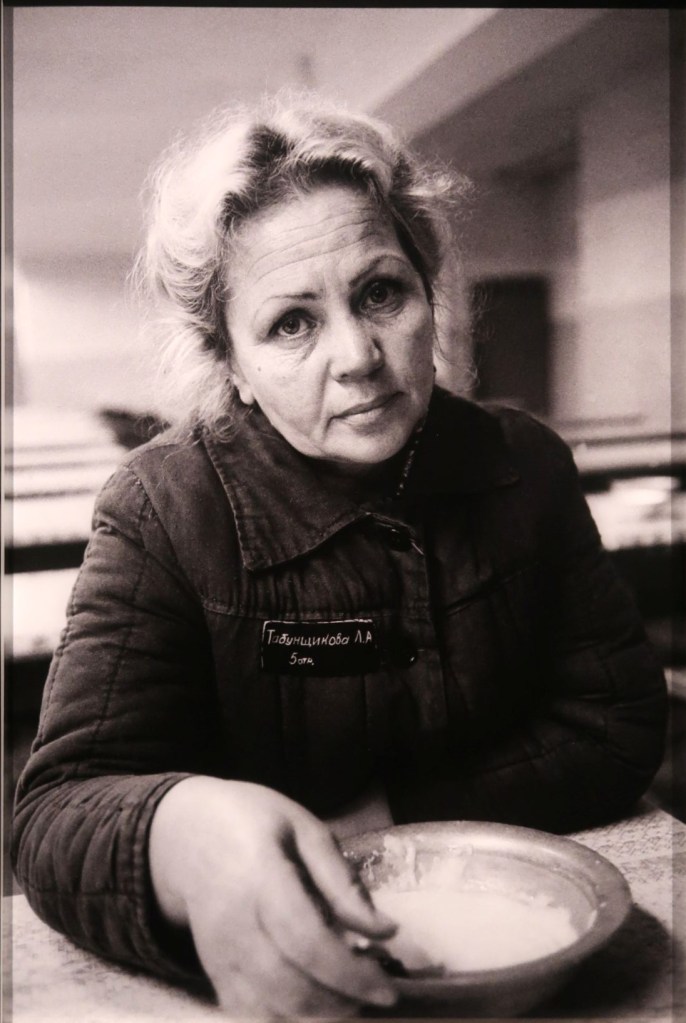
  • Portrait by Jane Evelyn Atwood, one of the four photographers shortlisted for the Deutsche Börse Prize 2026 at the Photographers’ Gallery.

    Atwood’s Too Much Time  stems from a ten-year investigation during which she accompanied incarcerated women in forty prisons across nine countries in the 1990s.

    “Inmates Dining Room, Perm Penal Colony for Women, Perm, Russia, 1990”.

  • Meanwhile:

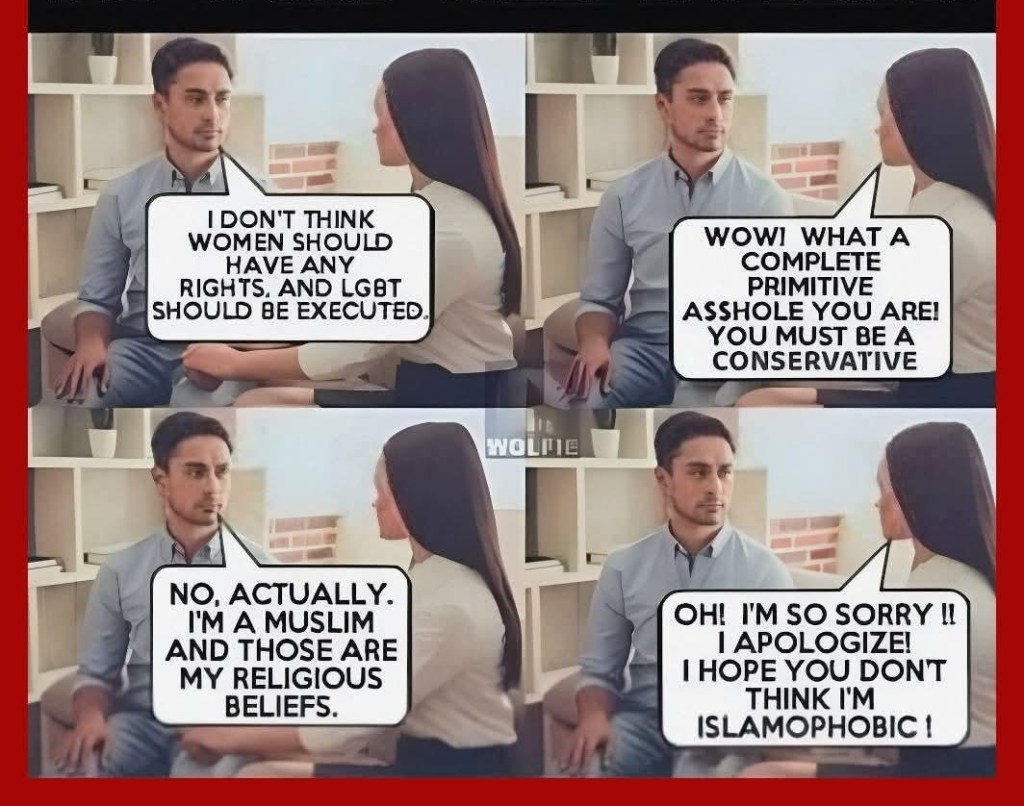
    Can this be for real? Seems to be…

  • On the other hand…..Fraser Nelson in the Times sees the problem, but offers reasons to be cheerful – “Decline in Christian belief and rise in the UK Muslim population raise hard questions, but ones our culture can answer”:

    With fewer people than ever in church tomorrow, are we still a Christian country? Are Muslims a threat to British values? Are we ignoring an enemy within? To dismiss this as bigotry is to deny justified concern about genuine scandals, perhaps the worst of which being the grooming gangs exposed by this newspaper. Then we have the British-born jihadis, the hate preachers and attitudes to women, the antisemitism: all problems cast into sharp relief after the 9/11 attacks a quarter-century ago.

    Since then, Britain’s Muslim population has more than doubled to about 6 per cent of the total and 10 per cent of children. The change is visible: women in headscarves are a far more common sight than they were a generation ago. Is that scarf a sign of someone hostile to our values, a regression on the progress made on women’s rights? It’s a difficult conversation but one we can’t afford to ignore.

    Allowing the creation of balkanised, almost-closed communities was a calamitous error, born of a failure to talk frankly about mass immigration and what it meant. But it’s also an error to be blind to the progress now; the declining segregation and bridge-building. Most of this story is told in things that don’t happen, tension that’s not there. Take this newspaper’s report about non-Muslim pupils trying a Ramadan fast alongside their Muslim classmates, curious to see what it’s like to abstain in an era of instant consumption. There’s a Jewish school in Manchester where 80 per cent of pupils are Muslim: drawn by the quality of education.

    For those of us who can remember an era where it was controversial for a Catholic boy to date a Protestant girl, all this is unexpected — and precious. It’s spilling over into streets and suburbs. During Ramadan, it has become common for Muslims to invite non-Muslims over for the meal after sundown. Such acts of community — an active rejection of sectarianism — quietly happen all over the country. “Open iftars”, once rare, are now hosted by football clubs, cathedrals and even synagogues, from Inverness to Truro.

    Any reports of mosques hosting Christian or Jewish rituals? These “acts of community” do all seem to be rather one way. Cathedrals and synagogues – even football clubs! – host Muslim-themed rituals, and feel very pleased with themselves about it, but there doesn’t seem to be very much traffic the other way.

    It was the big one, the open iftar in Trafalgar Square, that caught the headlines. Part of the ceremony is a short prayer, where men and women separate. The whole event was intended as an act of hospitality and cohesion with Jewish, Christian and atheist guests. But if you’re passing by during prayer time (as I did) it can look like Muslims closing off a national space. A Tory MP, Nick Timothy, said the praying was an act of “domination” that should never have been approved. Cue outrage.

    What was different this time was who rose to Muslims’ defence. The Jewish News (whose editor was a guest at the iftar) published a thundering editorial defending open worship. The sort of people pursuing Muslims now, it said, could come after Jews later. We then saw Anglican bishops saying the iftar was an act of hospitality not isolationism. Muslims were doing exactly what was asked of them: reaching out to others. Paying homage to their faith and, by gathering in Trafalgar Square, their country.

    Yes, but the point here is that this act of inclusion with Jewish and Christian guests – men and women separate of course – wasn’t held in a mosque or some other Muslim space. That would indeed have been a significant gesture. Instead they chose Trafalgar Square – as though it was theirs to be inclusive with, for them to make this big friendly gesture to the other faiths. But Trafalgar Square is the nation’s space anyway, not an Islamic space.

  • Michael Deacon in the Telegraph – Rory Stewart’s opinion on Islamophobia is delusional drivel;

    People who criticise Islam are racist bigots. That, at least, appears to be the judgment of Rory Stewart, the great sage of centrist podcasting.

    Speaking to The New Statesman this week, he said: “I think we’ve got to be very clear that this is basically racism… All those people on social media who are talking about ‘Judeo-Christian values’, and saying, ‘I’ve got nothing against people of colour, I just don’t like Islam’, are basically racist.”

    The problem, of course, is that Islam is not a race.

    Stewart’s outpouring of wisdom, however, did not end there. The former Tory minister went on to explain that it’s “completely demented” to single out Islam, because people do “horrible things” in the name of other religions, too.

    No doubt. The thing is, though: they don’t do terribly many of them in this country, do they? Which is probably why we don’t see “all those people on social media” fretting that Britain will suffer yet another massive terror attack by Buddhists.

    Or calling for a national inquiry into Confucian grooming gangs. And, while we’re on the subject, I haven’t heard of many teachers in Batley being forced to spend the past five years in hiding after receiving death threats from militant Quakers.

    When members of the public voice their fears that 21st-century Britain is falling some way short of a beautifully integrated multicultural paradise, therefore, our superiors shouldn’t be so quick to belittle them. Still, you can be sure they will. After the Government decided to draw up an official definition of Islamophobia, opponents predicted that it would lead to all criticism of Islam being dismissed as “racist”. And they’re already being proven right.

    Let’s just add this (via);

  • Queen’s Wood this morning:

  • Or, reimagining morality.

    Yes, that Andrea Long Chu:

    “Pornography is … a quintessential expression of femaleness.”

    “Getting f*cked makes you female because f*cked is what a female is.”

    More from Reduxx, May 2023:

    Transgender academic who credited PORN with making him want to transition receives Pulitzer Prize.

    Andrea Long Chu, born male, has a long history of comparing his feelings of ‘womanhood’ to his pornography addiction.

    In his academic writings he spoke about porn being the key to womanhood:

    “Pornography is what it feels like when you think you have an object, but really the object has you. It is therefore a quintessential expression of femaleness”

    “Sissy porn did make me trans … At the center of sissy porn lies the asshole, a kind of universal vagina through which femaleness can always be accessed.”

    His writings have been published in The NY Times and he has now been awarded a Pulitzer Prize for literary criticism.

    Still seems to be, as we see here, a darling of New York’s intellectual elite.

    And they wonder why Trump got elected.

  • The answer is that they invested in antizionism because it worked for them, both geopolitically and domestically.

    To be sure, there were many individuals in the Soviet antizionist apparatus who were driven by personal antisemitism. The Zionologists — individuals tasked with formulating the key tenets of the ideology — are the prime example.

    But at the state level, the demonization of Israel served much bigger, strategic purposes.

    It strengthened the Soviet-Arab alliance. It helped mobilize groups and states around the world against the US and the West, pulling them into the Soviet anti-Western orbit, including at the UN.

    At home, it functioned as a warning to other minorities: don’t organize around your own national interests, and definitely forget about any emigration demands.

    For the Soviets, antizionism was a tool — and a highly effective one at that. That’s why they kept using it, even when internal discussions acknowledged that their antizionist language was echoing the Protocols and Nazi propaganda.

    This is useful to understand because antizionism is still a political tool today.

    We talk a lot about antizionist hate, and there is no question that much of it is driven by that.

    But there are also political entrepreneurs who use antizionism to get ahead: to gain social media followers, raise money, advance socially and professionally, or pursue political goals.

    States do the same: witness South Africa filing its case against Israel at the ICJ or China deploying antizionist propaganda online.

    When incentives align, antizionism gets used. And right now, antizionism is rewarded. It’s a crucial aspect of its growing popularity, and it’s really important that we understand it as we develop strategies to combat it.

  • From the Times:

    A growing online trend encourages women to quit their jobs, run the home and defer to their husbands. This “tradwife” movement urges a return to traditional roles and, when researchers in the US recently set out to examine what kind of men support it, they expected to find a cohort fond of old-fashioned chivalry.

    The reality, they say, was rather different.

    Among young American men, the strongest predictor of support for the tradwife lifestyle was not gallantry but hostility towards women.

    “We were taken aback,” said Dr Rachael Robnett, a psychologist at the University of Nevada, in Las Vegas, and lead author of the study. Her team had thought that men drawn to the tradwife idea would display what academics call “benevolent sexism” — a belief that men should protect and provide for women...

    Instead, statistical tests found that the strongest predictor of male support for tradwife lifestyles was “hostile sexism”. This involves overtly negative beliefs about women, including that they manipulate men, exaggerate discrimination and should not expect equal power.

    Taken aback? Why on earth? I’d have thought this was the obvious conclusion – now backed by the evidence. Men who want good little wives in the kitchen are men who have a contemptuous view of women. What did they expect?