
• An interesting article from Georgian Natalia Antelava – why don't we tend to see Russia as a colonizer?

    My parents may have cherished Georgia’s freedom from Moscow, but somehow I had still bought into a widely accepted myth that the Soviet Union was an anti-colonial power. Both at my Soviet school, and later at university in the United States, I was taught that colonialism was something that Western countries did to Africa, Asia, and the Far East. It was only when I went to Senegal and stumbled upon the depth and ease with which I was able to relate to the anti-colonial part of the West African identity that I began to realize that I, too, was a product of “colonialism.” Until then, the struggle of non-Russian Soviet republics for independence was compartmentalized in my mind as something qualitatively different from the plight of formerly colonized people elsewhere.

    Russia's invasion of Ukraine helped to put matters into perspective.

    From Central Asia to the Baltics, from the Caucasus to Poland, activists, academics, historians, journalists, and ordinary citizens were suddenly digging up long-hidden stories of oppression, deportations, ethnic cleansing and “Russification” policies that the Kremlin had imposed on them over the centuries. Their stories were different, but the point they were making was the same: Russia’s war in Ukraine was a quintessentially colonial conflict, part of the centuries-long cycle of relentless conquest and subjugation.  

    Across Russia’s former empire, this struggle to break away from subjugation has defined generation after generation. Today in Georgia, the children of those who in 1989 protested against—and helped end—the Soviet Union are out on the same streets, protesting against the current government’s attempts to take their country off its pro-European course and bring it back into Russia’s fold…

    She notes an important difference between Western and Russian colonialism.

    The very nature of Russian colonialism doesn’t fit the Western definition of oppression. Over the centuries, while European powers conquered overseas territories, Russia ran a land empire that absorbed its neighbors. While Europeans instilled the notion that their subjects were “different” from them, Russians conquered using another device: “sameness.” In the Russian colonial system, which was subsequently refined by the Soviets, subjects were banned from speaking their language or celebrating their culture (outside of the sterilized version of a culture that was sanctioned by Moscow). In exchange, they were allowed to rise to the top….

    Ukrainian philosopher Volodymyr Yermolenko is among the most prolific voices when it comes to comparing Russian and Western colonial styles. He is also the one who first introduced me to the idea of “sameness” as an instrument of domination. The message of Western colonialism was: “ ‘you are not able to be like us’, while the message of Russian colonialism was ‘you are not allowed to be different from us,’ ” he explained at the Zeg Storytelling Festival in Tbilisi in 2023. While there were differences in the way the Russians and the Europeans constructed their empires, the result was the same: violence, redrawn borders, repression of cultures and languages, and annihilation of entire communities.

    The idea of “sameness as an instrument of domination” also explains why most well-meaning Russians I meet often seem weirdly unaware of their country being perceived as a colonial master. There are, of course, notable exceptions, but for the most part even the most liberal Russians I know seem utterly disinterested in engaging on the issue of colonialism with the country’s former subjects like myself.  Soon after the Ukraine invasion, I asked a prominent liberal Russian journalist whether he was going to introduce the topic of colonialism to his equally liberal, Russian audiences. He seemed genuinely insulted by the suggestion. “We are not colonialists!” he said. 

    One reason why the debate about colonialism is largely missing from the Russian liberal discourse is because Russia is still missing from the debate about colonialism in the West. Yermolenko believes that when it comes to colonialism, the Western intellectual elite went from one extreme in the 19th century to another in the 21st. “They went from saying, ‘we are the best and no one can compare to us’ to saying, ‘we were the worst and no one can compare to us,’ ” Yermolenko says. 

    Georgian historian Lasha Bakradze takes the argument a step further: “At the heart of this inability to understand, accept and analyze other forms of colonialism lies, paradoxically, the West’s own colonial mentality. This is where skeletons of Western colonialism are really buried.” 

    For two decades, these self-imposed limits of Western debate about colonialism have given the Kremlin an enormous propaganda advantage, enabling Putin to position Russia as an anti-colonial power, and himself as the champion of all victims of European colonialism. They have also shaped our own, self-imposed, compartmentalized frameworks through which we understand oppression. 

    It's not just Russia that's escaped any post-colonial reckoning. As I've noted before, Arab imperialism seems to get a free pass – and now, with cries of "Zionist imperialism", they're the greatest victims ever for the Free Palestine crowd, even as Arab militias continue their genocidal assault on black Africans in Darfur.
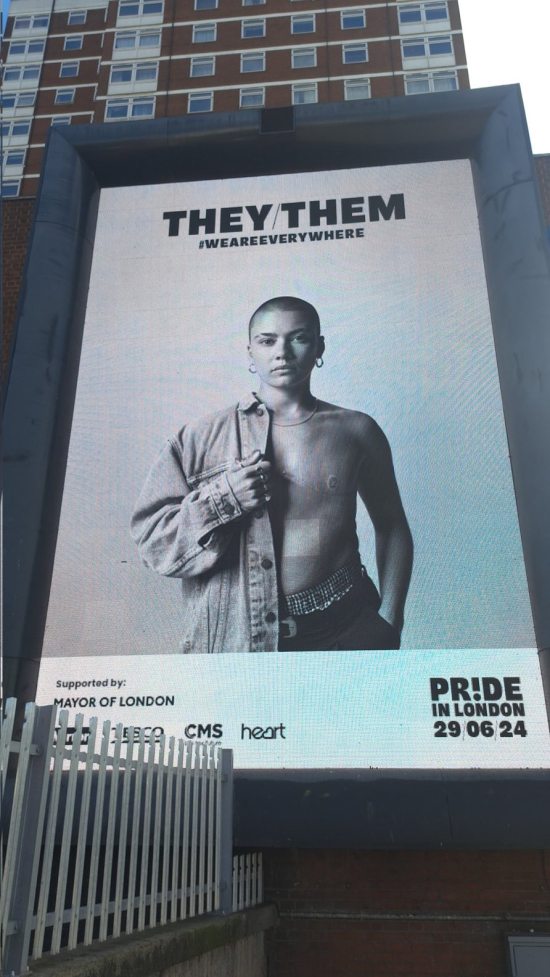
  • Gender ideology requires a return to the old sex stereotypes of what men and women should look like. It's also, as Victoria Smith points out, a return to childish thinking, which most of us grow out of:

    Young children, it is often claimed by progressive types, are far more open-minded than adults when it comes to questions of sex and gender. You don’t hear the average five-year-old whining about sex-based rights or complaining that cis is a slur. If someone says they are a woman, no one in reception class is going to ask about their gametes. As long as this person has long hair or some suitably feminine accessories, that will be evidence enough.

    Alas, this is not because each child is born a mini-Judith Butler, wise in the ways of queering, at least until cisheteronormative patriarchy gets to them. It’s because even the most intelligent children can draw stupid conclusions due to their lack of experience of the world (Butler, who is 68, has no such excuse).

    As developmental psychologist Kate Alcock points out, until the age of around seven “children think that when something changes its appearance, its underlying reality changes”. If someone has short hair, they must be a boy; if they put on a dress, they become a girl. Realising that sex is constant and cannot be changed has long been understood to be an important developmental stage. Children who have not yet reached it will of course be more receptive to the idea that someone such as Pips Bunce is a woman on some days, a man on others, depending on hair and clothing choices.

    Most adults do not think this because most adults grow up. Even those who believe there is such a thing as being born in the wrong body do not generally think that this can be solved by one trip to Toni & Guy (they tend to opt for full-on medical scandals instead). Yet recently I’ve noticed that there are some people who have drifted into adulthood still unaware that having a haircut isn’t magic. It is incredibly strange.

    If a young female celebrity has short hair, there’s a good chance she won’t be identifying as a woman. Countless articles recommend “non-binary haircuts to embrace your gender identity”, while Apple’s “non-binary” emojis are nothing more than random people with medium-length hair. In one TikTok video, an obviously female person with a nice pixie cut seeks to defy the imaginary “Karens trying to kick [her] out of the toilet” due to her apparent androgyny. Even if we are assured that “gender begins with one’s soul or one’s interior life before it manifests itself into a haircut”, this really feels like a long-winded way of saying “certain ways of presenting are not usually for girls”. We are witnessing a new conservatism, one that is only reinforced by those who consider themselves super-rebellious for tinkering at the edges….

    It's weirdly regressive is what it is. Childish sexist stereotypes dressed up as progressive.

    Changing your appearance doesn’t change your sex, and if people judge you for looking “less feminine”, it is because they notice your sex, not because they don’t. The sad thing is, feminism already had the solution to this. It is better to think like a feminist than a child. 

  • https://platform.twitter.com/widgets.js

    Pride

  • It's the article we've been waiting for. Gender-inclusive language in midwifery and perinatal services: A guide and argument for justice. The abstract:

    Effective communication in relation to pregnancy and birth is crucial to quality care. A recent focus in reproductive healthcare on “sexed language” reflects an ideology of unchangeable sex binary and fear of erasure, from both cisgender women and the profession of midwifery. In this paper, we highlight how privileging sexed language causes harm to all who birth—including pregnant trans, gender diverse, and non-binary people—and is, therefore, unethical and incompatible with the principles of midwifery. We show how this argument, which conflates midwifery with essentialist thinking, is unstable, and perpetuates and misappropriates midwifery's marginalized status. We also explore how sex and gender essentialism can be understood as colonialist, heteropatriarchal, and universalist, and therefore, reinforcing of these harmful principles. Midwifery has both the opportunity and duty to uphold reproductive justice. Midwifery can be a leader in the decolonization of childbirth and in defending the rights of all childbearing people, the majority of whom are cisgender women. As the systemwide use of inclusive language is central to this commitment, we offer guidance in relation to how inclusive language in perinatal and midwifery services may be realized.

    Yep, they've really drunk the kool-aid.

    The notion of childbearing having a necessary or logical belonging within the nuclear two-parent family initiated by heterosexual couples whose gender has a normative relationship with their sex assigned at birth is a recent development in our human history, and one still inconsistently observed around the globe. Indeed, community and extended family are often as, if not more important. Yet, more recently and particularly in the Global North, perinatal and midwifery services have been positioned as “woman” centered and understood exclusively in heteropatriarchal and cisnormative terms. There is increasing recognition that such understandings are colonial in nature and do not acknowledge gender diversity. Thus there have been calls for reform through the development of inclusive guidelines and policies to be reflective of all who birth. However, there is a conservative counter-resistance calling for the continued use of “sexed language”. In this paper, we will illustrate how such a move inadvertently reinforces the structures that presently oppress all birthing people, the majority of whom are cisgender women, and midwifery itself.

    I have nothing to add.

    [Via Ophelia B]

  • Brendan O'Neill at Spiked on Blair's latest dramatic intervention:

    Here’s everything you need to know about Keir Starmer. When Rosie Duffield, one of his MPs, suggested only women have a cervix, he publicly denounced her. He gave her a Stalinoid dressing down as if she had deviated from some sacred doctrine. That is ‘not right’, he thundered. It is ‘something that shouldn’t be said’, he insisted. And yet when Tony Blair said similar this week – that only a woman ‘has a vagina’ – Starmer lauded him. ‘Tony’s right about that’, he gushed about his dear old chum.

    How striking that he damns a woman and cheers a man for giving voice to the same idea. If only there was a word for that, for treating people differently depending on their sex, for rewarding men more highly than women for doing the same job. In this case, the job of reminding a world gone nuts that women and men have different bits.

    This is the news that – ‘FINALLY’, in the words of the Daily Mail – Starmer has twigged that women don’t have cocks. Blair said in a magazine interview that he was ‘of the school that says, biologically, a woman is with a vagina and a man is with a penis’. The Telegraph asked Starmer what he thought of Blair’s comments. ‘He put it very well’, he said. ‘I agree with him on that.’

    Didn't he just put it well? If only someone had told Starmer that earlier – what a lot of fuss and bother he'd have saved himself.

  • Hezbollah MP Mohammad Raad on Russia Today TV – we should “invest” in western university students protesting for Palestine: Hezbollah needs to use them in order to enter the heart of Western societies.

    No need to invest: they're doing a great job on their own, these students.

    Hezbollah means "Party of God". It's a fundamentalist Shi'ite group that fights for the destruction of Israel and the worldwide triumph of Islam, and pledges allegiance to Iran's supreme leader. Just so we're clear.

  • I posted this last month:

    https://platform.twitter.com/widgets.js

    Now a coach who complained has been sacked. A Reduxx report:

    The head track and field coach at a high school in Oregon has been fired after writing letters to state officials expressing his concerns about allowing biological males to compete with girls.

    John Parks, who had been employed at Lake Oswego High School since January of last year, says his contract was terminated shortly after he began speaking out against trans-identified males self-identifying into female races.

    Parks explains that he first wrote the Oregon Student Activities Association with his concerns just before the controversial May 18 state championships where a trans-identified male student participated with the girls.

    The student, Aayden Gallagher, had been the source of much outcry after dominating a number of races in the qualifying matches leading up to the state championships. In April, Gallagher won multiple awards in Girls Varsity races, but he finally secured his place at state on May 9 when he took two gold medals at the Portland Interscholastic League meet.

    Gallagher ultimately seized first place in the Girls Varsity 200m at the championships, and was booed upon taking the winner’s podium.

    It was either acknowledge that it's a grotesque charade having men compete in girls athletics, or get rid of the trouble-maker who points this out. So yes – get rid of the trouble-maker. Easier all round for the people who matter. Though not for the coach and the girl athletes, obviously…

  • From Haaretz – Columbia task force reveals full extent of antisemitism on campus since Oct. 7:

    One professor encountering a Jewish-sounding surname while reading names before an exam asked the student to explain their views on the Israeli government's actions in Gaza. Another told their class to avoid reading mainstream media, declaring that "it is owned by Jews." A third revealed a student's complaint about an offensive comment regarding Jews by publicly displaying their email to fellow students.

    Several times, professors encouraged students to participate in pro-Palestinian protests or the Gaza Solidarity Encampment for extra credit, or conducted classes at protest sites. Other incidents included students wearing Jewish symbols having them torn from their person. Some were pushed out of student clubs they had been part of because they did not want to participate in group actions and statements against Israel's right to exist.

    These are just a few of the hundreds of testimonies the Columbia Task Force on Antisemitism has documented that detail harassment, intimidation, discrimination and exclusion against Jewish students by professors and fellow students at the New York university since the October 7 Hamas massacre and subsequent war in Gaza…

    No surprise to hear that professors are leading the way = but still shocking.

  • From the Telegraph:

    A University of Oxford museum will not display an African mask because the culture which created it forbids women from seeing it.

    The decision by the Pitt Rivers Museum is part of new policies in the interest of “cultural safety”.

    The museum has also removed online photos of the mask made by the Igbo people in Nigeria, which would originally have been used in a male-only ritual.

    Masks are a central part of Igbo culture, and some masquerade rituals carried out by men wearing the ceremonial objects are entirely male-only and carried out in secret away from female spectators.

    The new policy, a first for a major British collection, comes as part of a “decolonisation process” at the Pitt Rivers Museum, which is aiming to address a collection “closely tied to British Imperial expansion”.

    An online trigger warning on the museum’s collection database states that the Igbo mask “may be culturally sensitive” and “not normally be used in certain public or community contexts”.

    The wooden mask has been given the label “must not be seen by women”, is not on display, and has no photographs available to view online.

    A note on the museum website explains that, while photographs exist, curators “are unable to show the media publicly”.

    This effort to ensure that women do not see the mask follows a suite of policies aiming to ensure “cultural safety” with regard to taboos around secret ceremonies, human remains, nudity and gender roles.

    Concerns have been raised.

    Ruth Millington, an art critic and author, whose book Muse tackles the female subject, has raised concerns about the push for synergy creating a dangerous precedent.

    She said: “To deny all women, of all cultures, sight of something because that is a taboo in one particular culture seems an extreme stance, particularly given that this country is a modern, liberal and enlightened society.

    “Surely women should be given the right to decide, after reading about any cultural sensitivities, if they wish to look upon the artefact or not. When it comes to art, we should all have equal rights, regardless of sex, to view what we would like to.

    “Does this position also imply that only male curators in the museum can handle, care for and interpret this object? This stance seems to imply that no woman has ever seen the mask, which I think is highly unlikely.

    “As a feminist art historian, I now want to see it all the more.”

    You can see the dilemma. To put the mask on show to the general public – members of, as Ruth Millington puts it, a modern, liberal and enlightened society – would imply that we are now in a superior postion to the Igbo, and look, with a degree of colonial condescension perhaps, on the artefacts of a more primitive society. That would never do in a time of decolonisation and cultural sensitivity. On the other hand to put the mask on display to men only, thus respecting the cultural significance of the mask, would be even worse – living as we do in that, yes, modern, liberal and enlightened society.

    Hmm. So we stick it away in the bottom drawer….to show how, um, modern, liberal and enlightened we are.

    Update: see statement from Prof. Laura Van Broekhoven, Director of the Pitt-Rivers (link in comments). "This is a non-story…."

  • Jo Bartosch in The Critic, on Gareth Roberts' analysis of how trans activists took over the gay rights struggle:

    Have you ever seen footage of a beetle moving under the control of a parasite? Hollowed out, the horrifying, brainless critter stumbles forward as a hostile entity compels its legs to take stilted steps. This is the grisly picture that comes to mind reading Gareth Roberts’ Gay Shame: The Rise of Gender Ideology and the New Homophobia

    In his riotously funny yet gravely depressing polemic, Roberts charts how trans activists took over the once worthy gay rights struggle, devouring the hosts from the inside out and setting the animated corpse on a path to oblivion. 

    Roberts is ruthless in his appraisal of gay male culture, dissecting it with the withering accuracy of a queen critiquing the sartorial choices of passers-by from a Soho café. And he displays basalt balls when taking on his brethren by facing up to gay male misogyny and tweaking the plastic nipples of drag queens. 

    He is explicit about the “percolating resentment and sexual jealousy of women” of many homosexual men. He traces these sentiments from the closed male communities of his youth where “open disgust for women’s bodies and anatomy” was the norm, through to Ru Paul’s Drag Race, where gay men make jokes about women’s sexual organs for a mass television audience.

    This deep-rooted, unspoken envy of womanhood that many gay men harbour is why, Roberts says, so many cheer on the young women chopping off their breasts to become simulacra of men. It is also, he argues, behind the attitudes of men such as Owen Jones, who profess to believe that “trans women are women” until they decide to find a surrogate to start a family. 

    He pithily notes that to such gay male trans activists “a man becomes a woman with a click of his fingers; and a womb is a free-floating commercial service that some people just happen to possess”.

    The book follows the illogical logic of transgenderism to its end point: the “elimination of homosexuality — as taken to the extreme in the ideology of the Iranian state”.

    Queers for Palestine, anyone?