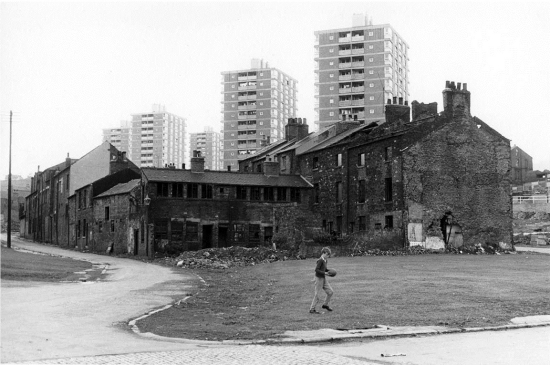
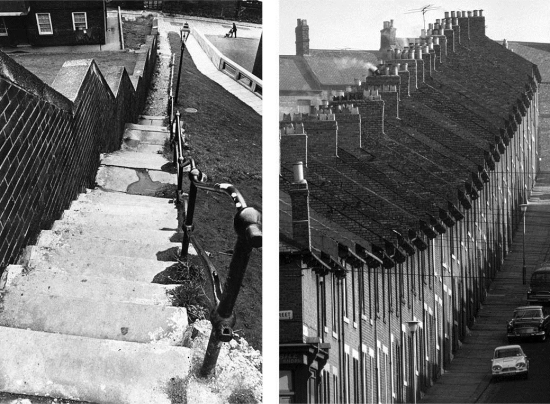
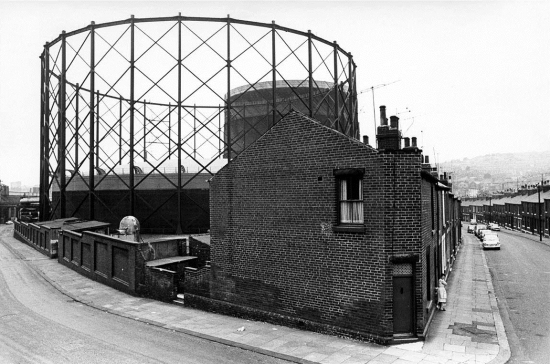
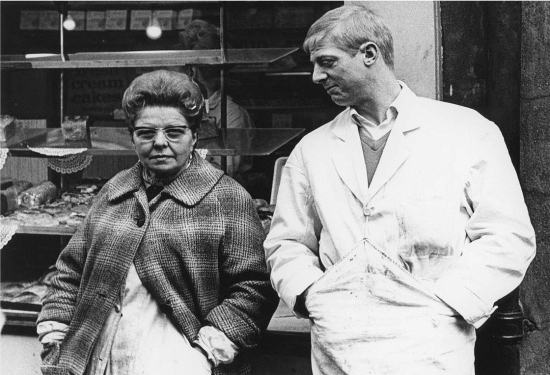
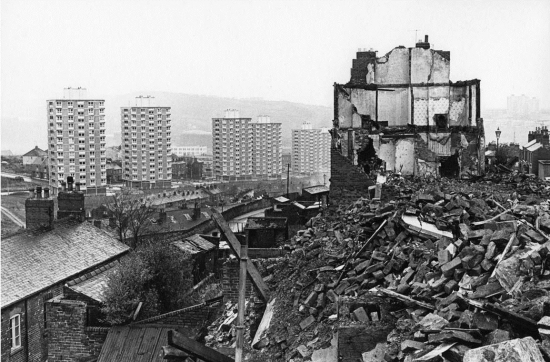
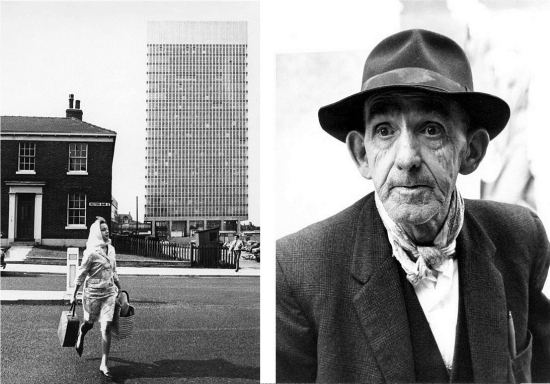
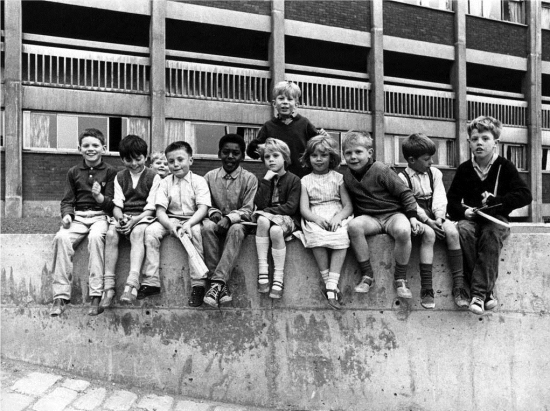
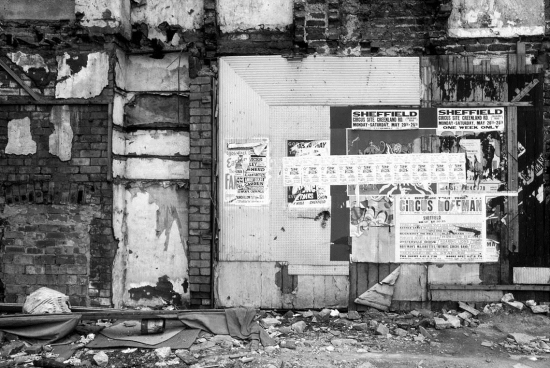
Photographer Robert Blomfield, in the latest from Café Royal Books:




[Photos © Cafe Royal Books/robert Blomfield]

Politics and Culture
Photographer Robert Blomfield, in the latest from Café Royal Books:
[Photos © Cafe Royal Books/robert Blomfield]
#Corrie matriarch Rita ❤️. As far as I'm concerned, this is the final nail in the coffin of #nodebate Sweet.@BluskyeAllison @Glinner @DreyfusJames @MForstater @HJoyceGender @JeanHatchet @beatrixcampbell @sexbasedrights @63_susan @AjaTheEmpress @MrMennoTweets @moleatthedoor pic.twitter.com/nLpEMxaWbl
— sue green adult human female (@AKAsusangreen) September 6, 2024
Psychotherapy and Jews – they were made for each other. The talking cure. In the golden years of psychoanalysis – the Fifties, say – I imagine the number of Jews as Freud's practicing disciples in New York, putting in the hours by the couch, would have been something on the preponderant side. Not for nothing was it called a "Jewish science": from Freud onward all the main psychoanalytic theorists were Jews (at least until Jung came along, found it all a bit too Jewish, and headed off on his own little mystical crusade). Woody Allen probably helped too, later on. Of course it's by no means all psychoanalysis nowadays, but Freud is still the grandaddy of the therapy business. So this article by Jay Deitcher in Tablet should come as no surprise – When Your Therapist Hates Israel. It's not a problem all of us share, but still, yes, there are issues…
Like many Jews around the world, Rosie found herself spiraling post-Oct. 7, watching news 12 hours per day, debating folks online, and feeling her friendship circle dwindling. After she posted about the massacres online, she lost clients of her Kingston, New York, tarot-reading business.
“The day of Oct. 7, I completely shut down and went into survival mode,” said Rosie. “I was not OK.”
During her third session with a new therapist, Rosie (we’re using therapy clients’ first names to protect their privacy) broached the subject of the massacres, and her emotional distress. The non-Jewish therapist told her flatly, “Everything happens for a reason.”
Rosie is far from alone. Post-Oct. 7, many Jewish clients across the political spectrum have attempted to process Israel-related issues in therapy, yet had their feelings dismissed—often, though not always, by non-Jewish therapists….
Finding a Jewish therapist was essential for a client named Rachel after working with her previous therapist through middle school, high school, and college. “The therapist knew everything about me,” she said, including that her grandmother was a Holocaust survivor. After Oct. 7, when Rachel broke down in tears about the antisemitism she was witnessing, her therapist told her that the videos she’d watched from the massacres were “spliced together” and “fake.”
“What about the 16,000 dead Palestinians?” her therapist asked.
“My brain kind of just shut off,” Rachel told me. “She was just talking, and I was in a bubble, like, ‘What is happening here? People are tearing the kidnapped posters off. How could you just be so cold-hearted?’”
“I need to leave this conversation,” she remembered saying to her therapist. “I don’t feel safe.” Her Zoom session ended with the click of a button.
Soon Rachel found a new therapist who shared her Jewish background. “After Oct. 7, I need to make sure that [my therapist is] Jewish,” she said, “because [non-Jewish therapists] don’t understand, they won’t understand it.”
I don't know. Considering what so many Jews in Israel are going through, it's hard to work up much sympathy. But there are more serious concerns.
Since the attacks, therapy organizations that claim to be progressive, such as the social justice-oriented Inclusive Therapists, have flooded social media with watermelon emojis, referring to the war in Gaza as genocide. Other groups have been criticized in long Reddit threads for being too supportive of Israel (“So frustrated with ‘liberal’ therapists,” one thread is titled). Suddenly, stating you are anti-Zionist is a prerequisite to being added to therapist listservs, and there was even a Zionist therapist blacklist being passed around, made up mainly of Jews. Safe places where therapists go for support have veered to one extreme or the other, leaving clinicians feeling alone.
Even in therapy, perhaps the Jewish profession par excellence, the post-October 7th poison has been at work.
There's no excuse not to know about the Taliban's treatment of women: it's made the news often enough recently. So why is nothing being done? Janice Turner in the Times:
The Afghan men’s cricket team is one of 12 Test match sides. The limited-overs team competed in last year’s World Cup — with prestigious victories over Pakistan and England — and on Monday in India the Test side will play New Zealand. Why? The only possible answer is that the international community cares not a damn for Afghan women.
Among the Taliban’s first acts when it roared into Kabul three years ago was banning the women’s cricket team, exiling some players and threatening to kill those who remained if they picked up a bat again. Sport was only the first joy removed from Afghan women’s lives.
The Taliban is certainly thorough. First it stopped girls attending school and university, removed women from most jobs and demanded they cover themselves in chadors head to toe. Then it pondered other female pleasures, barring women from gyms, beauty salons, hairdressers and public parks, and making shopping trips, eating out, even buying a coffee illegal without a male chaperone. But a few chinks of happiness remained, so last month it banned the female voice from singing, reciting and speaking in public….
Later this month, in the UAE, the Afghan men’s cricket team will play South Africa. A bitter irony. Throughout the apartheid years, sporting boycotts were used to pressure Pretoria to end violent white supremacist rule and to punish its bar on black cricketers. The world took a moral stand: we refused to fill stadiums with cheering fans for a racist state.
Without wishing to diminish that evil regime, the Taliban is a far more meticulous oppressor. Black children received an inferior education but could still attend school. Black people were barred from many jobs and received pitiful pay yet could still earn a living. Those corralled into black townships kept the most basic human freedoms: to play music and sport, to dance, sing, laugh and chat with friends, or simply feel the breeze in their hair….
It is hard, everyone admits, to have leverage over the Taliban. It has crushed opposition, closed itself to the West. To make food aid conditional on allowing girls back to school could lead to mass starvation. Campaigners say the Taliban doesn’t care. Its leaders pocket enough stolen wealth to afford huge houses, several wives and to keep their families safe — and their daughters educated — in Gulf states. Subject to Russian-style travel bans, they nonetheless fly private jets to Dubai for health treatment, while an unaccompanied Afghan woman cannot hail a taxi to take her sick child to hospital.
International silence about the regime is born of shame. America is embarrassed by the fiasco it caused by precipitously pulling out its forces. Afghanistan, once a noble, liberal, democratic project, is a failure never to be spoken of again. We tried for 20 years is the conceit, but abandon a garden and nature surges back. What do you expect when civic society, especially the participation of women, was alien to Afghan culture?
Campaigners are enraged to hear that female advances in every sphere of life, from law to sport, were a mere blip. They say the Taliban’s edicts are neither social “norms” nor Islamic law but mechanisms of social control (and of men, too, who are brutally punished for not keeping “wayward” womenfolk in check). What they endure needs a name and in October the UN legal committee will debate codifying a new crime against humanity into international law: gender apartheid. Existing laws address abuse of women but campaigners, from Nobel laureates to Amnesty, believe none fully capture the codified, systemic abuse of Afghan women.
This new crime could allow the prosecution of the Taliban in international courts and would declare its unique evils to the world. Could the International Cricket Council keep an apartheid nation on its fixture lists? Boycotting the Afghan team would not be a peevish act but the deployment of a rare political lever against the Taliban, which permitted the men’s game when it forbade all other pastimes. Its leaders both love the sport and know a ban would be too unpopular to sustain. Afghan players pose regularly with Taliban chiefs, who relish victory over a team such as England. A boycott would hurt.
Like many women observing an unfolding dystopia that exceeds even the The Handmaid’s Tale, I’ve despaired that there is anything we can do for Afghan women. But there is: it starts with regarding their human rights as no more negotiable than those of black South Africans and treating the Taliban as what it is, the ruler of an apartheid state.
The power of cricket? We shall see.
Hamas doesn’t want a ceasefire: The German newspaper "Bild" revealed today Hamas' military strategy and its deception tactics based on a document discovered from Hamas' military intelligence, found on a computer in Gaza, signed by Yahya Sinwar.
This document, approved… pic.twitter.com/ZLBJhA0894
— Hen Mazzig (@HenMazzig) September 6, 2024
https://platform.twitter.com/widgets.js
Full text:
Hamas doesn’t want a ceasefire: The German newspaper "Bild" revealed today Hamas' military strategy and its deception tactics based on a document discovered from Hamas' military intelligence, found on a computer in Gaza, signed by Yahya Sinwar.
This document, approved personally by Sinwar in the spring of 2024, outlines how Hamas manipulates the international community during ceasefire negotiations and details its strategy, which includes inflicting psychological pressure on the families of hostages and delaying the end of the conflict.
The document reveals that Hamas has no intention of ending the war quickly, nor does it care about the suffering of the Palestinians in Gaza. Its main focus is to preserve the organization's military capabilities to act against Israel.
The document also mentions an additional goal of "exhausting Israel's military and political systems" and emphasizes increasing international pressure on Israel.
Hamas does not aim for a swift end to the war that would alleviate the hardships of Gaza's residents. On the contrary, the document suggests prolonging negotiations to improve key terms, even if this means delaying the talks.
Despite acknowledging that Hamas' military capabilities have weakened, the document does not call for a rapid conclusion to the conflict. Instead, it dismisses the damage in Gaza and the thousands of casualties, showing no concern for these issues.
One of the key tactics outlined in the document is the continued application of psychological pressure on the families of the hostages to increase public pressure on the Israeli government. It is stated that during the second phase of the negotiations, Hamas plans to allow the Red Cross to visit some of the hostages as a "goodwill gesture," intended to send messages to their families and extend the ceasefire.
The document also includes Hamas' demands and strategies to manipulate the international community in order to strengthen its position. For instance, Hamas representatives are instructed to propose the placement of Arab forces along Gaza's eastern and northern borders with Israel. These forces would act as a buffer to prevent Israeli forces from entering Gaza until Hamas fully restores its military capabilities.
Additionally, the document outlines how Hamas intends to ensure that Israel is blamed for any failure in negotiations by framing it in public statements as the obstacle to an American-backed deal.
One significant point of contention, the Philadelphi Route, which Hamas has prioritized in current negotiations, is notably absent from the document.
Despite its public emphasis on this issue, the document fails to mention it, further illustrating Hamas' focus on military and strategic gains rather than addressing the humanitarian crisis in Gaza.
Kim Jong-un. as we all know, likes to wear baggy pants…
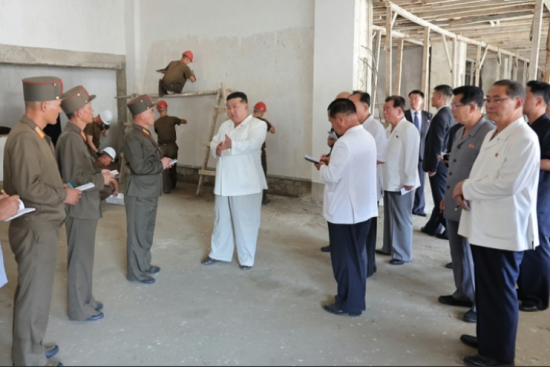
It accommodates, and perhaps helps to camouflage, his substantial girth. It is not, though, a style to be emulated.
As North Korean authorities intensify a crackdown on youth fashion, they’ve begun targeting young people who imitate Kim Jong Un’s clothing and hairstyle, particularly those who wear baggy pants similar to the leader’s. The unexpected crackdown, which began in early August in Chongjin, is being enforced by the Socialist Patriotic Youth League.
Speaking on condition of anonymity, a source in North Hamgyong province told The Daily NK on Wednesday that North Korean youths call the baggy pants, which have far more legroom than other pants, “supreme leader pants.”
The sartorial choices of Kim Jong Un or his family often become trendy when they appear on television or in newspapers. As Kim’s baggy pants have become popular recently, students at Chongjin Railway University, Chongjin Medical University and other major universities in Chongjin have taken to wearing them.
However, the Socialist Patriotic Youth League organizations began cracking down on young people wearing baggy pants in early August, saying that “the pants looked good on people with robust figures like the supreme leader, but they looked bad on smaller-framed people,” according to the source.
In fact the wearing of "supreme leader pants" might be seen as a rather unwelcome reminder that Kim Jong-un is substantially fatter than the people he rules over.
“They crack down on shorts, claiming they do not go with the socialist lifestyle, but with baggy pants, they just crack down on them without explanation. However, they just warn us not to wear them. They don’t publicly criticize us like they do when we wear tight pants or shorts,” he explained.
“Baggy pants, known as ‘supreme leader pants,’ are so baggy that they can make you look like a scarecrow, so it seems that Pyongyang has quietly issued a fashion crackdown on people who wear them out of concern that such an image could be associated with Kim.”
Authorities have also cracked down on young people who wear their hair like Kim.
“University students are encouraged to wear their hair long on the sides and short on top, and they are cracking down on the so-called supreme leader hairstyle, with the sides cut almost to the scalp and the top left long,” the source said.
The organizations enforcing the crackdown have yet to explain exactly why they are objecting to the hairstyle. However, the source suggested that they may believe that “calling it the ‘supreme leader’s hair’ is itself a problem.”
Some people find it “very confusing” that “even following what the Supreme Leader does is a problem,” the source said.
“They didn’t stop people from wearing windbreakers and platform shoes when Kim Jong Il was in power, but now they’re stopping you from wearing see-through clothes like Kim Jong Un’s daughter, or baggy pants and leather jackets like Kim himself. Now that they’re cracking down on the supreme leader’s hairstyle, some people are whispering that it seems like they’re trying to separate the Paektu bloodline from the people.”
Well yes. Isn't that the whole point?
Another look at the terrible dilemma that Israel faces – to bring back the hostages, or to defeat Hamas. Bret Stephens in the NYT (via Jerry Coyne):
Since the days of Abraham — who, according to Genesis, rescued his nephew Lot after he’d been seized by an invading army — Jewish tradition has placed supreme value on the redemption of captives. It is, in a sense, the fulfillment of a primary, implicit commandment: to be one’s brother’s keeper. It is also a source of Jewish communal cohesion over millenniums to never forsake those who have been taken, even if only to give them a proper burial.
It’s also, to mix references from antiquity, a Jewish Achilles’ heel.
In 2006, an Israeli soldier named Gilad Shalit was captured by Hamas and held in Gaza. He was released five years later in exchange for more than 1,000 Palestinian security prisoners — a euphemism, in many cases, for terrorists. The deal, which was approved by Benjamin Netanyahu, the prime minister of Israel, included the release of Yahya Sinwar, the mastermind of Oct. 7.
These two reference points are now at the heart of the debate Israelis are having about what comes next in Gaza. Huge demonstrations in Tel Aviv, coinciding with the heartbreaking funerals of six murdered hostages, have demanded that the prime minister agree to a cease-fire deal to obtain the release of additional hostages, at the cost of conceding one of Hamas’s core demands: an Israeli withdrawal from a strip of land known as the Philadelphi Corridor, which separates Gaza from Egypt. Netanyahu has refused, insisting in a news conference on Monday that Israeli forces will not leave.
Netanyahu is right, and it’s important for his usual critics, including me, to acknowledge it.
He’s right, first because the highest justification for fighting a war, besides survival, is to prevent its repetition. Israel has lost hundreds of soldiers to defeat Hamas. Thousands of innocent Palestinians have died and hundreds of thousands have suffered, because Hamas has held every Gazan hostage to its fanatical aims. Hamas was able to initiate and fight this war only because of a secure line of logistical supply under its border with Egypt.
Israel’s control of the Philadelphi Corridor largely stops this. To relinquish it now, for any reason, forsakes what Israel has been fighting for, consigns Palestinians to further misery under Hamas and all but guarantees that a similar war will eventually be fought again. Why do that? […]
Whatever one thinks of Netanyahu, the weight of outrage should fall not on him but on Hamas. It released a video of a hostage it later murdered — 24-year-old Eden Yerushalmi, telling her family how much she loved them — on Monday, the day after her funeral. It’s another act of cynical, grotesque and unadulterated sadism by the group that pretends to speak in the name of all Palestinians. It does not deserve a cease-fire so that it can regain its strength. It deserves the same ash heap of history on which, in our better moments, we deposited the Nazis, Al Qaeda and the Islamic State.
There are bright people who say that what Israel ought to do now is cut a deal, recover its hostages, take a breather and start preparing for the next war, probably in Lebanon. Israelis should remember that wars will be worse, and come more often, to those who fail to win them.
Als0 – what agreement can there ever be with Hamas over the hostages? They simply cannot be trusted. When the six hostages were about to be rescued in Rafah, they were brutally and coldly murdered.
One side in this war places a supreme value on saving lives, while the other places none – and views the lives of both Israelis and Gazans as expendable bargaining chips. How do you fight a war against an enemy that not only doesn't care about the number of deaths on its side, but actively welcomes them?
Naturally, in the state we're in, we see thousands and thousands of demonstrators in our cities lauding the killers as freedom fighters, while shouting mindlessly about "genocide" against the Palestinians.
June 17, 1938. Washington, D.C. "No more hot air in Congress. Two million cubic feet of clean, cool air is delivered to members of Congress each minute by a $3,500,000 air conditioning plant, part of which is shown above. The plant supplies the entire Capitol and the Senate and the new and old House Office Buildings."
[Photo: Shorpy/Harris & Ewing]
At Prime Minister’s Questions yesterday, Keir Starmer claimed that the decision to suspend 30 of the UK’s 350 arms export licences to Israel was a “legal decision not a policy decision”. Not so, says Kemi Badenoch:
The former business and trade secretary said in a lengthy post on X/Twitter: “It is not true that the removal of Israel arms licences was a legal decision. Keir Starmer should not hide behind this fig leaf. It was *very* much a political decision… I know this, because as trade secretary, responsible for arms licences, I saw the legal advice.”
She accused Labour of being scared of anti-Israel activists and contrasted that approach with her own time in office: “I made a considered decision to maintain all existing licences for arms exports to Israel. Union-backed civil servants threatened to stop work and go on strike. My response was not to make concessions but to make it clear that they were there to deliver the government’s agenda. Not their own.”
Badenoch continued: “The Labour government has once again prioritised the mob over UK interests, making politically charged foreign policy decisions that lack legal reasoning and weaken our position in the global fight against Iran and her terrorist proxies.”
The Tory leadership contender also questioned why the government reached this decision even though advice from the Foreign, Commonwealth and Development Office stated that "it has not been possible to reach a determinative judgement on allegations regarding Israel’s conduct of hostilities."
“If it hasn't been possible to reach a judgement why are licenses suspended?,” she asked rhetorically before accusing the government of “playing around” with Britain’s defence industry and national security and harming Britain’s relationship with the United States and Israel.
Floods have hit North Korea, and it's all hands to the pumps. From the Daily NK:
On Aug. 6, North Korean leader Kim Jong Un attended a ceremony for the Mount Paektu Heroic Youth Shock Troops, who were assigned to clean up flooded areas, in the square in front of the April 25 House of Culture in Pyongyang.
“Less than a week after the decision to send the Mount Paektu Heroic Youth Shock Troops to build houses in the flood-stricken areas of Sinuiju and Uiju county, nearly 300,000 young people have decided to take part in the reconstruction work. I want to show the world what noble young people we have in our country,” Kim said at the ceremony.
The reality is less inspiring.
While North Korea claims that 300,000 young people have volunteered for flood recovery work to promote national unity, most were forcibly recruited and the actual number of volunteers is less than 10,000.
Speaking on condition of anonymity, a source in Pyongyang told The Daily NK on Tuesday that the figure of 300,000 is not the number of young people permanently assigned to reconstruction work in the flood-hit areas of North Pyongan and Ryanggang provinces, but includes adults temporarily mobilized for the project….
The living conditions of the Mount Paektu Heroic Youth Shock Troops, a group currently engaged in flood recovery efforts, are so harsh that a number of the shock troops have abandoned the site…
“The working conditions for flood recovery are so bad that there have been a few deserters from each work group. The government is publicizing youth volunteerism as a way to promote young people’s loyalty to the party, but the fact is that young people and their parents are doing everything in their power to avoid being assigned to flood reconstruction work,” the source said.
“No one wants to join the shock troops when they’re working themselves to death, and when even hard workers aren’t guaranteed party membership. Still, some young people endure the harsh conditions in the shock troops in the hope of being admitted to the party.”
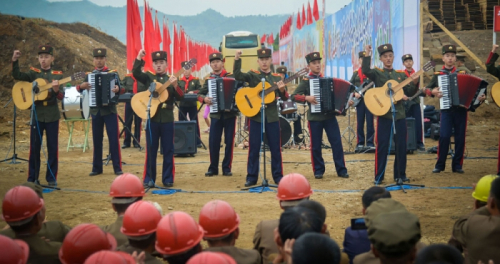
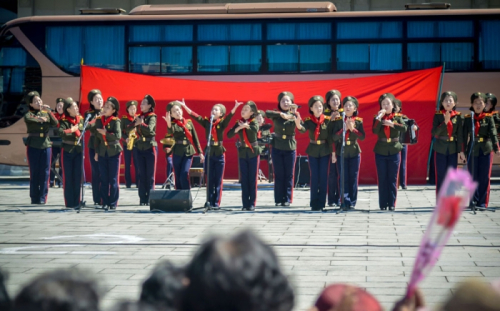
Fortunately, as the official Rodong Sinmun tells us, there was an inspirational motivation campaign for these lucky shock troop workers:
Students of Mangyongdae Revolutionary School and Kang Pan Sok Revolutionary School in the DPRK launched a motivation campaign in areas of Jagang Province under recovery from flood damage.
Students of Mangyongdae Revolutionary School gave fresh strength and courage to the builders through their dynamic artistic performances.
The performance began with chorus "Dear Father". Through such numbers as serial songs "Cheers of the People" and poem and song "His Humanity", it impressively represented the great efforts and warm love of the respected fatherly Marshal Kim Jong Un who left immortal traces for the people in the dangerous flood-hit areas.
Students of Kang Pan Sok Revolutionary School, too, gave performances in different places.
The performers called on the builders, officials and people to bring about world-startling miracles without fail in the recovery campaign by invariably carrying forward the integrity of the Jagang provincial people put forward by Chairman Kim Jong Il.
The cheerful and dynamic songs sung by the fine reserves who inherited the lifeblood of the Juche revolution, the reliable pillars guaranteeing the eternal youth of the cause, made the areas advancing towards a fresh victory with the enthusiasm for loyalty, repayment, feats and miracles.
 Mick Hartley