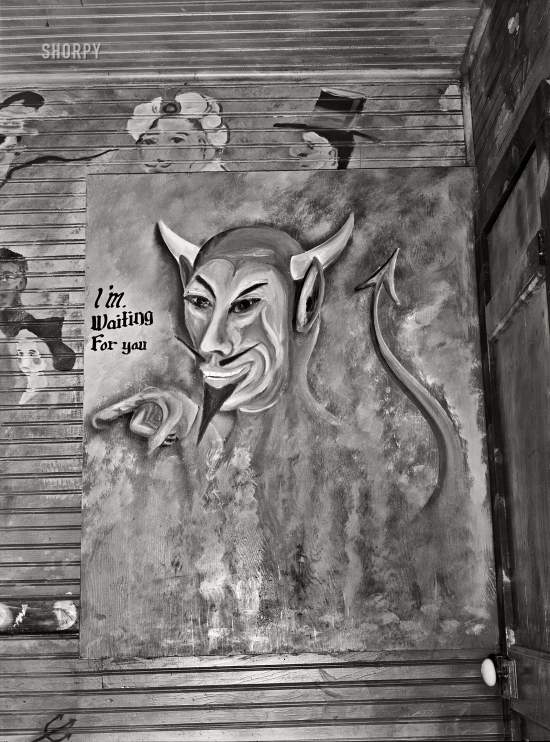
Russell Lee, September 1938. "Interior views of barrooms. Decoration painted by itinerant artist in back room of bar. Raceland, Louisiana."
[Photo: Shorpy/Russell Lee for the FSA]
Politics and Culture
Russell Lee, September 1938. "Interior views of barrooms. Decoration painted by itinerant artist in back room of bar. Raceland, Louisiana."
[Photo: Shorpy/Russell Lee for the FSA]
Howard Jacobson in the Times:
Art matters. That oughtn’t be a controversial thing to say. Indeed, even those who choose to boycott art must agree that art matters, or they wouldn’t take such pains to silence it.
I am referring, of course, to the various attempts to shut down the making and distribution of art by Israelis who don’t share the boycotters’ interpretation of Israel’s war in Gaza.
That might mean many things, but the most striking is the assumption that if an Israeli doesn’t agree to call what’s happening “genocide” — perhaps on the grounds that it isn’t — and even if that Israeli otherwise feels as horrified by events as the boycotters, he or she must be exiled from the self-appointed, closed community of the caring.
Thus, to be a boycotter you must believe there is a hierarchy of compassion and condemnation. Only those whose anguish is as vociferous as theirs are allowed a voice. What makes this inquisition so grotesque is that the inquisitors are themselves artists or art-enablers….
Everything must be permitted for artists but the silencing of their fellows. To boycott authors, agents or publishers on the grounds that they hold views objectionable to you is to violate art and the part it has played in stirring and individuating the imaginations of men and women since the first cave drawing appeared.
Art is not to be confused with a post on social media. It is not a statement. It is not susceptible to thumbs-down disagreement for the reason that it doesn’t invite thumbs-up consensus. It is not an echo chamber. It is a meeting place, not only of people who read and look and listen differently to one another, but of the hostile and the loving, of the real and the imagined, of colours that are not meant to go together, of words that clash and contradict.
Those who cannot bear such vitality of contradiction congregrate with the like-minded in a safe space they call a boycott, but for which the real word is tyranny.
The October 7 terrorists were all UNRWA welfare recipients. Your taxes gave them the financial security to devote their lives to killing Jews. Stop this madness. pic.twitter.com/ax84hWYbXe
— Eylon Levy (@EylonALevy) October 30, 2024
More autumn colour, on the Heath and then The Hill, Hampstead, and finally at neo-gothic Holly Village, below Highgate Cemetery:








In response to those attempting to blacklist Israel from the literary world, here's a response from over 1000 authors, writers, and journalists:
More than 1000 leaders from the literary and entertainment industry signed an open letter released by the non-profit entertainment industry organization Creative Community For Peace (CCFP) in support of freedom of expression and against discriminatory boycotts.
The letter comes in response to continued efforts to boycott, harass, and scapegoat Jewish and Israeli authors and literary institutions. Among the signatories are Nobel laureates, Pulitzer Prize winners, and Booker Prize winners.
Booker Prize-winning author, Howard Jacobson said: “Art is the antithesis to a political party. It is a meeting place not an echo chamber. Art explores, discovers, differs, questions and surprises. Precisely where a door should be forever open, the boycotters slam it closed.”
Recent calls to boycott Israeli literary institutions follow a year filled with efforts to demonize and ostracize Jewish authors across the globe. In the last year, bookstore appearances have been canceled based on authors’ identities and book readings have been shut down. Activists have publicized lists of “Zionist” authors to harass and just last week, ads for a book with ‘Israel’ in the title were rejected….
The letter highlights the unique role that writers and books play in society, “We believe that writers, authors, and books — along with the festivals that showcase them — bring people together, transcend boundaries, broaden awareness, open dialogue, and can affect positive change.” It continues, “We believe that anyone who works to subvert this spirit merely adds yet another roadblock to freedom, justice, equality, and peace that we all desperately desire.”…
Philosopher and Author Bernard-Henri Lévy said: “I have always believed in the power of ideas and truth. I have always been in favor of debate, clash of opinions, even the confrontation of convictions. But what we have here is not a clash of opinions or a debate. Boycotting Israeli writers, publishers and festivals is pure anti-Semitism – and it’s anti-democratic and dangerous. The goal of this boycott is the delegitimization of the only Jewish state in the world—Israel. It is a moral obscenity and must be firmly condemned by all free-thinking and democratic citizens of the world.”
Author and historian Simon Sebag Montefiore said: “The resort to witch hunt is always dangerous and ugly especially when the inquisitors are writers. History is full of examples of self-righteous cadres of self-appointed judges who tried to enforce their version of purity by excluding people. Whatever one thinks of this tragic Middle Eastern war, who judges who is good, who bad? Once started where would it stop? Who is pure enough?”…
The letter states: “Regardless of one’s views on the current conflict, boycotts of creatives and creative institutions simply create more divisiveness and foment further hatred.” The letter concludes: “We call on our friends and colleagues worldwide to join us in expressing their support for Israeli and Jewish publishers, authors, and all book festivals, publishers, and literary agencies that refuse to capitulate to censorship based on identity or litmus tests.”
At Fathom, Adam Gregerman puts forward a series of parallels between historical views of Jews and contemporary views of Israel, in an attempt to explain the particular venom now aimed at Israeli determination to survive in the Middle East against enemies openly proclaiming their exterminationist aims.
Briefly…
First parallel: Jews/Israel as the apex of evil:
Christians long held irrational and fantastical beliefs about Jewish malevolence toward them. Some saw Jews not just as holding hostile attitudes toward Christians. They were accused of martyring Christians; of murdering Christian children; of poisoning wells; of spreading disease; of desecrating ritual objects; and of covertly undermining Christian and later secular Western societies in which they lived. They were falsely accused of the most dreadful acts one could imagine, threatening their lives and their deepest religious convictions. These tropes rested on terrible assumptions about Jewish motives, that, if given the chance, Jews wanted to do (and sometimes successfully did) awful things against Christians.
Likewise, some accuse Israel today not just of bad policies and of transgressing legal and moral norms. Rather, accusations of malevolence are ratcheted up to the highest possible level. For example, after tragic combat situations that led to the deaths of innocents, Israelis have regularly been accused of intentionally committing murder. Food shortages in Gaza, rightly deserving attention and redress, are said to be a deliberate Israeli policy to starve civilians amongst whom Hamas hides. There is an oft-heard claim that dreadful acts with deadly results, sometimes caused by Israelis’ unacceptable carelessness and even negligence, are in fact intended outcomes. This attributes an inhuman level of deliberate malevolence to Israelis and to Israeli policy, far beyond that attributed to other Western militaries implicated in the tragic deaths of innocents. (For example, I do not recall anyone saying American military bombings in Afghanistan of wedding halls or children walking in the street were intentional murder.)
Similarly, accusations of genocide have been brought against Israel regularly in the United Nations (starting in 1982), in internationals tribunals, and by organisations (eg. The World Conference against Racism in 2001). This claim—naturally recalling the Shoah—constitutes what Francesca Albanese, the highly controversial U.N. Special Rapporteur on the Occupied Palestinian Territories, characterised as ‘the crime of crimes.’ The introduction of the most extreme terminology immediately forecloses dispassionate analysis according to conventional means of assessing state actions. In the face of such murderous evil, it seems almost absurd to ask for nuance and balance in a discussion of Israel’s military and political actions. The genocide charge signals a moral harm of the highest order, raising questions about the state’s legitimacy and not just the state’s policies.
Second parallel: Jews'/Israel's original sin is false theology/ideology:
While other religions and heresies provoked sometimes violent opposition, Judaism alone across the centuries was unique in its status as a present, even visceral manifestation of a supposed inversion of Christian values. Jews did not, of course, face unremitting hostility in all times and places, but antipathy toward Judaism was nearly constant, especially when Christians sought to define the boundaries of their communities by assuring that Jews fell outside them.
Likewise, modern critics of Israel claim that its ideological foundation is qualitatively different from that of other countries. The claim is that Zionism—Israel’s founding ideology of Jewish self-determination and sovereignty in the biblical homeland—is inherently racist and discriminatory and therefore without legitimacy.
Third parallel: Jews/Israeli as the ultimate interlopers
As unbelievers, [Jews] were to be scattered abroad from their biblical homeland, without political or military strength. They were to be kept weak and ruled by non-Jews, with the Jewish diaspora and powerlessness serving as vivid symbols of Christianity’s triumph over Judaism.
Likewise, the Jews of Israel have long been portrayed as interlopers, temporary residents of the region, and destined for (or deserving of) expulsion.
Not just Christianity's triumph over Judaism: the dhimmi status assigned to Jews living in Muslim countries was a mark of their inferior position under Islamic rule.
Fourth parallel: Jews/Israel reduced to symbols
[T]he issues raised by the Israel-Gaza conflict are often framed as claims about Israel but sometimes seem to reflect other disputes. Israel is a vessel for these disputes, serving as a symbol of that which is objectionable, outdated, immoral, or ambiguous. For example, as noted above, there is much discussion about Israel and colonialism. While some of this discussion engages substantively with Israel’s history, more often the dispute appears to provide an opportunity for rejecting colonialism itself. This makes sense given that most Western examples of colonialism are in the past, leaving few opportunities for residents of Western countries to confront contemporary colonialism. Israel can serve as the superlative, ongoing example of a terrible, historical injustice previously but not currently committed by non-Jews.
But worth reading in full…
North Korea recently destroyed roads leading to the South, as a concrete display, as it were, of the increasing anti-South Korea rhetoric and rejection of the idea of reunification. From the Daily NK:
North Korea is holding public lectures on the demolition of major inter-Korean road links along the Seoul-Uiju and east coast corridors.
According to a source in Pyongyang on Oct. 25, the lectures began on Oct. 15 and are being held by party organizations and labor groups, including the Socialist Patriotic Youth League, the General Federation of Trade Unions and the Socialist Women’s Union.
The public lectures have featured photos of the demolition of the road links. “These demolition measures are a legitimate exercise of North Korea’s sovereignty aimed at protecting the people from the military provocations and plots of our enemies,” the authorities said.
“We must expunge the familiar concepts of ‘one Korean nation’ and ‘unification’ from our minds. We must completely eliminate any thought of communication or exchange with South Korea,” a lecturer recently told a Pyongyang Youth League branch.
“South Korea is neither part of the Korean nation nor the subject of reunification. Rather, it’s a country we must occupy. All our military actions are legal,” the lecturer continued in an attempt to stir up hostility toward South Korea and justify provocations against the South.
“We can specify in our constitution the issue of completely occupying, subjugating and reclaiming the ROK and annexing it as part of the territory of our republic in case [. . .] a war breaks out on the Korean Peninsula,” North Korean leader Kim Jong Un said in a policy speech before the Supreme People’s Assembly in January while speaking of the need to amend North Korea’s constitution.
This doesn't sit easily, however, in a nation inculcated with Kim worship and the sacred doctrines of Great Leader Kim Il Sung.
But the lectures received a cool reception from North Korean audiences.
Many party officials were perplexed as to how the party could reject the teachings of North Korea’s founder, Kim Il Sung, and his son, Kim Jong Il, father of current leader Kim Jong Un. There is resistance to the de facto rejection of the teachings of North Korea’s past leaders, which have been taken as gospel truth in the North.
“Not long ago they told us about the need to reunify the country, but now they’re telling us to erase reunification from our minds,” one person complained.
“Do they think that 5,000 years of Korean history can be erased in an instant just because they say we’re not the same nation anymore?” commented another.
In anticipation of budget horrors, the BBC has spoken to a cross-section to gauge the mood of the nation: eight individuals and their financial concerns. This being the BBC a cross-section, of course, includes Allana Lamb, 70, a trans woman:
BBC News has spoken to a cross-section of society about how the Budget will affect them. The 'retired woman' is 'Allana', a cross-dressing man who says he's concerned about his finances, but doesn't mention that he spends a lot of money on fetish gear pic.twitter.com/4tpeft9Fn4
— ripx4nutmeg (@ripx4nutmeg) October 29, 2024
https://platform.twitter.com/widgets.js
They keep doing this pic.twitter.com/Tp7PMdBJb5
— ripx4nutmeg (@ripx4nutmeg) October 29, 2024
The Taliban has issued a decree banning Afghan women from hearing each other’s voices.
The Taliban’s minister for the “propagation of virtue and prevention of vice” (I.e. the Taliban’s “morality police”) said,
“When women are not permitted to call takbir or athan [Islamic call… pic.twitter.com/oBY134LGje
— Elica Le Bon الیکا ل بن (@elicalebon) October 30, 2024
https://platform.twitter.com/widgets.js
Full text:
The Taliban’s minister for the “propagation of virtue and prevention of vice” (I.e. the Taliban’s “morality police”) said,
“When women are not permitted to call takbir or athan [Islamic call to prayer], they certainly cannot sing songs or music . . . . Even when an adult female prays and another female passes by, she must not pray loudly enough for them to hear . . . . they aren’t even permitted to hear [each other’s] voices while praying, let alone for anything else.”
This new law marks another intensification of the Taliban’s draconian suppression of women into nobodyhood.
The reason they keep women from hearing each other, communicating, experiencing sound, music, laughter and joy is to keep them subdued, isolated, without personhood, and increasingly amenable to total erasure.
How much longer can we ignore these regimes treating women as less than cattle – which despite having no basic rights, still enjoy the right to see, to feel, to make noise, and to be heard? Are our women really less than this?
Afghan women are responding to the Taliban’s restrictions by dancing in traditional attire, a powerful expression of their identity and defiance against oppression.
— Habib Khan (@HabibKhanT) October 29, 2024
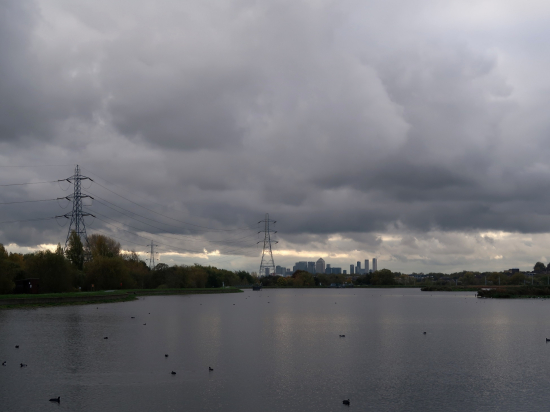
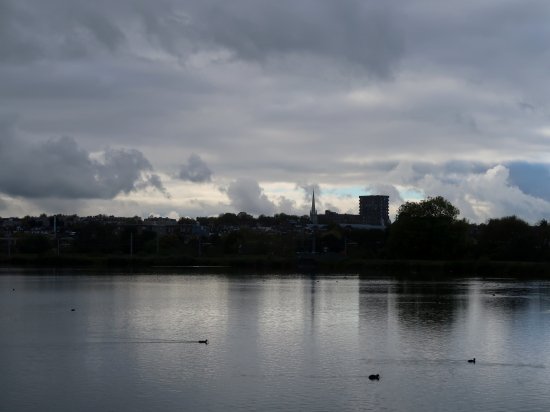
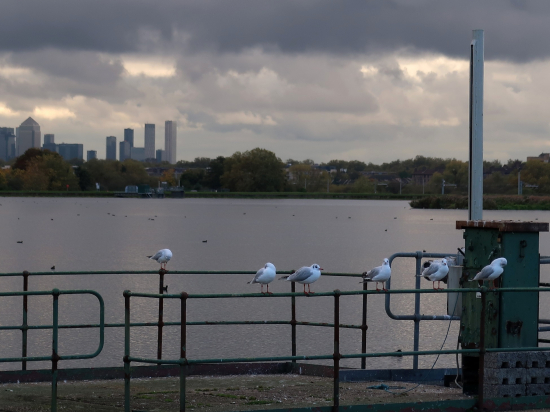
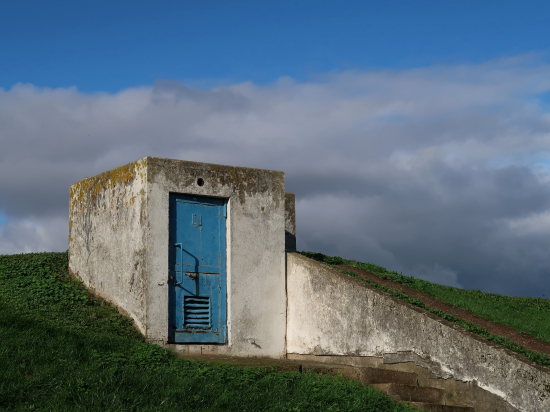
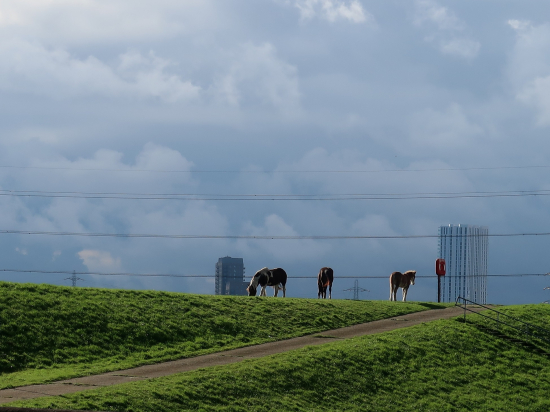
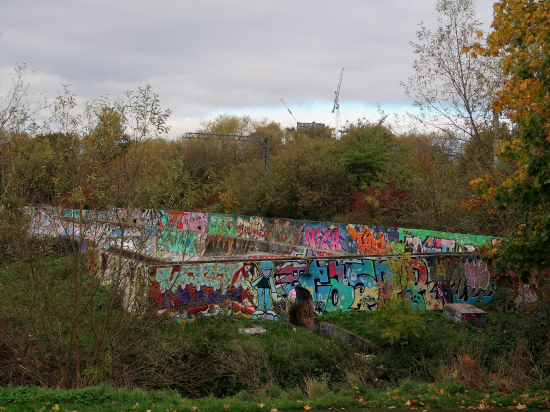
A bike ride this morning up through Walthamstow Wetlands, round the top of Banbury Reservoir (horses grazing, industrial stuff to the north), then back down the Lea towpath – with a final stop-off at Markfield Skate Park:





 Mick Hartley