• What's going on in Scotland, at the Supreme Court hearing on woman's rights? Hannah Barnes at the New Statesman has been following the labyrynthine proceedings:

    Unlike the scores of women who gathered this week in Courtroom 1 of the UK Supreme Court in Westminster – there were so many that they had to be herded into an overspill room – I watched the proceedings online. It was a surreal experience. On Tuesday 27 and Wednesday 28 November, the highest court in the land listened to arguments on how to answer a question that would, I think, seem extraordinary to most people: what is a woman? That we have got to this point makes a mockery of the Labour Party’s insistence, during the general election campaign, that the law is clear when it comes to the definition of sex.

    Two things stood out as I followed the case on day two: that women (in Scotland in particular), were being gaslit by the Scottish government; and lesbians were, in effect, being told by the Scottish government that they were no longer protected in law according to their sexual orientation. By virtue of a legal piece of paper, it was argued, a “heterosexual male” could become a lesbian woman overnight. These were the words of Scottish government lawyers.

    This case is about interaction between the 2004 Gender Recognition Act and the 2010 Equality Act. The former allows someone with a medical diagnosis of gender dysphoria to gain a gender recognition certificate (GRC). This certificate grants that person the right to be treated under the law as belonging to the sex they identify as, “for all purposes”.

    Under the Equality Act, it is illegal to discriminate against anyone on the basis of nine protected characteristics: age, disability, religion, race, marital status, being pregnant or on maternity leave, sexual orientation, sex, and gender reassignment. The last of these, rightfully, protects trans people from discrimination. The problem comes when you ask what “sex” means in this context: biological sex, or legal sex – as defined by a GRC.

    Well OK. This is where it gets complicated. Needlessly complicated, you might say. 

    In late 2022, Scotland’s Court of Session ruled that sex, for the purposes of the Equality Act, was “not limited to biological or birth sex” and included “those in possession of a GRC”. It’s that judgement, and its widespread implication for the provision of single-sex spaces and service provision, that was taken to the Supreme Court.

    The case put forward by For Women Scotland, expressed in court through Aidan O’Neill KC, is that: “In the Equality Act, sex just means sex, as that word and the words woman and man are understood and used in ordinary, everyday language, used every day in everyday situations by ordinary people.” The Scottish government argues that a transgender woman with a GRC is entitled to the same protection under the Equality Act as those who are born female.

    The implications of the Scottish government case, as argued by Ruth Crawford:

    Crawford confirmed to the court that a lesbian association of 25 members or more would not be able to restrict membership to those who are born female. Natal males – in the language of the court, meaning those born male – with a GRC who were attracted to females could not be refused entry. The only way for these trans women to be excluded would be to regroup as an association which seeks to advance a protected philosophical belief: in this instance, the gender-critical belief that sex is immutable. Those inside the court building have reported “audible intakes of breath”. Under this scenario, lesbians were no longer lesbians but rather, as the academic Jo Phoenix put it, “gender-critical women attracted to other gender-critical women”: this was sexual orientation being replaced by “belief orientation”.

    “This has a chilling effect on these kinds of organisations, doesn’t it?” Justice Ingrid Simler asked the Scottish government’s representative: a lesbian association would not only have to include natal males with GRCs, but also those who identified as women but who did not hold a GRC, because the law dictates that you cannot ask if someone has a GRC. “No, you cannot,” Crawford confirmed. This was grade-A catch-22 material. “If they simply want to associate as a group of lesbians… do you say that it doesn’t have a chilling effect?” Simler pressed again. “I say it doesn’t m’lady,” Crawford replied.

    “It was just gobsmacking the way she dismissed our concerns, our legal rights, actually our existence,” Sally Wainwright, who helped write the Lesbian interveners’ case, told me. “She actually denied the existence of same-sex attraction as a protected characteristic. Their position is, in my opinion, really beyond the pale: lesbians don’t matter. If men can be lesbians, then what does same-sex attraction mean? It doesn’t mean anything.”

    When lawyers take over and sense goes out the window. You'd need the Dickens of Bleak House to unravel these fog-bound legal mysteries.
  • https://platform.twitter.com/widgets.js

  • From NK News:

    Russia’s defense chief arrived in North Korea on Friday for talks with the country’s top military and political brass, as DPRK troops fight for Moscow in its conflict with Ukraine.

    Meanwhile:

    South Korean President Yoon Suk-yeol met a visiting Ukrainian delegation on Wednesday and discussed joint efforts to counter North Korean military support for Russia’s invasion, amid attention on whether Seoul will send weapons and a monitoring team to Ukraine.

  • https://platform.twitter.com/widgets.js

    Full text:

    ‘I’ll tell you more about what happened at Oxford when I confronted these liars and I’ll also upload clips from my speech there, but one thing I can say for sure – Oxford has been taken over by terror supporters.
    90% of the participants are clearly anti-Israel propagandists who admire Nasrallah and Sinwar and believe Israel has no right to exist.
    During the biased discussion, extreme statements flew such as praising and glorifying the October 7th massacre and claims that it was a “heroic act of an oppressed people.”
    When a speaker in the audience cried for the residents of Gaza in a forced and unbelievable way, I pulled out a picture of the Muslim hostages Yousef and Hamza al-Ziyadna and asked if she was crying for them too.
    One of the participants in the audience took the picture and threw it on the floor and others stepped on it. I endured curses, boos, and threats during the confrontation, but there was one thing I was not willing to endure: the humiliation of our hostages.
    I demanded that they be removed and I refused to continue the discussion, even when the anti-Israel chairman, who actually took part in the confrontation himself, warned me and finally decided to have me removed from the venue.
    In front of the hostile terrorist-supporting audience, just before I left the hall, I did one last thing – over my official tuxedo, I wore a T-shirt that I had brought. It has a picture of Nasrallah with a large X over it and the caption "Your ‘heroic’ terrorist is dead, we killed him"

    The debate was “This House Believes Israel is an Apartheid State Responsible for Genocide.” The motion passed 278:59 in favour.

    Arguing in favor of Israel were British lawyer Natasha Hausdorff, British journalist Jonathan Sacerdoti, Arab-Israeli activist Yoseph Haddad and ex-Hamas member turned Israeli spy Mosab Hassan Yousef.

    On the other side of the debate were US political scientist and anti-Israel activist Norman Finkelstein, Israeli-American activist and author Miko Peled, Palestinian-American author Susan Abulhawa, and Palestinian writer Mohammed El-Kurd.

    The debate devolved into a shouting match between the speakers and the audience at one point, and Haddad was removed from the stage after a verbal altercation with attendees.

    Norman Finkelstein, ffs. Author of The Holocaust Industry, on how Jews exploit the Holocaust for political and financial gain….

    Added: Finkelstein dropped out and didn't attend.

  • A good article in the Times from Michael Coren, an Anglican priest:

    The only way to the truth,” said the Catholic American novelist Flannery O’Connor, “is through blasphemy.” Could someone please send her books to Sir Keir Starmer, because his response to the Labour MP Tahir Ali this week was as puny as it was disturbing. The backbencher asked: “Will the prime minister commit to introducing measures to prohibit the desecration of all religious texts and the prophets of the Abrahamic religions?”

    Rather than explaining that the right to question or mock religious faith was a fundamental right in any free society, and that even a hint of a blasphemy law was anathema to our way of life, the prime minister said with consummate passivity: “Desecration is awful, and I think it should be condemned across the House. We are committed to tackling all forms of hatred and division including Islamophobia in all its forms.”

    Starmer’s supporters have described his answer as “reasonable under the circumstances”; those circumstances presumably being that November is Islamophobia awareness month and that Tahir Ali’s Birmingham constituency is majority Muslim, a voting bloc the Labour Party can’t afford to lose.

    But is such desecration “awful”? I’m an Anglican priest — I certainly oppose it. And at its worst, as with Nazi book-burning, it can be a precursor to something far worse. But my concern is for people rather than objects, and the hideously ironic truth is that people are killed in the name of a similar religious fundamentalism that would introduce blasphemy laws.

    It’s too glib to blame all of this on conservative Islam. Death for blasphemy has a history in ancient Judaism and not-so-ancient Christianity. But today, the worst that would happen if a Bible were burnt would be a few angry demonstrators and a guest appearance on a comedy special lauding atheism….

    I realise that the Koran holds a unique place in Muslim theology and consciousness, and that behind textual destruction can be racism and hatred. But without freedom of speech there can be no authentic freedom of religion, which at its best demands an informed and often challenged acceptance. God forbid we ever lose the right to blaspheme.

    Most recommended comment:

    Hear hear. As an Orthodox Jew I have no right to demand someone else respects my religious beliefs

    Or indeed me. I have a right to practise my beliefs without harassment. Not without judgement.

  • https://platform.twitter.com/widgets.js

  • https://platform.twitter.com/widgets.js

    Thread reader:

    Here is a classic, somewhat absurd case of progressive presentist inversion and distortion of history in the captioning @britishmuseum: 'by the beginning of the first century millennium the Israelites occupied most of Palestine'.

    Canaan is probably the right word here. Or even Judea. Or even Holy Land. But not Palestine since Hadrian redesignated Judea as part of Syria-Palaestina around 135AD which is over a thousand years later and in a different world.

    Someone enjoyed writing this I'm sure and well done for getting into the public display … but we do expect high standards from @britishmuseum.

    One could also add that though the Bible narrative suggests a much earlier conquest by Israelites, long before the first millennium, many secular scholars now lean towards the theory that the Israelites originated from indigenous Canaanites and other Levantine peoples. So no occupation there at all.

    Under the Romans and then the Byzantines – Eastern Roman empire – these provinces remained Palaestina and then Palaestina 1,2 and 3 until the Arab conquest when Jund Filastin was a district of the Umayyad and Abbasid province of Bilad al-Sham

    I shld add that i know both @George_Osborne and Nicholas Cullinan well and both r punctilious lovers of history and if this has slipped under the radar into the British Museum they ll be the first to oversee its correction

  • More from the edgily antisemitic world of film festivals:

    https://platform.twitter.com/widgets.js

    Full text:

    Julia Layani, a Jewish judge at the competition, faced exclusion after being falsely accused of being a “far-right Zionist,” despite her left-wing views and advocacy for peace.

    First, an anonymous open letter was published, calling for her removal as a judge.

    Later, Julia’s request to mention the 101 Israeli hostages alongside Gaza and Lebanon was rejected, and she was barred from speaking.

    Refusing to be silenced, Julia courageously took the stage to denounce this hypocrisy.

    12 out of 16 jury members signed the letter demanding Julia be banned from the festival.

    Her only “crime”? Being Jewish.

    It’s time to expose how antisemitism hides behind the word “Zionist.”

    Julia never expressed an opinion on Israel’s government. Her haters never asked her stance on Netanyahu. She wasn’t targeted for her views or actions—but solely for her religion.

    Being Jewish alone was enough to make her guilty.

  • From Jewish News:

    An Israeli choreographer has spoken of his “great shock” and “disappointment” after an international dance film festival backtracked on its decision to show his film honouring the victims of the Nova music festival….

    Exeter International Dance Film Festival initially accepted Dor Eldar’s short film and invited him to come to come in person.

    His two-and-a-half-minute film, Rave, features a group of young dancers, all of whom volunteered to take part. “I did not make this film for Israelis,” Eldar said. “I wanted to have something that the world would see, that was my aim.”

    The dancer turned choreographer began sending the film to various festivals and it received a good reception, most recently in Lisbon. The film opens with young men hoisting two young women into the back of a truck, mimicking the kidnappings that took place on 7 October.

    Eldar said that after he had submitted the film to Exeter, about a month before the two-day festival opened on 19 October, organisers had invited him to come in person.

    He was unable to attend but noted that when the festival programme was published, organisers had issued an “alert” note next to a description of Rave, saying the film was about the Israeli-Palestinian conflict.

    “It’s not true,” Eldar said, “but I didn’t say anything. It’s their festival. And then, two weeks before the festival opened they sent me an email saying they weren’t going to show my film at all.”

    In their rejection email, the Exeter organisers told Eldar that the festival’s selection and programming committee had “come to the difficult decision to pull Rave from our programme. We have had to consider our audience attendees and artists, and are receiving pressure from the artistic community. The subject matter is controversial and contentious, and as a non-political organisation we have to be extremely careful about what we put the spotlight on.”

    The Exeter organisers added that the festival “doesn’t boycott Israeli films”, but that they had had to make the “difficult decision to boycott anything specifically commenting on events that have had an impact on ongoing conflicts around the world”. They said that they were receiving “backlash” from funders and sponsors, but noted that “we recognise the artistic merit of the film and that it is expressing genuine emotions about the terrible event that happened”.

    The festival "doesn't boycott Israeli films", but is boycotting Israeli films. Such brave people.

    See the film here.

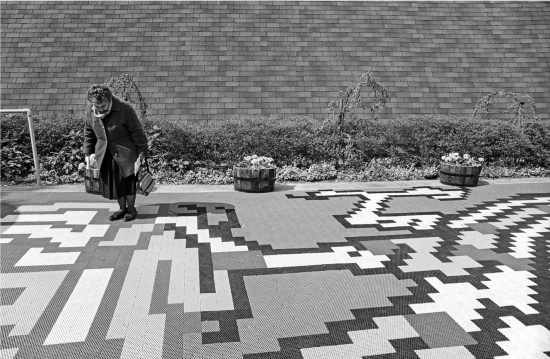
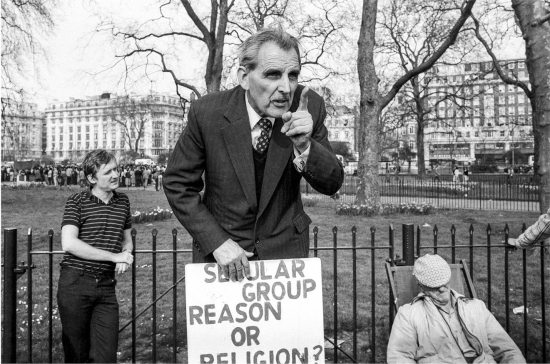
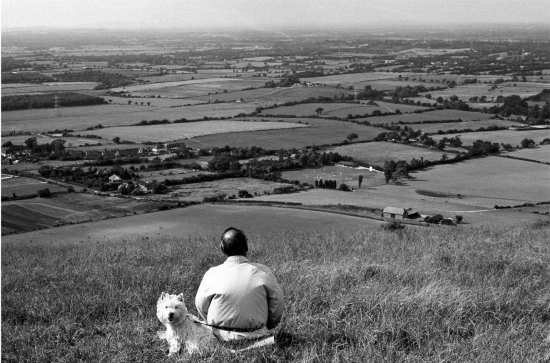
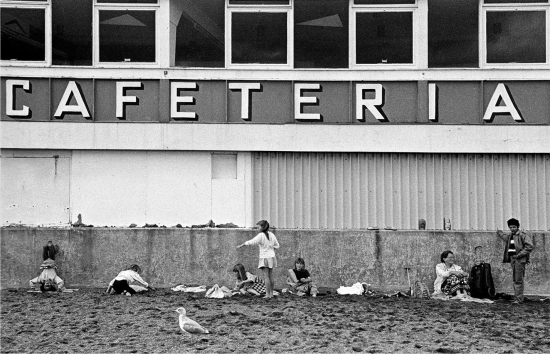
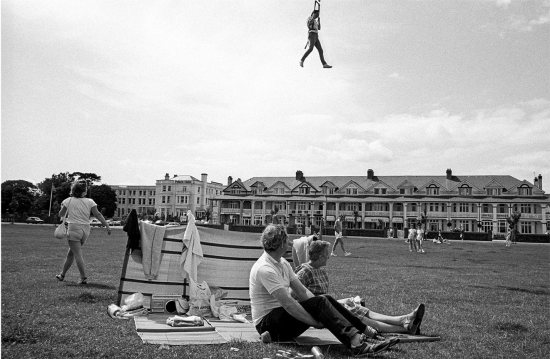
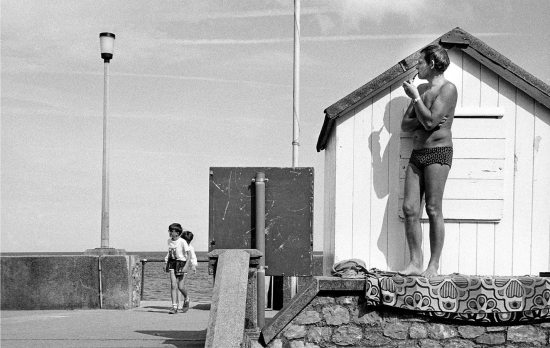
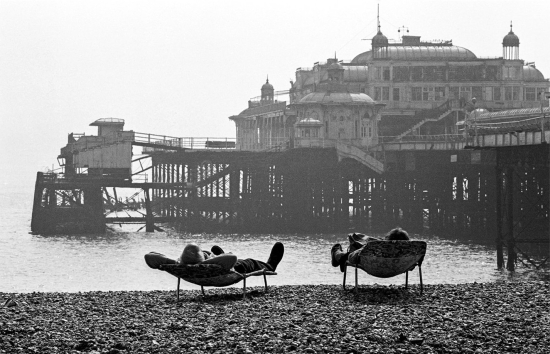
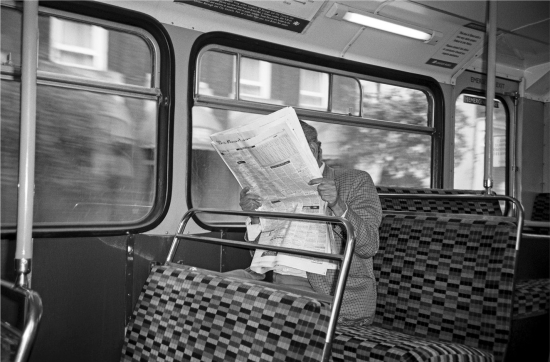
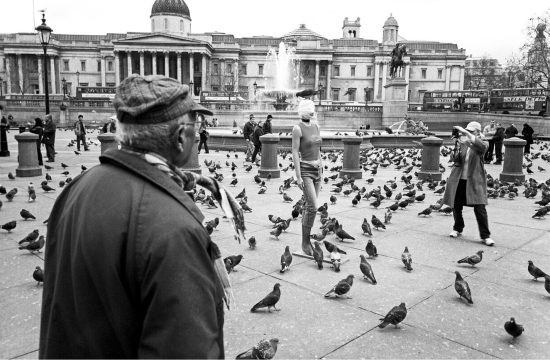
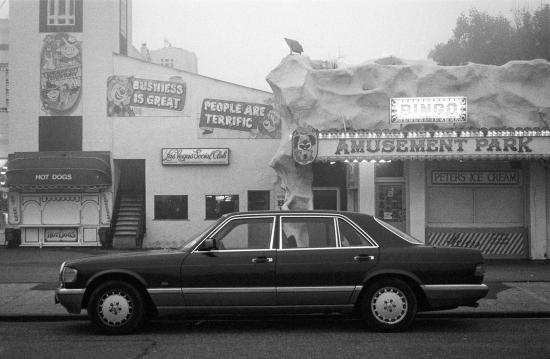
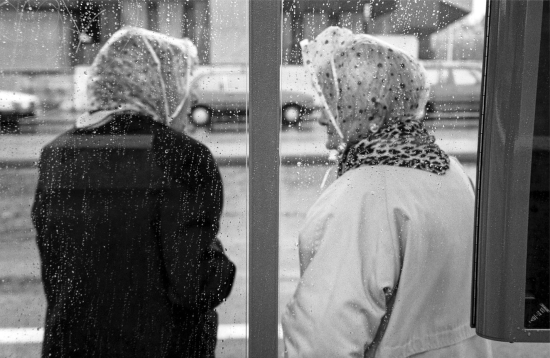
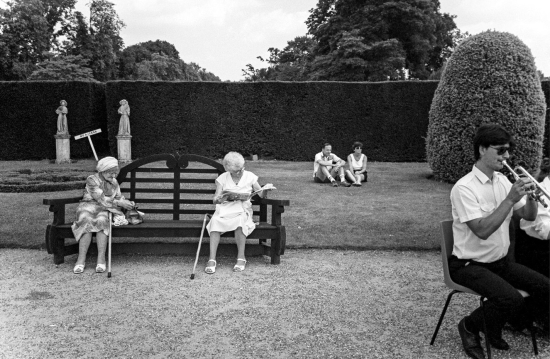
  • Another from the Café Royal Books catalogue, this time from photographer Robert Morris:

    Robert+Morris+English+Days+Out+1web12002
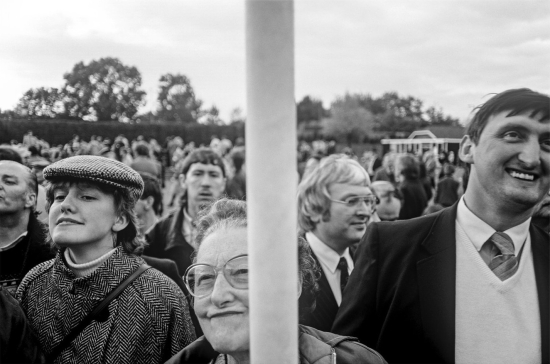
    Nottingham Racecourse 1985

    Robert+Morris+English+Days+Out+1web12008
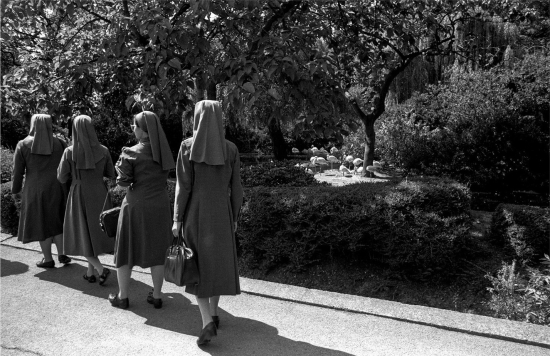
    London Zoo 1989

    Robert+Morris+English+Days+Out+1web12003
    Matlock Bath, Derbyshire 1985

    Robert+Morris+English+Days+Out+1web120010
    Hyde Park, London 1984

    Robert+Morris+English+Days+Out+1web120013
    South Downs, Sussex 1989

    Robert+Morris+English+Days+Out+1web120017
    Painton, Devon 1985

    Robert+Morris+English+Days+Out+1web120015
    Paignton, Devon 1985

    Robert+Morris+English+Days+Out+2web12003
    Goodrington, Devon 1986

    Robert+Morris+English+Days+Out+1web120018
    Brighton, Sussex 1980

    Robert+Morris+English+Days+Out+2web120011
    London 1995

    Robert+Morris+English+Days+Out+2web12007
    Trafalgar Square, London 1999

    Robert+Morris+English+Days+Out+2web12008
    Felixstowe, Suffolk 1992

    Robert+Morris+English+Days+Out+2web120012
    Waterloo, London 1995

    Robert+Morris+English+Days+Out+2web120013
    Hever Castle, Kent 1991
    [Photos © Cafe Royal Books/Robert Morris]