From my bike ride this morning.
Late Victorian red brick (Birnam Road):
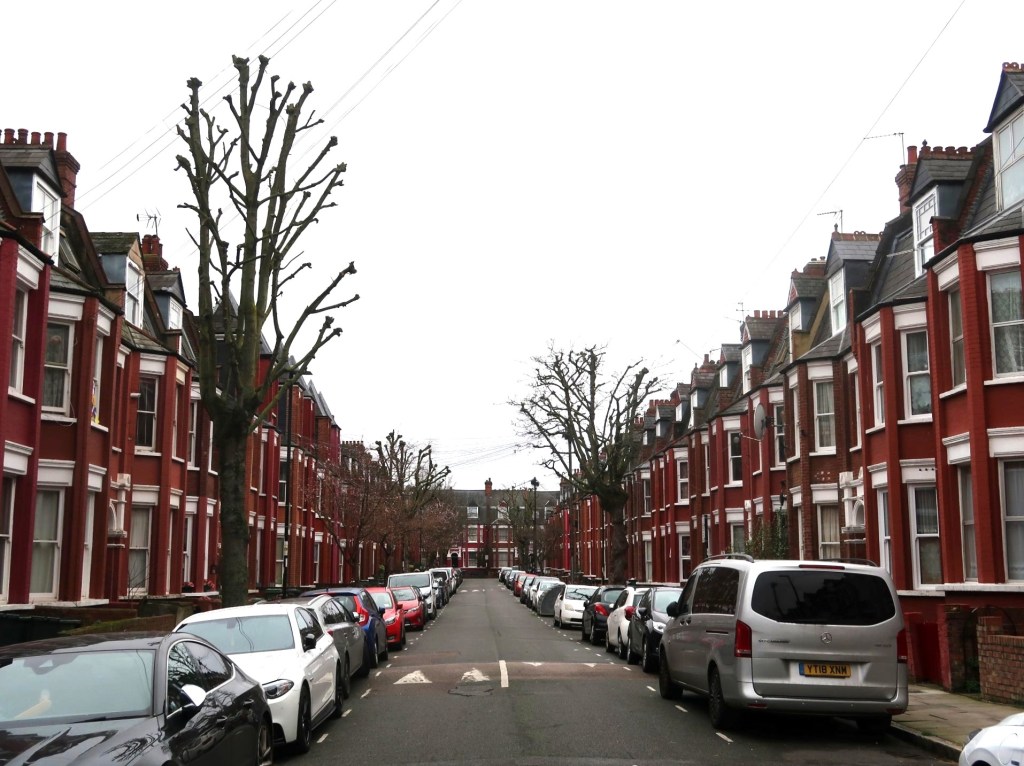
Late Georgian terrace (Bewdley Street):
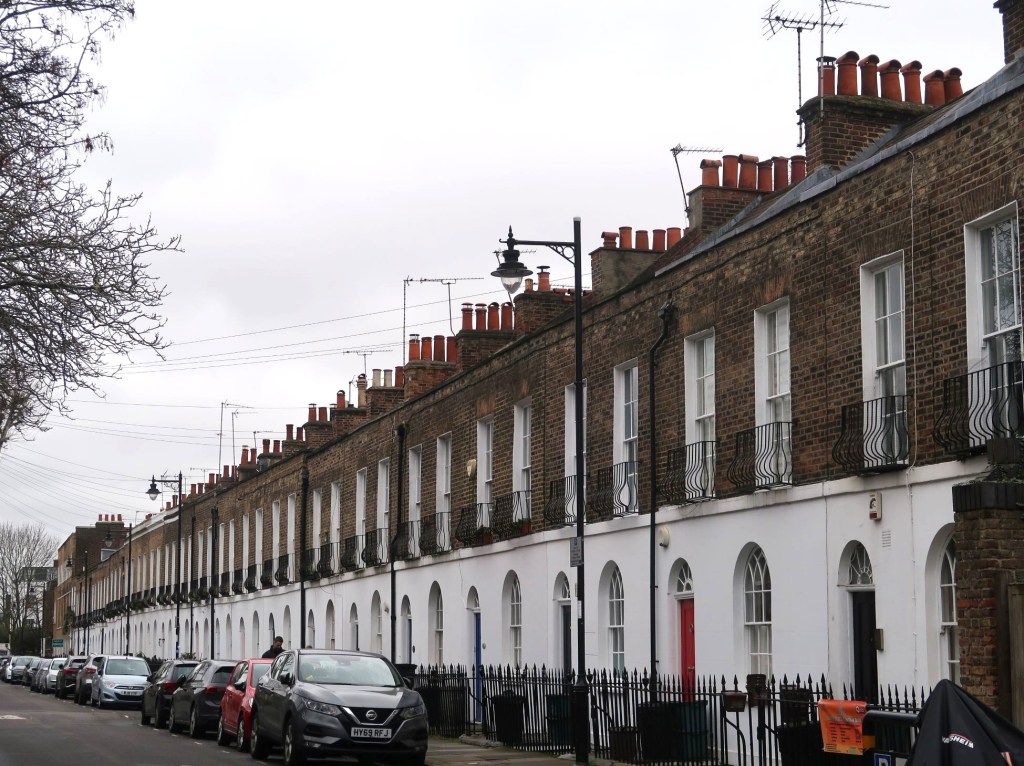
Early Victorian Tudor Gothic revival (Lonsdale Square):
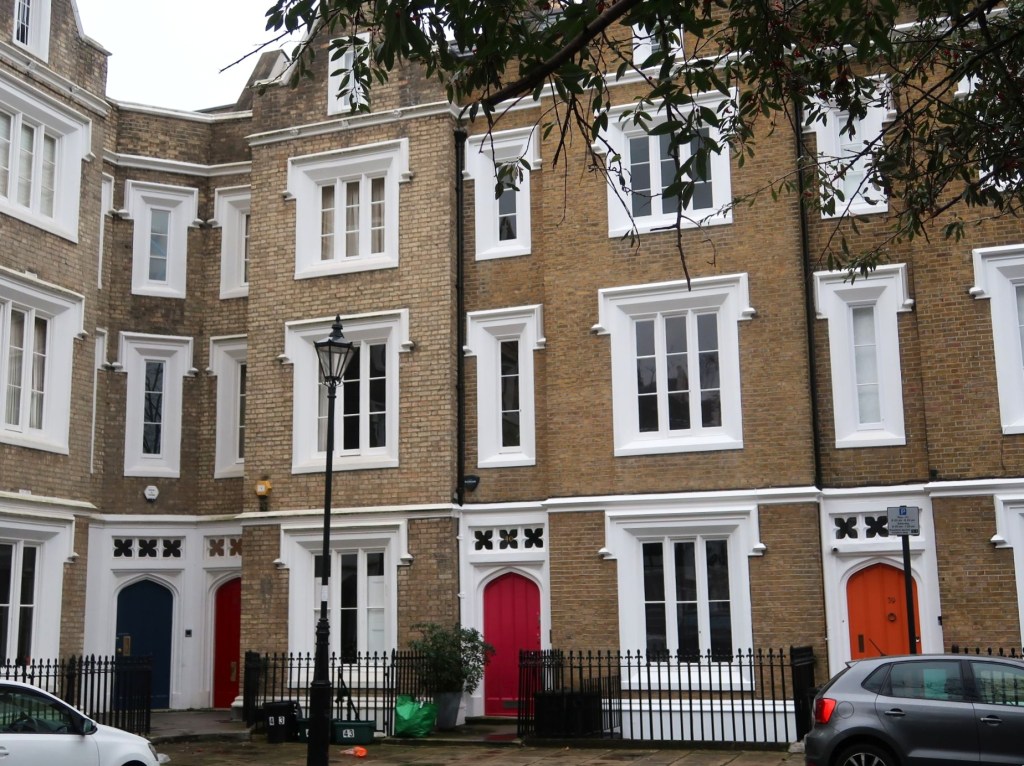
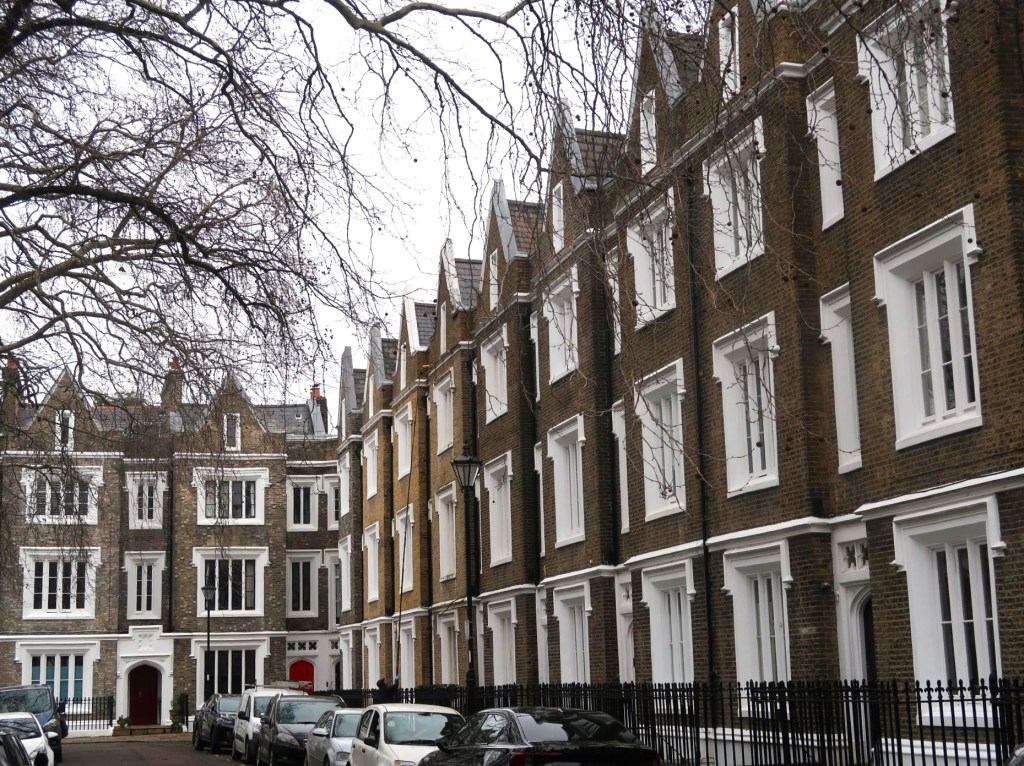
Politics and Culture
From my bike ride this morning.
Late Victorian red brick (Birnam Road):
Late Georgian terrace (Bewdley Street):
Early Victorian Tudor Gothic revival (Lonsdale Square):
Good news – CPS loses bid to overturn Quran-burner’s acquittal:
The Crown Prosecution Service (CPS) has lost a High Court bid to challenge the acquittal of a man who burned a Quran outside the Turkish consulate in London.
Hamit Coskun was initially convicted last June of a religiously aggravated public order offence after he held a flaming copy of the Islamic text aloft and shouted an expletive about Islam outside the Turkish embassy in February last year.
The 51-year-old successfully appealed against his conviction, having it overturned by Mr Justice Bennathan at Southwark Crown Court in October.
The CPS brought an appeal against that decision at the High Court and asked for it to be reconsidered.
And were told, in legal terms, to fuck right off.
Dismissing the appeal in a decision on Friday, Lord Justice Warby and Ms Justice Obi said: “We are not persuaded that the court left any material factor out of account or relied on any immaterial factor.”
Reacting to the dismissal of the appeal, the Free Speech Union described it as a “humiliating defeat” for the CPS and called on the Director of Public Prosecutions to resign…
Coskun, an atheist, also shouted “Islam is religion of terrorism” and “Quran is burning” during his protest in Rutland Gardens, Knightsbridge
We don’t have a blasphemy law here, and we don’t want one, whatever the CPS may think.
From the National Secular Society, who co-funded Coskun’s defence:
“The High Court has rightly rejected this wrongheaded attempt to introduce a blasphemy law by the back door.
“However offensive some may have found the Quran-burning protest, it was lawful. Criminal law protects people from harm, not from being offended. This judgment makes clear that it is not the state’s job to police religious sensibilities. A hostile – even violent – reaction to speech cannot be allowed to determine whether that speech is criminal.
“There must now be a serious review of how and why the CPS originally came to charge a man with causing harassment, alarm and distress to the religion of Islam and why it chose to pursue this case to the High Court. Public confidence demands answers.”
Zionist war criminal? Because he defeated the Nazis? The true motivations of the Free Palestine crowd become clearer…
Good news on the puberty blocker front. From the Times:
Gender clinics will be forced to release data on the outcomes of thousands of children who received puberty blockers on the NHS.
Wes Streeting, the health secretary, has announced a law change to allow researchers to study the long-term impact of medical interventions given to children in distress about their gender.
The data of 9,000 people who were treated at the Tavistock gender identity clinic as children, before the clinic closed in 2023, will be linked with their adult NHS records to see how they have fared.
The study, led by NHS England, will evaluate how treatments such as puberty blocking drugs have affected long-term mental and physical health.
The data linkage study was a key recommendation of the Cass Review in 2024, which advised overhauling gender services on the NHS. However, six of the NHS’s adult gender clinics had refused to co-operate with the medical research study and hand over data on their patients. Many of their patients were initially treated with puberty blockers as children before being transferred to adult clinics for cross-sex hormones and gender-reassignment surgery.
This should have been done from the start, as per the Cass Review. And should obviate the need for the Pathways trial. The data’s out there.
The new regime in Syria seemed at first to be a welcome change from the chaos and brutality of the Assad years, but it wasn’t long before tales of violence against minority groups emerged….Alawites, the Druze, and in particular the Kurds. Giran Ozcan in Fathom – How Syria’s transition went off the rails:
It is easy, and wrong, to find simple causes for the recent violence in Syria. Examples include claiming that al-Shaara is taking orders from Turkey to attack the Kurds, or that the Kurds are being maximalist by seeking to retain the SDF and their self-rule in the north east.
Instead, the anti-Kurdish campaign of 2026 and the violence against other minorities in 2025 are part of al-Sharaa’s four point playbook.
First, al-Sharaa and the Syrian transitional government possess an extreme Islamist mindset. The interim constitution makes Islamic jurisprudence “the principal source of legislation,” meaning that the state will be run on religious principles.
That, in a nutshell, is the problem. The new president, Ahmed al-Sharaa, may have scrubbed up nicely to give the impression that he’s put his Al Qaeda past behind him, but he’s still an Islamist.
Also concerning is that western support for al-Sharaa and his “unified” Syria impedes the post-9/11 struggle against Islamist extremism and jihadism. The unified, unaccountable Syria that al-Sharaa is building will have the same results in the future as such a state had in the past – repression, corruption, and extremism. U.S. policy after 9/11 was to push for openness and reform in the Middle East. Although Obama and subsequent presidents dropped George W. Bush’s emphasis on democracy, there remained an understanding that Islamist extremism and jihadism constitute threats to the United States and its friends. The alliance with the Kurds was a logical outcome of this policy. All the strands of Kurdish nationalism are hostile to Islamist extremism and jihadism as they deny Kurdish identity. The Syrian Kurds are particularly averse to Islamist extremism as they believe that the most powerful means of economic and social development is the empowerment of women. Any attempt to drop the Kurds as security partners and to rely on the goodwill of jihadis could be a fatal error.
Owen Matthews in the Spectator – ‘More than half our squad were executed’: Inside Russia’s rotten army:
For a more complete depiction of the reality of the war in Ukraine from the Russian side, take a look at the feature-length documentary Russians at War, available on YouTube. This extraordinary film was made by the Canadian-Russian filmmaker Anastasia Trofimova, who got herself unofficially embedded with a frontline infantry company fighting in Donbas after a chance encounter on a train with a solider. The picture that emerges as Trofimova follows the unit from the spring to autumn of 2023 is of a rag-tag force of undisciplined, reluctant civilians who have mostly signed up only for the money. All are, notionally, volunteers desperate enough to risk their lives for a signing bounty. But many speak of their desperation, their revulsion at the war, and of the corruption and ineptitude of their commanders.
‘We are people with broken fates,’ complains one private who has just returned from the front lines. ‘We were dumped, then got surrounded. Out of our battalion of 900 just 300 made it.’…
Trofimova’s film was shot in 2023. But by all accounts the situation in the Russian army in Ukraine has deteriorated dramatically since then. Storm V, a Telegram blog that reports from the Storm ‘penal/volunteer’ battalion fighting near Pokrovsk, reported in a 14 February post that the unit – made up mostly of released prisoners – lacked ‘even the simplest armour, helmets, masks, generators, magazines for machine-guns’. The unit was regularly chosen for frontline duty because ‘they are told, “You know both cold and hunger, so go ahead, you are more prepared for a life of survival.”’ Commanders, according to the anonymous (and unverified) author of the blog, openly talk of ‘meat assaults’ – the practice of throwing infantry forward into the drone-saturated ‘death zone’ between the two armies. ‘On all fronts [Storm V] are at the forefront of the attack,’ says the blogger. ‘They are not given medals, those are received by those who follow.’
Footage of Russian soldiers being punished for drunkenness and desertion by being taped naked to trees in the freezing cold, then being whipped or punched by officers, appear regularly on Russian social media. This month Denis Kolesnikov, a junior sergeant in the 1435th Regiment, posted a video blog where he explained that he deserted his unit because commanders were demanding bribes not to send men to the front lines. ‘Over half of our squad, about 50 people, were executed by commanders,’ claimed Kolesnikov, blogging from Russia, not from Ukrainian captivity. ‘Everyone must pay money to commanders. When we line up, everyone is told how much they owe. Each person was told to pay from one to three million rubles [£10,000 to £30,000]… not to go to the contact line. As soon as money runs out, they get sent there or killed.’….
In Iraq and Afghanistan I did 13 official journalistic ‘embeds’ with various frontline US and British units between 2001 and 2005 – including the US Third Marine Corps during heavy fighting in Fallujah. The extreme professionalism and discipline of the British and American armies, even under fire, was hugely impressive. The contrast with the chaotic, corrupt, amateurish and utterly unwilling Russian army that is fighting in Ukraine could not be starker. Putin’s forces may command deadly missiles, long-range drones and a modern air-force. And on the ground massed artillery and successive meat-waves of men recruited as cannon fodder may grind slowly and bloodily forward. But a threat to Nato? Not in a million years.
I’m surprised he doesn’t mention the BBC’s The Zero Line: Inside Russia’s War, which I watched last night – a very powerful expose of the scarcely credible brutality in the Russian army, with soldiers executed by commanders and tortured for dissent.
Hannah Barnes in the New Statesman:
The proposed NHS-backed “Pathways” puberty blocker trial “could not have received more oversight and scrutiny”, the Health Secretary, Wes Streeting, told parliamentary colleagues in January. It had gone through “rigorous rounds of scientific, clinical, ethical and regulatory review”. How, then, to make sense of the U-turn from the Medicines and Healthcare Products Regulatory Agency (MHRA) on 20 February? The medicines regulator had initially given its approval for Pathways, which is being led by researchers from King’s College London (KCL). In a letter to KCL, the MHRA raised significant safety and ethical concerns, prompting the trial to be paused.
On one level, this suspension can be seen as scientific scrutiny working well. After the trial was announced in November 2025, hundreds of clinicians voiced “grave disquiet” about the trial’s design. I have scrutinised the trial’s documentation and asked, in the New Statesman, whether participants are being told enough about the balance of risks and benefits. Perhaps the MHRA has listened.
But it is also pertinent to ask why the regulator approved a study it now says risks sterilising children, damaging their bones, and impairing their cognition. Everything the MHRA appears to now be concerned about was known at the time of approval. The true reason behind the regulator’s actions is as yet unclear.
Perhaps they’ve been surprised by the strength of opposition. Perhaps they’re beginning to realise the full horror of a government/NHS trial whereby children are given life-changing drugs to see if it cures them of a delusion picked up on social media. It’s not going to look good on anyone’s CV.
 Mick Hartley