• Iain Macwhirter in the Times, in praise of For Women Scotland:

    With a little help from a certain well-known Edinburgh author, these “ordinary Scottish mums”, as they were rather patronisingly described — Marion Calder, Trina Budge and Susan Smith — took on the media, the medical profession, and the political establishment and helped to spark a debate about women’s sex-based rights that has gone global. They killed the bill, but that was only the start.

    As of this month, the gender reform bill is history, the Tavistock clinic has closed, and puberty blockers have been banned by a Labour minister. Rapists are no longer placed in women’s prisons. Indeed, it is arguable that, had the Democrats listened to the Women Who Wouldn’t Wheesht, Kamala Harris might have been heading to the White House right now instead of Donald Trump. Many pollsters agree that the Republican Party’s most effective campaign advert in the final stages of the presidential campaign was directed against Harris’s support for transgender transition (self-ID) for prison inmates.

    It was, perhaps, not so much that the women in Scotland were particularly courageous and outspoken – though they were – more that the SNP under Nicola Sturgeon led the way in promoting the idiocies of gender ideology and self-ID, with double rapist "Isla Bryson" in the women's prison as the shining blonde-wigged evidence of the lunacy.

    It may not have been a “woke mind virus,” but it was certainly pathological. A kind of Maoist cultural revolution — without Mao — had seized the commanding heights of academia, the civil service and even women’s organisations. Edinburgh Women’s Aid refuge was led by a natal male. The government was handing public money to groups like LGBT Youth Scotland to promote transgender ideology in schools. It still is.

    Yet all it took was a handful of women equipped with robust common sense to expose this elite capture of our civic space. When the Scottish government decided to count trans women as women when assessing gender balance on public boards, FWS took them to court under the Equality Act. That led, ultimately, to the biggest farce of the panto season, when the Supreme Court of the United Kingdom met last month to define what a woman is. The supreme idiocy of this hearing, even more than the gender recognition bill or the Isla Bryson case, has mobilised women across the planet in defence of sex-based rights. The idea that the opinion of judges, not human biology, should define what a woman is, is so outrageous that even the LGBT campaign Stonewall has been largely silent on the case.

    At the close of this year, I think we can safely say there has been a “vibe shift”, as they say in America, over gender ideology. No one wants to demean or discriminate against trans people. As For Women Scotland would say: live how you want, love whom you wish, but don’t tell women what a woman is. They were born that way.
  • https://platform.twitter.com/widgets.js

  • This addictive, amphetamine-like pill, sometimes called "poor man's cocaine", was mass produced in Syrian laboratories under the control of the Assad regime. Its use spread across the Middle East: the bodies of some of the Hamas October 7th jihadis were found with captagon pills in their pockets. The trade was worth an annual $5.6bn (£4.5bn) acccording to the World Bank.

    Now the new Syrian leaders have vowed that the drug will be "purified by the grace of God" from the country, but – assuming they mean what they say given the huge profits involved – the actual destruction of the captagon factories will be the easy part. The users themselves, though, can't just be forgotten.

    A report from Emir Nader at the BBC:

    So how will al-Sharaa and his group, Hayat Tahrir al-Sham (HTS), deal with the large number of people in Syria and around the Middle East addicted to Captagon who may suddenly find themselves without a supply?

    Caroline Rose, an expert on Syrian drug trafficking at the New Lines Institute, has concerns around this. "My fear is that they will really crack down on supply and not necessarily try to do any sort of demand reduction."

    But there is a broader question at play too: that is, what effect will the loss of such a lucrative trade have on Syria's economy? And as those behind it move aside, how will al-Sharaa keep at bay any other criminals waiting in the wings to replace them?

    The proliferation of Captagon pushed the Middle East into a genuine narco-war.

    While filming with the Jordanian army on their desert border with Syria, we saw how the soldiers had reinforced their fences and learned about their comrades who had been killed in shoot-outs with Captagon smugglers. They accused the Syrian soldiers across the border of aiding the smugglers.

    Other countries in the region have been just as disturbed by the trade.

    For a while, Saudi Arabia suspended imports of fruit and vegetables from Lebanon because authorities were frequently finding shipping containers full of produce like pomegranates which had been hollowed out and filled with bags of Captagon pills.

    While the new regime have promised a crackdown on the captagon trade as apart of their efforts to build positive relations with their Middle Eastern neighbours, the signs aren't good:

    There is little evidence of investment in rehabilitation from the time HTS controlled Idlib province in north-west Syria, according to Ms Rose. "[There was a] very poor picture for trying to address Captagon consumption," she says.

    She also says there has already been an uptick in another drug being trafficked through Syria.

    "I think many users will seek out crystal meth as an alternative, especially users who have already established a tolerance to Captagon and need something that's a bit more strong."

    Crystal meth…as manufactured in large quantities by, um, North Korea. Though, according to recent reports, that may no longer be the case:

    Opium is replacing methamphetamine as the drug of choice in North Korea as the pandemic has disrupted Chinese supplies of the raw materials needed to make meth, residents in the country told Radio Free Asia.

    Perhaps a similar switch could happen in Syria and the Middle East. Afghanistan may no longer be the world's largest opium supplier – overtaken by Myanmar after the Taliban imposed a ban in 2022 – but it still goes on. Keeping it all, as it were, in the Islamic family.

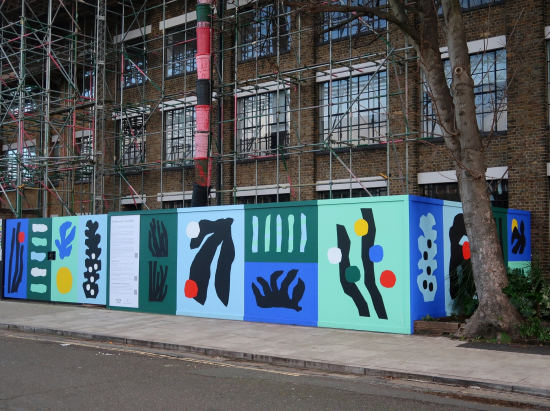
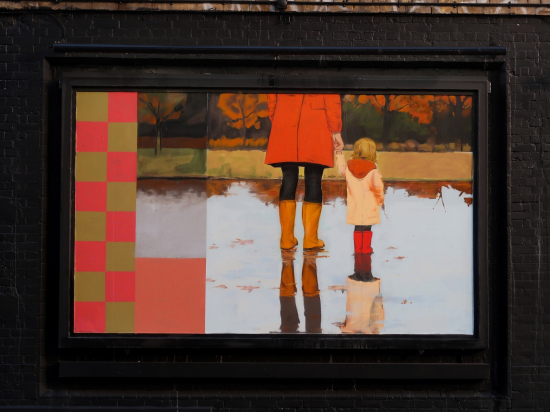
  • De Beauvoir Road and round Great Eastern Street this morning:

    IMG_3100s

    IMG_3102s

    IMG_3104s

    IMG_3105s

    IMG_3107s

    IMG_3108s

    IMG_3109s

    Images 2 and 3, Kamil Dadon.

  • https://platform.twitter.com/widgets.js

  • From the JC:

    The Iranian regime has “intensified” the weaponisation aspect of its nuclear project and is moving towards building an atomic bomb at a “rapid pace”, experts have warned.

    It has long been known that Iran is accumulating enriched uranium at near-weapons grade purity, sufficient for producing fissile material for a bomb, but new findings point to advancements in the critical process of weaponisation — the regime’s capability to detonate a nuclear weapon.

    The alarm was sounded by the Washington Office of the National Council of Resistance of Iran (NCRI), an opposition group which seeks to overthrow the country’s government, based on intelligence it has derived sources embedded in the Iranian regime.

    According to findings presented by the NCRI at a press conference in Washington D.C. on Thursday, the regime's covert activities have intensified at least at two sites, where research, manufacturing and explosive testing has been detected in relation to nuclear detonation, including but not limited to exploding-bridgewire (EBW) detonators.

    The evidence points towards an acceleration in the regime's weaponisation capability, signifying a critical step in its ability to build nuclear warheads.

    Soona Samsami, the representative of the NCRI in the US, said: “While global attention remains focused on uranium enrichment levels needed to produce fissile material for a bomb, and while the world is concerned about the quantitative and qualitative expansion of uranium enrichment by the Iranian regime, the actual bomb-making has not been addressed.

    “The Iranian regime is covertly working on the weaponisation aspect of its nuclear project to build a warhead, effectively obstructing verification through deceit.”

    No surprise there. 

    The NCRI said the Iranian regime has been severely weakened since the 2022 uprising and the fall of Bashar al-Assad in Syria. The regional balance of power has shifted dramatically against Ali Khamenei, spurring his nuclear project on. The only solution, argues Samsami, is for the regime to be overthrown, before it becomes too powerful.

    “In such dire circumstances, the regime is likely to invest significantly more energy and resources in building a nuclear bomb, as confirmed by intelligence obtained by the Iranian Resistance.

    “The only long-term solution to prevent the world’s most dangerous regime from obtaining the world’s most dangerous weapon is its overthrow by the people and the organised Resistance – a goal that is more attainable now than ever before.”

    Well yes, of course. The prospects of the mullahs with nuclear weapons doesn't bear thinking about. They're governed not by normal political humanitarian restraints but by an apocalyptic vision of the coming of the Mahdi. Loss of life means next to nothing in such eschatalogical thinking. In the absence of any push to bring down the regime, Israel – Iran's number one target – will surely have to consider targeted strikes. 

  • Joan Smith casts a jaundiced eye over western media's propensity to emphasise the positive with the new Syrian leader:

    Syria’s new leader, Ahmed al-Sharaa, understands the symbolism of clothes. For his interview with the BBC’s Jeremy Bowen, the leader of Hayat Tahrir al-Sham (HTS) abandoned his customary military fatigues in favour of a smart overcoat and open-necked shirt. His appearance sent a powerful message to Western leaders, who have it in their power to lift sanctions, that he is no longer an extremist.

    It’s striking, however, that he continues to evade questions about dress codes for Syrian women, many of whom are anxious about the prospect of HTS forcing them to cover their heads.

    In Afghanistan, the Taliban’s imposition of a strict religious dress code was a sign of much worse to come. If HTS really wanted to signal a break with its Islamist past, it could rule out compulsory hijab in Syria not just for now, while the world is watching, but in the future.

    Its behaviour towards women will be the litmus test of whether Sharaa’s bland assurances about a secular state are genuine, yet Western reporters seem reluctant to press him. It’s hard to avoid the conclusion that the world’s media is so desperate for a positive outcome in Syria that they’re too quick to discount the possibility that the country will become another Afghanistan.

    The signs are not good.

    Just two years ago, a report described HTS’s “restriction of religious freedom” in Idlib as “deeply burdensome, especially for women and girls”. It said that schools set up by the organisation enforce segregation by sex and allow little room for dissent from a jihadist version of Islam. The US Commission on International Religious Freedom reported that HTS had given orders to ban married female students, including girls subjected to forced marriage, from attending public schools and universities.

    This is Taliban-like behaviour, reinforcing the need for follow-up questions when the group’s leaders make sweeping statements about their attitude towards women’s education. Instead, they are met with a surprising degree of naïveté or, worse, an assumption that the status of women matters less in Syria than security and financial stability. But the idea that the country might one day look like Afghanistan isn’t far-fetched.

    HTS emerged from an Islamist militia, the al-Nusra Front, which was al-Qaeda’s affiliate in Syria until 2016. Sharaa had a long association with Abu Bakr al-Baghdadi, leader of Isis, which notoriously abducted and trafficked women, including thousands of Yazidis. Baghdadi himself repeatedly raped an American hostage, Kayla Mueller, who was killed in Syria in 2015. This is a history few Western reporters raise as they marvel at HTS’s rapid advance in Syria and Sharaa’s supposed conversion to secular politics….

    Scenes of celebration in the streets of Damascus after the ignominious flight of Bashar al-Assad were moving to watch, but they also filled me with trepidation. They reminded me of Tehran after the removal of the Shah, when a popular revolution was hijacked by mullahs who rule Iran to this day with their pitiless brand of misogyny. Instead of romanticising Syria’s new leader, Western correspondents have a duty to ask searching questions. Sending sceptical female journalists to interview him, instead of jovial male interrogators, would be a start.

    It's all part of the carefully honed "moderate jihad" approach. There are very good reasons to have concerns about the direction Syria may be taking.

  • Back in Queen's Wood for those dark sinewy hornbeams:

    IMG_3092s

    IMG_3093s

    IMG_3094s

    IMG_3091s

    IMG_3098s

  • BBC report on the Magdeburg attack:

    The motive behind the attack remains unclear, but authorities have reported that they believe he carried out the attack alone.

    Originally from Saudi Arabia, he arrived in Germany in 2006 and in 2016 was recognised as a refugee.

    Germany's Interior Minister Nancy Faeser told reporters that it was "clear to see" that the suspect holds "Islamophobic" views.

    The suspect is an outspoken critic of Islam on social media, and has promoted conspiracy theories regarding an alleged plot by German authorities to islamicise Europe.

    Hmm. 

    On the other hand…

    https://platform.twitter.com/widgets.js

    Despite claims made by the German press, Taleb Al Abdulmohsen is not an ex-Muslim atheist, nor is he a fan of the AfD or Elon Musk. While he may have spread this misinformation himself, it aligns with the practice of Taqqiye, an Islamic doctrine that permits lying and deception to advance Islamic objectives.

    In reality, he is a radical Shia Muslim, as evidenced by his name and numerous tweets and chat leaks circulating on Arabic-speaking platforms like X. Disturbingly, his plans to carry out mass killings of Germans were brought to the attention of German authorities by a Saudi woman. Tragically, the police ignored her warnings.

    More details and links in the thread.

    Added:

    https://platform.twitter.com/widgets.js

    Full text:

    The man who was arrested for the most recent terrorist attack on a Christmas market- this time in Magdeburg, Germany- is allegedly Saudi national Taleb Al Abdulmohsen. I’ve known him for years (online only) and he never seemed stable to me. He obsessively went after an ExMuslim Saudi woman. He wanted my help in ‘exposing’ her and turned aggressive when I wouldn’t comply. Friends have shared with me that he was targeting other Saudi female activists as well. I still can’t believe this is real. I knew he was unhinged, and I wanted to keep my distance, but I never suspected he’d be violent.

    There is suspicion now that he was actually working w Saudi authorities to bring down Saudi female activists. And although I cannot confirm this obviously, I will say that this theory aligns with my experience and exchanges with him.

    This is a tragedy on top of a tragedy on top of a tragedy. This will now make it harder for ExMuslims to seek asylum in EU or anywhere probably. It will also feed the racist narrative that all Arabs are terrorists, regardless of their faith- which I’ve already seen gaining predictable traction. The epicenter of this is the tragedy of the families of those killed and the trauma the survivors and their families will endure, of course, but even the far-reaching ripple effects of this will continue to cause devastation for so many.

  • The Telegraph gets a peek preview of the NHS 'calendar of awareness’ for 2025:

    Gender-fluid visibility week and transgender parent day are among awareness events the NHS will recognise in 2025.

    A calendar of events for NHS England staff to watch out for includes some 351 awareness days, weeks and months, to be marked next year.

    After various religious holidays and festivals are removed, there are about 240 events left, and about one in eight is related to LGBT people.

    A source said most awareness days and weeks were not typically marked in any way, but those relating to transgender people tended to be “highly visible” and get blog posts, emailed to all staff and put on the NHS staff homepage.

    “The main issue is excessive airtime for awareness days for trans people and their gender identities and rules, and these are riddled with falsehoods about being more likely to be victims of murder or discrimination,” the source said. “And if you challenge it, you are a bigot.”

    They queried why staff were spending so much time on promoting these days rather than doing their jobs.

    Well yes.

    The 31 awareness days and weeks for this group on the NHS list is significantly more than any other topic or area, followed by cancer, which has almost half the awareness events noted at just 16….

    Among the days being celebrated there is a transgender parent day, a pansexual and panromantic awareness and visibility day, an intersex day of solidarity, a transgender day of remembrance, a national coming out day, and an international pronouns day, the NHS says.

    You'd be forgiven for thinking this was some kind of parody: "a transgender parent day, a pansexual and panromantic awareness and visibility day, an intersex day of solidarity, a transgender day of remembrance, a national coming out day, and an international pronouns day". Alas not.

    As if that wasn't enough…

    There is also an LGBT history month throughout January and a trans awareness month in November.

    It's all a bit obsessive.

    Kate Barker, chief executive of charity LGB Alliance, said: “Instead of celebrating made-up pronouns, the NHS should be raising awareness of the scandal of unevidenced, experimental medicalisation of gender-distressed young people.

    “Marking Detransition Awareness Day on March 12th would be a welcome step in ending the irreversible damage – often inflicted by the NHS itself – on youth who are otherwise likely to grow up happily gay or lesbian.”

    Helen Joyce, director of advocacy at Sex Matters, a human rights charity said: “The NHS has one job: to provide healthcare to everyone. No doubt that does involve public health messaging, like days to raise awareness of dementia or menopause symptoms.

    “But endless tripe about special identities is not only tiresome, it’s a distraction from what medical professionals should be doing. It makes NHS staff look obsessed with trivial nonsense like made-up genders and preferred pronouns. Over time that’s bound to erode patients’ trust.

    “This is all a waste of time and money. The NHS needs to drop the performative nonsense and focus its efforts on treating sick people and improving the nation’s health.”