• Charlie Hebdo editor-in-chief Gérard Biard, interviewed at Spiked:

    Because Charlie Hebdo is an atheist newspaper, we also defend secularism, which means the right to criticise and to mock religious dogmas and religious representatives, and having the right to blaspheme. The right to blaspheme is a right that has existed since the French Revolution.

    During the French Revolution, we killed the monarchy, we decapitated the king. But the king held his power by divine right. So, in a way, we decapitated God. We expelled God from the realm of civil power, from earthly power. That’s secularism: it’s to say that God is an idea, an idea like any other. It has no more value, nor less either. We can, and we must, subject it to the same treatment as all other ideas. We can mock it, we can say, ‘No, you’re wrong’.

    This is not about insulting believers. It’s simply saying, ‘I do not accept the power of God’. This is something that, in my view, is essential for democracy to function. The principle of democracy is that all laws should be debatable, that we should be able to oppose them, that we should be able to go into the streets to say we don’t agree, and we should be able to change them. But then if you apply a law or base a law on the word of God, you can’t do any of that, because God has spoken, end of story. He is right. So, you cannot contest God’s word. A law based on God’s word is not a democratic law.

    What are the Iranian people asking for today? They’re not asking for the mullahs to disappear entirely – they’re asking for them to leave power. They want non-religious leaders and civil laws. Secularism is that. And that’s what we defend. […]

    It’s important to understand one thing: every time we publish a cartoon, whether it’s about politics, religion or society, it’s because something relevant has happened. If we draw Muhammad, it’s not because we just want to draw Muhammad; it’s because Muhammad is in the news. We are a newspaper that comments on current affairs. To be honest, we’re not really interested in Muhammad. It’s not our problem. We’re not interested in God. We don’t give a damn. But unfortunately, God matters a lot to people in the world, and some use God to exercise a toxic, totalitarian power over others. That’s what we’re fighting against. […]

    We’ve now become aware that Islamism is a political ideology, a totalitarian ideology. This is what we need to take a stand against. It’s not against believers. We don’t give a shit about the believers. The believers aren’t the problem. Believers can believe what they like. The problem is the use of these beliefs to control society. That’s what religion does. It’s about how worship, belief and faith are used to exercise control over society and individuals. That’s where the danger lies. […]

    Terrorist attacks work like this: if we give in to fear, we will lose more freedoms. We no longer publish what we want to. We reinstate laws to ban blasphemy, as Denmark has just done. But that doesn’t change anything. The terrorism is still there. It still wants to kill. It still wants to kill people who gather to drink, to talk to each other, to make newspapers, to listen to music, even to pray, too. The terrorism doesn’t go away.

    So we must fight against it, physically, but we must also fight against it ideologically. And the only way to combat it is by continuing to be who we are, by continuing to exercise our freedoms – and to exercise them with the strongest conviction possible.
  • Another NHS case where a woman has to fight for somewhere to change in privacy, away from men. From the Times:

    A nurse suspended after she complained about a trans woman in a female changing room has beaten an attempt to gag reporting of her employment tribunal.

    The health worker claims her experiences amounted to harassment and is taking legal action against both her employer, NHS Fife, and the colleague who undressed in what she believes should be a female-only space.

    The clue's in the name: female changing room.

    In a rare move, the health board and the trans woman made formal applications for the case to be heard in private and the names of those involved and the hospital department where they worked to be kept secret.

    The nurse — as well as gender-critical campaign groups and major media organisations, including The Times — opposed gagging attempts at a special hearing in November.

    Judge Antoine Tinnion has now ordered that all proceedings be public and that the parties be named. It can now be revealed that the nurse taking the action is Sandie Peggie and that the trans woman she accused of harassment is a doctor called Beth Upton. Both work at the A&E department of Victoria Hospital in Kirkcaldy….

    Peggie at one point is understood to have been told she could change in a cupboard if she was uncomfortable with her trans colleague.

    NHS Fife in September announced that it had paused development of its trans policy “following growing coverage and public debate”.

    Which is exactly why these tribunals need to be in the public eye – so this kind of trans pandering over women's concerns gets exposed.

  • Liitle joy at the Friday sermon in Yasuj, Iran for the (segregated) audience, as Imam Nassir Hosseini describes a Syria taken over by foreigners: "one half of Syria is occupied by the Turks, and the other half by the Zionists". The Zionist regime "attacked some of the places there with nuclear bombs".

    From MEMRI TV:

    In his January 3, 2025 Friday sermon in Yasuj, Iran, which was aired on Dena TV (Iran), Nassir Hosseini warned that Iran's enemies, the enemies of the Shiites, are like "rabid dogs" – if not confronted, they will defeat you, but if resisted, they will back down. He cited Syria as an example, claiming that when Syria's resistance wavered, the Zionist regime destroyed much of the country’s military infrastructure. Hosseini also asserted that Israel used nuclear bombs in Syria, emphasizing that disunity and a lack of resistance lead to such devastating outcomes.

  • It's ten years on from the Charlie Hebdo killings, and it doesn't make for an inspiring tale of lessons learned. Two Islamists, outraged by the magazine's printing of cartoons of the Prophet Mohammed, stormed into the Hebdo offices on 7th January 2014 and slaughtered twelve people, including eight members of the editorial staff. It was as clear an attack as you could possibly imagine on the principles of a free society where nothing and no one is exempt from ridicule, yet though the massacre was met initially with horror and condemnation, the back-tracking soon began. And it hasn't stopped since.

    Andrew Hussey at UnHerd:

    Just a week after the killings, for instance, Le Monde published an editorial, signed by prominent Left-wing intellectuals, condemning Charlie’s “obsession” with Muslims and attacking French immigration policy and police brutality. More recently, journalists in Left-wing papers, with Libération leading the way, have openly expressed scepticism for Charlie Hebdo — even suggesting the magazine was guilty of racism.

    No wonder Charlie Hebdo feels betrayed by the very people that should have had its back. It continues to publish, naturally, and is marking the anniversary of the attack with a new book. Entitled Charlie Liberté, le journal de leur vie (“Charlie Freedom: The diary of their life”), it’s dedicated to those who died. Yet though it’s clearly meant as a homage to the victims, Charlie Liberté also contains a decidedly bitter tone. More precisely, Laurent “Riss” Sourisseau, the managing director of Charlie Hebdo and himself wounded in the attack, writes that Charlie has been betrayed on all sides over the last decade — but most of all by what he calls the “spineless” Left. This includes media and academia as well as politicians, all of whom spent the last 10 years dodging direct conflict with Islamism.

    That, of course, begs the question: why? Why, despite France’s long history of secular struggle, have so many on the Left and centre abandoned their comrades so absolutely? For Riss, the answer is partly to do with physical cowardice, with lawmakers and journalists simply too frightened to face the Islamist menace. To be fair, these fears are sometimes justified: an unnamed senior editor of a leading “progressive” magazine once told me he couldn’t openly support Charlie for fear of his life.

    More than that, though, Riss attacks the political cynicism of supposed progressives eager to court the Muslim vote, or anyway avoid specious accusations of racism.

    Now that rings a bell.

    Freddie Attenborough in The Critic:

    In the wake of the attack, millions took to the streets under the banner “Je Suis Charlie”, a declaration of solidarity and a proclamation that freedom of speech is non-negotiable. Yet, as we mark the 10th anniversary of this attack, it is impossible to ignore how fleeting that solidarity has proven to be. Even at the time, there were murmurings that Charlie Hebdo had “gone too far”, as if the act of drawing a cartoon could ever justify cold-blooded murder.

    When PEN America decided to award Charlie Hebdo its Free Expression Courage Award, more than 200 well-known writers protested. The dean of a journalism school, writing in USA Today, implied that the magazine’s satires of Muhammad should fall outside the protections of the First Amendment. Even Garry Trudeau, the creator of Doonesbury, suggested that Charlie Hebdo had incited the murderous violence against it….

    This unthinkable atrocity was not merely an attack on a magazine. It was an attack on the principle that no idea, no belief, no religious figure is beyond satire. It was an attempt to impose, through violence, a prohibition on critique. To yield to such demands is to surrender the freedoms that underpin our societies.

    As we do so, however, we should not blind ourselves to how much has already been lost. The freedom to criticise, to lampoon, to question sacred tenets has been increasingly curtailed, not just by fear of violent reprisal — the “jihadi’s veto” — but also via a broader societal tendency to avoid controversial subjects altogether. In the void created by fear, de facto blasphemy laws have crept into Western societies. They do not bear that name, but they have the same chilling effect. Writers, artists and thinkers censor themselves, avoiding subjects deemed too risky, too provocative, or too likely to incite a mob. This stifles not just speech but the contestation of ideas essential to progress, representing a capitulation to those who seek to control discourse through intimidation.

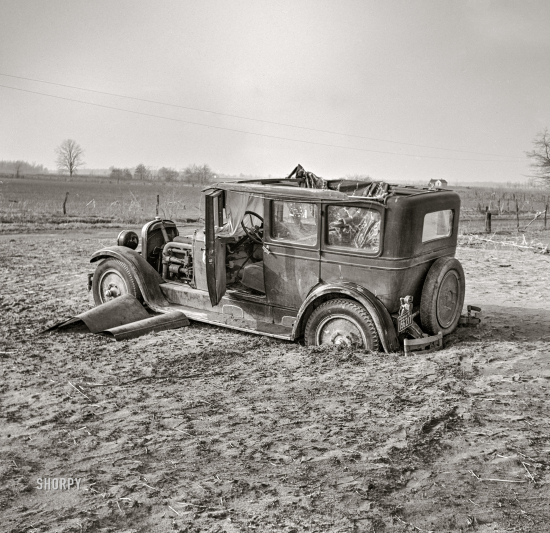
  • Russell Lee, February 1937. "Posey County, Indiana. Havoc wrought on farmland, highways, roads, farm buildings, equipment, homes by 1937 flood. Automobile after the flood on Mackey Ferry Road near Mount Vernon."

    image from www.shorpy.com
    [Photo: Shorpy/Russell Lee for the Farm Security Administration]

  • A Times report – Royal Society of Literature chiefs quit as diversity drive implodes. Apart from efforts to make the society more inclusive, with predictable results…

    Prior to recent “inclusivity initiatives”, would-be fellows could be nominated only if they had published two works of “outstanding literary merit”.

    One prominent writer, Don Paterson, said however that one new fellow appeared to have “published a single poetry pamphlet”. Another, Amanda Craig, said that while previously it had been seen by some as being “a bit too pale, stale and male”, it had now become so diluted that it was “no longer the kind of distinction that it was”.

    …there's the Salman Rushdie business. The society refused to issue a statement of support after Rushdie was stabbed, on the grounds that this “might give offence”. They couldn't take sides, apparently, between an author and his Islamist would-be assassin. Those who wanted Rushdie killed might be offended.

    Hadley Freeman had a good piece about this at the time

    This still strikes me as one of the all-time lows of British woke "inclusive" culture.

  • I was hoping to leave the subject – so much heat, so little light – but this is such an excellent clear-headed analysis of the rape-gang culture and the Rotherham cover-up. Louise Perry in the Spectator:

    When I use the word ‘Rotherham’, I am talking about the rape and sexual torture of thousands of underage girls in Britain over many decades by Muslim men from the Middle East, East Africa, and South Asia (predominantly Pakistan). The men targeted these girls because they were white and non-Muslim. Authorities failed to investigate the crimes for fear of being called racist. There is no disputing the fact that the motivation for the crimes was – and is – explicitly anti-white. Many of the perpetrators have said as much in both court testimony and police interviews. […]

    The specific kind of crime that ‘Rotherham’ represents is absolutely racialised, and it is not rare. Rotherham itself is a small town. By a conservative estimate, 1,400 children (the vast majority girls) were abused over a 15-year period, representing a very substantial minority of white girls living in Rotherham at the time. A 2020 study by academics from Reading and Chichester universities estimated that 1 in 73 Muslim men in Rotherham were prosecuted for their involvement in the abuse, with an unknown additional number evading detection. Almost everyone in Rotherham knows someone involved, either as victim or perpetrator. It should not surprise us that, during last Summer’s race riots, the town was the site of some of the most serious violence.

    But a post-industrial northern town like Rotherham feels a very long way from Westminster. ‘Rotherham’ as a synecdoche doesn’t just represent the racially-motivated sexual torture of adolescent girls, it also represents catastrophic elite failure.

    It was a failure, in the first instance, to permit the culture clash that resulted in ‘Rotherham’. Anyone with an ounce of sense should have realised that the post-sexual revolution culture of Britain and the very conservative sexual culture of a Muslim country like Pakistan would not mix happily. The men who participated in the rape gangs were clearly not good Muslims, not least because they drank alcohol. But they nevertheless conceived of themselves as ethnically and religiously distinct from Britain’s majority-white population, whose daughters were understood to be legitimate targets of sexual violence.

    This, too, in the era when online porn became widely available, which surely contributed to the sense that white girls (‘white slags’ and ‘white whores’, as the perpetrators described them) were fair game. The predominance of white and East Asian women in online porn means that it effectively functions as racist propaganda, teaching men across the world – including those who have never actually met a white or East Asian person – that these women are as pornography represents them: desperate for pain and humiliation.

    Men whose sexual tastes had been trained on this propaganda found themselves in the midst of a sexually liberated culture in which adolescent girls are not fiercely guarded by their male relatives, and most girls are not supervised when they go out, even at night. They targeted the girls whose supervision was most lax, particularly girls in foster care who could disappear for days on end without provoking much in the way of adult action. Very many teachers, carers, and NHS staff had a sense that something was going on, since they saw underage girls in the company of ‘older Asian boyfriends’. But this was typically written off as behaviour characteristic of the British underclass. They were just white slags. […]

    But this is hard history now, beyond dispute: police forces across the country prioritised the prevention of race riots over the prevention of the sexual torture of tens of thousands of children. Almost all of the media and political class turned a blind eye to it (with some important and admirable exceptions), precisely because so many of the perpetrators were motivated by anti-white animus. That fact is so shocking, and so significant, that we cannot find the right words.

  • As I wrote yesterday, where's Christopher Hitchens when you need him……

    https://platform.twitter.com/widgets.js

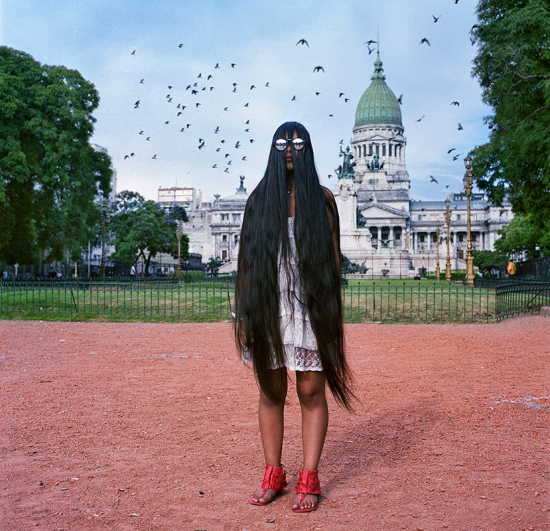
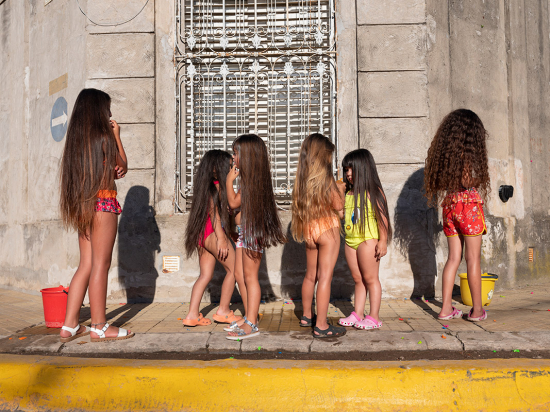
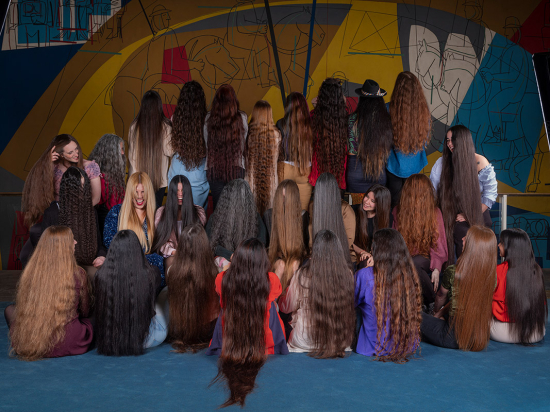
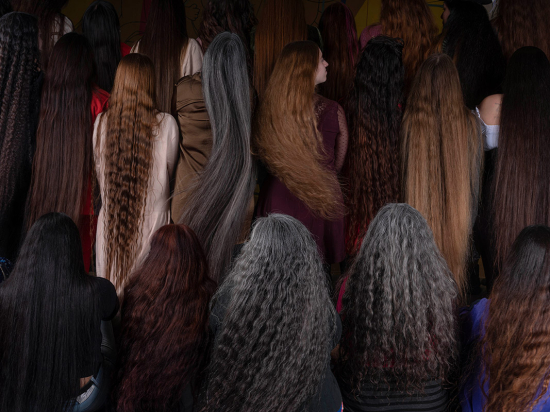
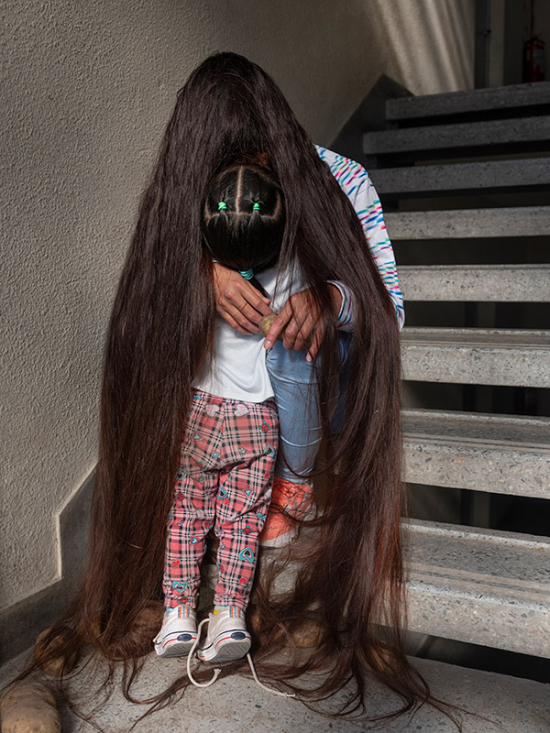
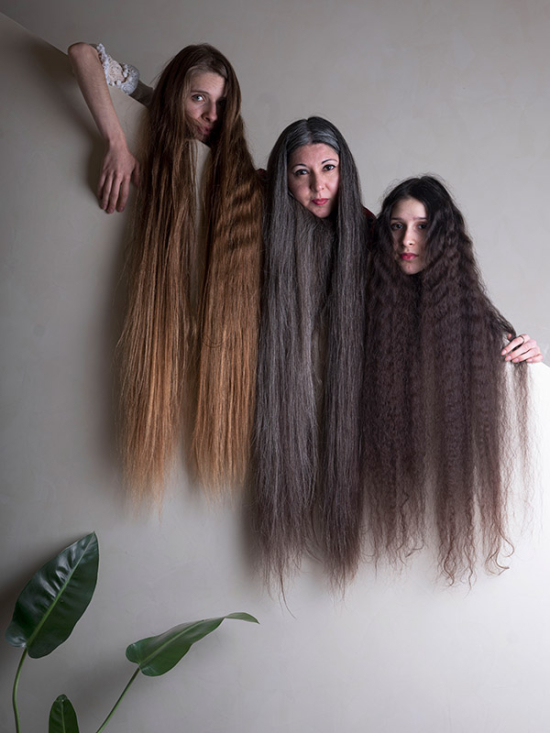
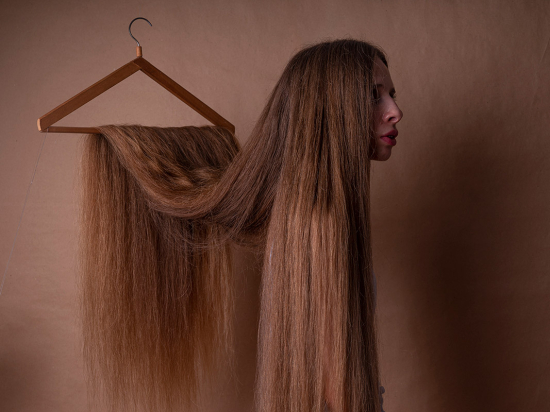
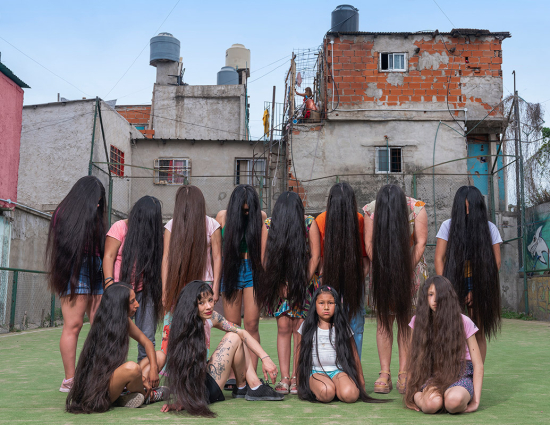
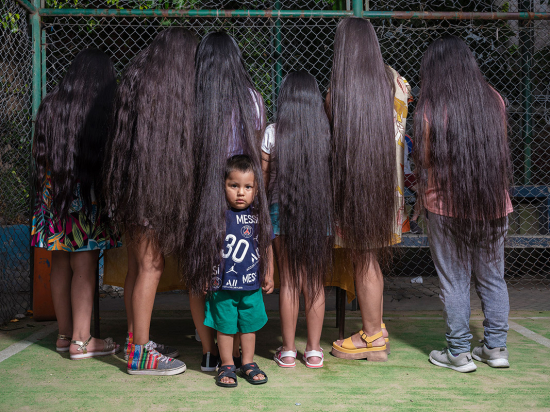
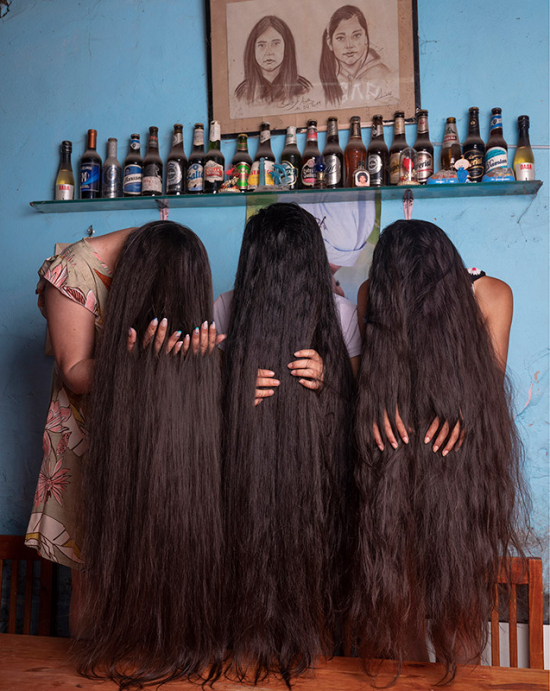
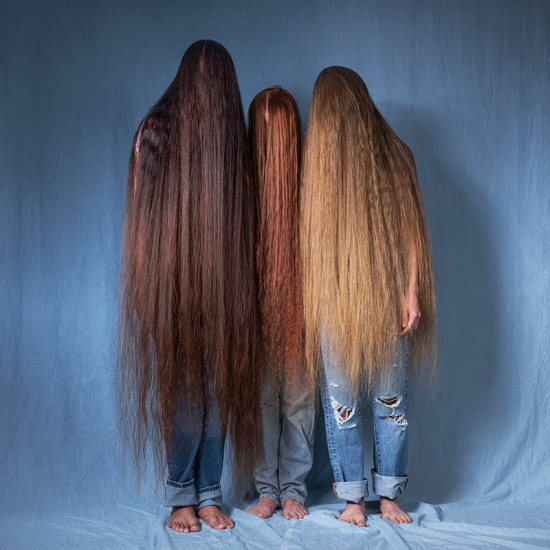
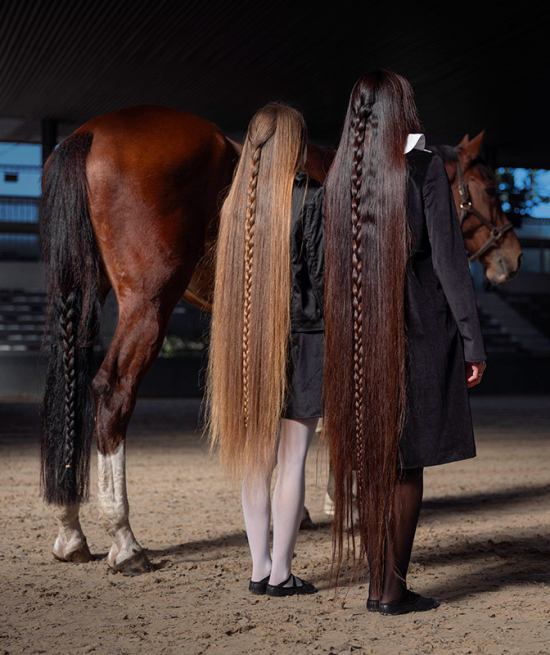
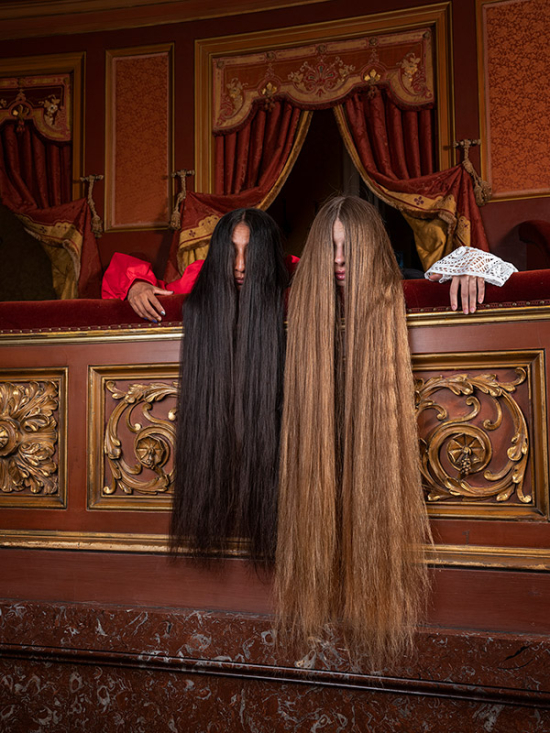
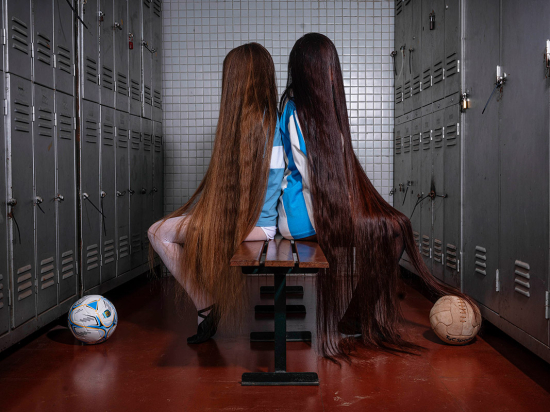
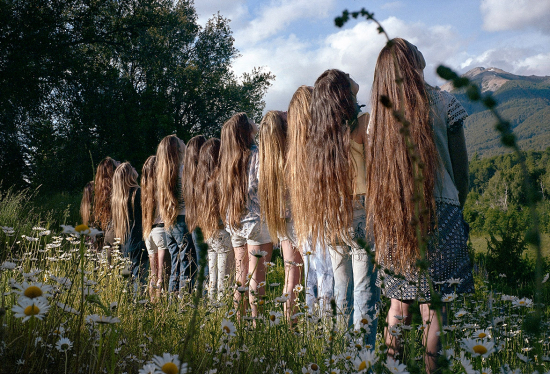
  • Photographer Irina Wearing, celebrating the longhair culture of Latin American women:

    Werning10-2

    Werning30a

    Werning34

    Werning37

    Werning34

    Werning38

    Werning40

    Werning42

    Werning46

    Werning47

    Werning48

    Werning52

    Werning54

    Werningc

    WerningDSCF3655

    Werningd
    [Photographs © 2025 Irina Werning]

    From Colossal's favourites of 2024:

    For the last 17 years, Irina Werning has traveled throughout Latin America photographing women and girls for her ongoing series, Las Pelilargas, or The Longhairs. Shot in color and black and white, the portraits document a distinct cultural practice through an incredibly alluring, even surreal lens. Many subjects are camouflaged behind their cascading locks, their identities obscured by hair that sometimes even appears to consume their bodies whole.

    Werning began Las Pelilargas in 2006 when people connected with one another primarily offline. “Back then, in the absence of social media, I would travel to mountain towns and stay there for months, putting up signs in markets, schools to find them, and even organizing long hair competitions,” she tells Colossal….

    While her approaches to identifying subjects and pinpointing unique ways to share their stories have shifted since the project started, Werning’s intent has remained constant: to honor and celebrate “their long hair, the patience and love and dedication of years of growing it.”

  • The Times this morning has the first of a three-part series by Anthony Loyd – Inside Sudan’s forgotten war: 150,000 dead, 11 million displaced:

    Torture and sickness are unremarkable ways to die in Sudan, where bullet and shellfire, enforced starvation, looting and rape are all part of the arsenal of war. Thousands of dead — the corpses of the slain, the sick and the hungry — have been buried in the cemeteries across the country since the war began in April 2023. A multitude more have died of malnutrition in the desert unrecorded, their fate unseen.

    Yet for all the scale and gravity of the conflict, which threatens the lives of millions and could transform Africa’s third largest country into a failed state, Sudan’s war has remained at the periphery of international attention, relegated to the shadows of conflicts in Ukraine and the Middle East.

    Among Sudanese medical staff struggling to save lives, anger often accompanies a sense of abandonment.

    “I don’t think the international community cares,” said Doctor Jamal Eltayeb Mohamed, the director the Al-Naw hospital in Omdurman, one of the few medical facilities to remain operational in the war-ravaged city, as he stood in a ward of wounded people.

    “I think they just don’t know what is happening here. They don’t know about the impact of this war on the poor and the vulnerable, who lose their livelihoods, their jobs, their means of survival. Everything around us is being destroyed.”

    Between 60 and 70 per cent of Sudan’s medical facilities have been destroyed in the war, along with most of the country’s main pharmaceutical production plants. The strain on the remaining facilities is intense. Al-Naw hospital currently receives between 500 and 600 patients a day — many patients were being treated as they lay on the floor.

    A graph showing who's responsible for the violence makes it clear that it's overwhelmingly down to the Rapid Support Forces [RSF], with 77% of all violent incidents against civilians. Loyd talks about their campaign of ethnic cleansing, but never spells it out. The RSF is primarily composed of the notorious Janjaweed militias which previously fought on behalf of the Sudanese government, killing and raping its way across Darfur. Its actions were deemed crimes against humanity by Human Rights Watch. They are largely Arab, and their targets, the victims of their ethnic cleansing, were and still are black Africans.

    As I noted back in May, after a Times report from Jane Flanagan (My dark skin is a death sentence in Darfur), whoever's doing the PR for the Arabs is doing one hell of a job. In Sudan Arab groups slaughter black Africans and have "slave hunts", with women and girls being rounded up…it doesn't make the news apart from the odd largely ignored report on the back pages, and no one cares. In Gaza, though, the Arabs are the biggest victims ever as the Israelis take strong action to counter the Hamas Islamic jihad against Jews, and the world explodes in protest.