Looking forward to the police statement about today’s Leeds pro-Palestine march where a van spontaneously combusted and a Muslim man sought safety on top and held his Quran high to keep it away from the flames. pic.twitter.com/gyi7wiwmLh
— Josh Howie (@joshxhowie) November 1, 2025
Mick Hartley
Politics and Culture
-
A new Chinese crackdown on Christians reinforces the view that Xi Jinping is Mao version 2, only with more sophistication. Bob Fu at Tablet:
For 40 years, since the end of Mao Zedong’s bloody Cultural Revolution, China’s unregistered Protestant and Catholic congregations have operated in a precarious gray zone—technically illegal but often tolerated. That uneasy equilibrium shattered in October.
Zion Church’s founder and senior pastor, Rev. Mingri “Ezra” Jin, was taken from his home in Beihai, Guangxi Province. Within hours, police swept through multiple cities, arresting at least 22 pastors, preachers, and lay leaders, including Pastors Wang Cong, Yin Huibin, Liu Zhenbin, and Sun Cong. Two detention centers in Beihai now hold 13 women and nine men; others have been placed under house arrest or disappeared into China’s labyrinth of “residential surveillance” facilities.…
During the Cultural Revolution, the party sought to eliminate all religious expression as “superstition.” But under Xi Jinping, the persecution has taken on a more sophisticated, ideological character—what he calls the “sinicization of religion.” Churches are not merely destroyed; they are forced to submit, to rewrite Scripture, to display portraits of Xi alongside crucifixes, to teach loyalty to the party before loyalty to Christ.
This crackdown thus represents a return to Maoist absolutism cloaked in modern technology. Surveillance cameras monitor house gatherings. Artificial intelligence scans sermons for “illegal religious content.” Christian WeChat groups are infiltrated by state security. The party has learned that total control in the digital age requires both coercion and algorithmic precision.
The reasoning behind the suppression is the same as ever: under totalitarian rule there can be loyalty only to the party. As it was with Mao, so it is with Xi. For a while, after Mao, it looked like China might be undergoing some kind of liberalisation – but it wasn’t to be. The country was structured to follow a totalitarian line. There was a Mao-shaped hole, which Xi has now filled.
-
From Genevieve Gluck at Reduxx:
A trans-identified male in Denmark who has been given permission to compete against women in football is being celebrated by national media. Oliver John Collenette, who calls himself Olivia Kjærgaard Collenette, began claiming a transgender status approximately three years ago, and shortly after began demanding the right to play on a women’s football team. Now, he has been granted approval by DBU Zealand (DBU Sjælland) to play on one of the club’s women’s teams.
In a glowing interview published this week by the Danish Broadcasting Corporation (DR), Collenette expressed his disappointment that the policy allowing men like himself to compete in women’s sports was not yet a national measure. To date, only DBU Zealand, the local governing body for football on the island of Zealand, has put into place guidelines allowing men to “identify” into women’s teams.
“I’m actually happy that I can play with the gender I identify as. But it’s not so nice that you don’t know how it will be in the other unions. It would be nice if it were nationwide – if the whole country supported transgender people,” Collenette told DR.
Until recently, Collenette had played football on men’s teams. “It was terrible for me when I played with the boys. I didn’t feel like I fit in, and I felt left out of the community,” he told the national broadcaster. “The fact that I was wearing girls’ clothes and felt like I was being looked at a lot and not really talked to… I was ostracized and I felt like I wasn’t welcome in a way, so it made me very insecure.”
Collenette indicated, in the interview, that women expressed opposition to his inclusion in women’s sports. “In the beginning, when we went to games, we always asked the teams before we showed up if they were okay with playing with us. When they heard there was a transgender person, they said no.”
“I don’t see why it would be a problem for biological women to play alongside transgender women who act and identify as women. It’s not about taking anything away from anyone, it’s about creating more diversity,” Collenette added.
The entitled brat. Of course it’s about taking away from someone. It’s taking away from the woman whose place he’s taken. More than that, though, it’s about the straightforward unfairness of it: a man playing against women.
It’s so easy for the media to celebrate this “diversity” when it’s a man playing the victim. It just builds on the same old tradition of women being ignored: of women not really counting
-
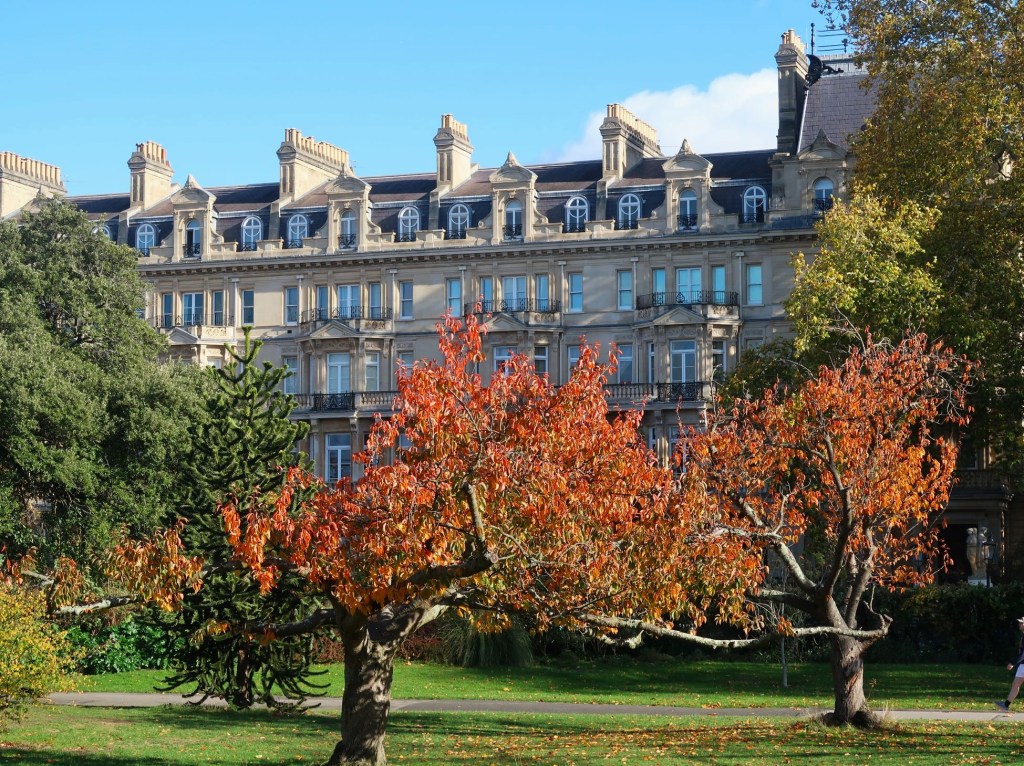
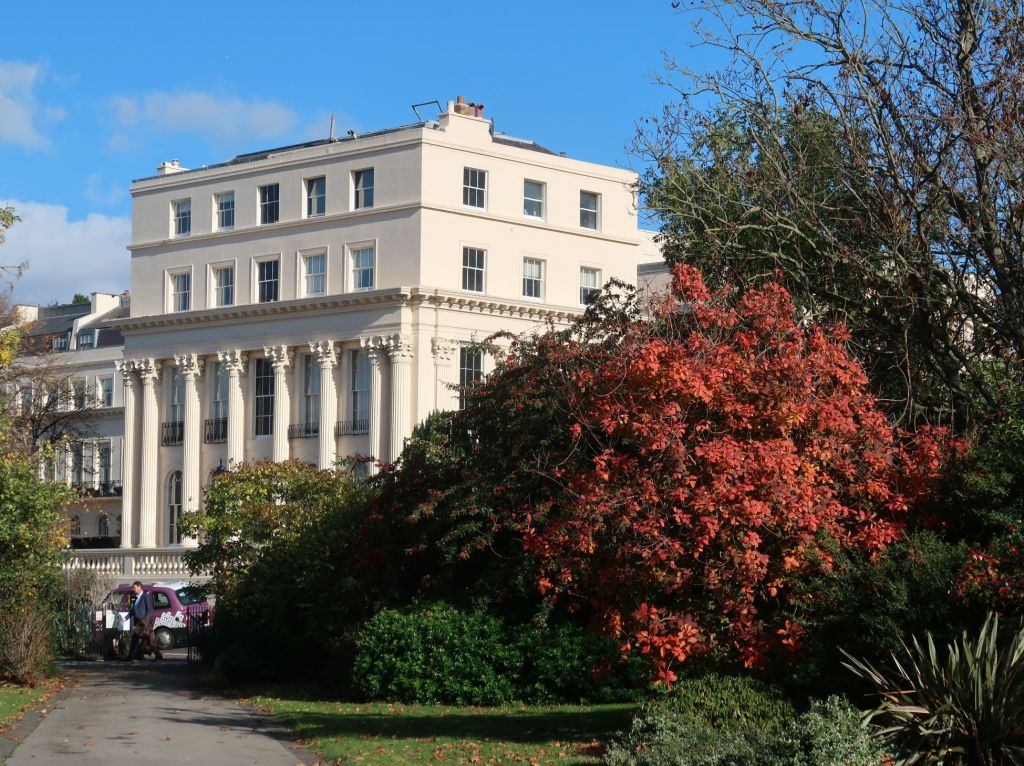
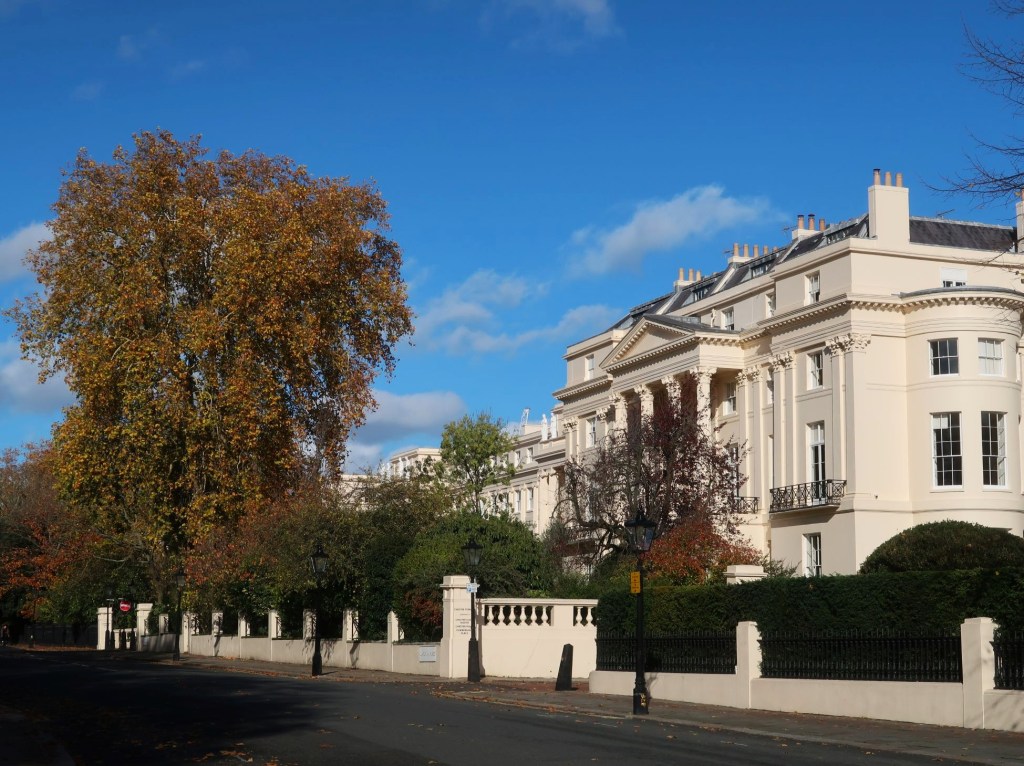
This morning:


-
Julie Bindel talks to the three women who’ve started a women-only society at Cambridge:
“University culture is obsessed with gender ideology,” says Halligan, 22, when I join the three women on a video call.
“All you can see are pronoun badges, rainbow flags, literature about transgender issues… ‘Are you feeling gender distress?’, and trans flags bearing slogans such as ‘My existence is not a threat’.”
As ever with trans ideology, there’s never room for debate. The answer is always ostracism and threats.
“At Cambridge, I built up lots of friendships, including with trans rights activists. I didn’t think it was going to be a problem. I thought if I could tolerate their views, then hopefully they could tolerate mine.”
But like Worley, she quickly felt “inundated” with trans ideology around campus.
Meanwhile, during her third term at Cambridge, Sewell, 20, showed a friend some newly acquired books, including Material Girls, a feminist work by Kathleen Stock, the academic hounded out of Sussex University by trans rights activists. The friend, she said, wasn’t a trans rights activist herself, “but she went out of her way to contact the biggest trans rights activists in my college because she thought they deserved to know what my views were”.
The incident led to “complete ostracism, pointedly hostile receptions in public spaces, ‘terf’ being scratched into my door. The few friends who did continue speaking to me refused to meet in public and said they were too scared to be seen with me.”…
On social media, the three students have been targeted with countless hateful messages. “Every other feminist society is denouncing us and mobilising against us,” adds Sewell. “The undergraduate population of Cambridge has turned against us, as we were expecting.
“They band together in group chats, parroting the usual slurs against us,” says Halligan. I’m shown one of the many Instagram posts: “Cambridge University joint statement from college Femsocs [feminist societies] and associated women’s societies: ‘Transgender and gender-queer individuals have been and will continue to be crucial to our cause as feminists.’”
That’s some feminism, when the promotion of men into women’s spaces and women’s sport is “crucial” to their cause.
-
Plastic surgery was born in the hospitals of the First World War, when doctors like Harold Gillies pioneered facial construction surgery on the appalling injuries that confronted them as the poor wounded soldiers were carted back from the horror of the trenches. Later, in peace time, it survived on nose jobs, blemish removals, and maybe dealing with those unfortunate bags under the eyes. Minor adjustments, basically. Now, though…well, it’s all about revealing the real you, exposing your inner beauty, These surgeons can reconstruct your face. Feminise it. Masculinise it. Above all – beautify it. Glamourise it. Take the years away.
So what about the lived-in face? About reading the inner life from the features? – as self-portraits by artists like Rembrandt manage so mysteriously and so powerfully. And as we all do to some extent, in every human interaction.
Kathleen Stock has some thoughts:
[T]reating other people as ensouled is constitutive of human interaction, built into the basic terms of engagement. There is not, first, the act of seeing some movements, and only then an intellectual inference to hidden pains or joys. The pain or joys are seen directly in the other person’s face and body. I smile meaningfully at you, and you smile meaningfully back. I literally see your mind in your smile, as you do in mine. Or as Wittgenstein also put it: “the human body is the best picture of the human soul”.…
But whereas physiognomy involves making predictions about general character traits, to say you can literally see someone’s mind or soul in their body and face is to make a different point – one about human uniqueness. It’s a gestalt: the alchemic interplay of features, gestures, facial movements, vocal tones, speech patterns, and other habits of mind that add up to an irreplaceable, particular person in the beholding of them. That this is the norm for meaningful human interaction is what makes even skilful impersonation of people you know so weird and hilarious: almost there, but not quite.
Perhaps this all sounds a bit too mystical to take seriously. Perhaps human faces are just bits of flesh performing functional tasks, as Descartes implied. But if you think otherwise – as I do – then it starts to look psychopathic that we culturally approve of faces being sliced up and rearranged into stiffly impersonal, generic masks, for no other reason than the owner’s vanity. At the very least, when the surgeon discards all those bits of muscle and skin, he is also cutting off others’ capacity to know you properly. At worst, he is doing some violence to your deepest self. When you look in the mirror, the eyes, nose, and mouth may all be in roughly the right places; but even you may not be able to tell who is looking back.
-
Kunwar Khuldune Shahid at Spiked on the horrors of Sudan’s civil war:
The violence visited upon the people of Sudan, particularly its non-Arab population, is without parallel in the 21st century. Darfur has been the epicentre of this misery. In the three decades in which Sudan was ruled by al-Bashir, the Sudanese army repeatedly attempted the ethnic cleansing of the state’s non-Arab population. This was done with the help of Arab militias such as the Janjaweed, many of whose fighters now belong to the RSF. The Fur, Masalit and Zaghawa ethnic groups bore the brunt of al-Burhan and Hemedti’s war crimes.
With the fall of El Fasher, the tally of those displaced in Sudan is now approaching 13million. It has been described as the world’s ‘largest humanitarian crisis’ by UNICEF with 25million people – half of Sudan’s population – experiencing malnutrition or famine. As many as 400,000 people have been killed since the start of the civil war.
Massacres of the region’s non-Arab population are sadly nothing new. This violence is rooted in the Arab colonisation of east Africa, beginning with the seventh-century conquests that converted northern Africa to Islam.
The enslavement of the region’s non-Arabs also has a long history. After Arab armies were thwarted in their bid to expand southwards from Egypt by the Christian Nubian kingdom of Makuria, the Baqt treaty of AD 652 allowed Arabs to trade grains and spices in exchange for slaves. The land acquired the Arabic name Bilad as-Sudan, or ‘Land of the Black People’. By the end of the 19th century, Sudan was a critical source of slaves for Egypt and the rest of the Ottoman Empire.
Sudanese independence in 1956 did nothing to change the subjugation of Sudan’s non-Arabic population. A succession of coups ended in 1989 with the ascent of Omar al-Bashir, who continued the Islamisation of Sudan with a vengeance.
Just recently the escalating violence has edged into the news, but basically no one in the West has much interest. The media, and the left – who you might perhaps expect to be concerned about the genocide of black Africans – are obsessed with Gaza. The wrong people here, the Arabs, are doing the slaughtering. By the rules of the racism game, Arabs are victims. Does Not Compute. Avoid. Keep focusing on the evil Jews.
As I’ve said before (can’t find it now) whoever’s doing the public relations for the Arabs is doing a cracking job. Here they are committing a clear-cut genocide against black Africans, and no one cares. The violent imperial spread of Arabs across North Africa under the banner of Islam is never confronted, nor the long-lasting and brutal slave trade – there long before the West got involved in African slavery, and still continuing. And now they’re the biggest victims the world’s ever seen at the hands of the Jews in Palestine, and the world erupts in support of their noble cause.
Nice work if you can get it.
-
The government is procrastinating over the Equality and Human Rights Commission guidance on single-sex spaces.
Rules that would ban transgender people from using facilities that do not match their biological sex could be delayed for more than a year, it has emerged, as ministers were accused of “undermining the law” by demanding extra checks.
Bridget Phillipson, the women and equalities minister, received statutory guidance from the Equality and Human Rights Commission (EHRC) eight weeks ago, setting out how gyms, clubs and hospitals must judge single-sex spaces based on biology.
The document has not yet been laid in parliament and many organisations, including some NHS trusts and the civil service, said they were waiting for the guidance before implementing changes after the Supreme Court ruling in April that the use of “woman” and “man” in the Equality Act refer to sex at birth.
Any excuse to delay. The law is clear, but – oh dear – it’s all so complicated now. Of course it was easy to allow men into women’s spaces when Stonewall was all-powerful, but now, well, it’s different. Then it was about pandering to men, and now it’s about being on the side of women. It’s much harder.
Claire Coutinho, the shadow women and equalities minister, told The Times: “Any delay in approving this code puts the safety and dignity of women and girls at risk. The Supreme Court ruling was clear and every organisation has a duty to comply with the law.
“Doing so is not a regulatory burden that needs assessment by government bureaucrats. Bridget Phillipson must get a grip and stop hiding behind process to avoid upsetting her backbenchers.”…
One Whitehall source said: “The reality is these things can be done very quickly if they want to, but when there’s a thorny issue it can also be used to kick the can down the road.”
Added: see Naomi Cunningham:
The proposed regulatory impact assessment looks remarkably like an act of simple cowardice. The government knows that a code of practice doesn’t make or change the law, but only explains it. It knows that this is not what regulatory impact assessment is for. It knows that many employers and institutions are currently delaying complying with the law until the new code is issued. It knows that many thousands of individuals are suffering ongoing legal wrongs because of the ongoing delay. It knows that a proportion of those will continue to bring claims, and the courts and tribunals will clog up with cases, and public authorities and private employers will continue to pour legal fees into defending them.
But it also knows that the new code of practice will be unpopular with many of its supporters. It is seizing on the idea of a regulatory impact assessment to delay the inevitable; and to redirect the fury of its activists to the courts and tribunals, and to the brave individuals who will have to go to court at great personal cost, often one by one, sometimes in groups like the Darlington nurses, to enforce their rights. It’s a craven exercise in blame-shifting.
 Mick Hartley