Imagine how wonderful the suburban streets of London must have looked when they were first built, before they were lined with cars. If you ignore the horse-shit all over the road, that is.
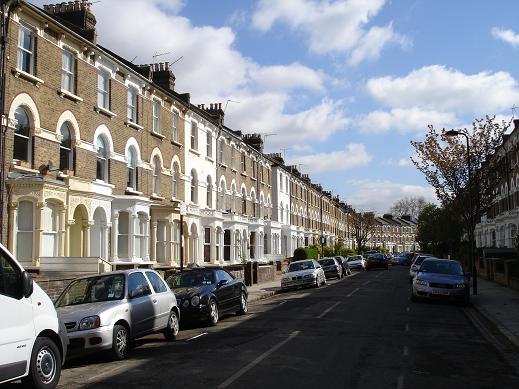

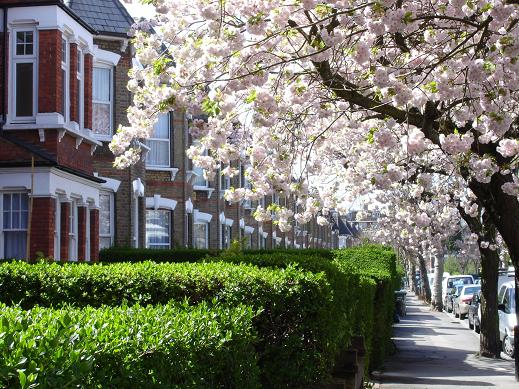
These are fairly standard late Victorian London terraces (apart from the looming towers of the Castle Climbing Centre, that is, formerly a water pumping station). They're so familiar that we tend not to bother with them too much, but in the spring sunshine, even with the cars, they look just fine.
It's one of my pet theories that the British don't on the whole excel at city centres, at least compared with European cities, but have unsurpassed suburbs. Whether that's because we were the first to develop the whole idea of suburbia, and we put up all those miles and miles of Victorian and Edwardian terraces before modern building techniques did away with the charm, or because of something about the British character – an aversion to city planning, perhaps, or a preference for the individual home as opposed to the grand statement of a municipal building - I don't know. Whatever it is, big cities in Europe tend to have centres full of fine urban spaces and noble buildings, but beyond the centre they quickly turn into mile after mile of grim high-rises. British cities, on the other hand, tend as often as not to be disappointing in the centre, but have delightful suburbs. Of course there are exceptions (London, Edinburgh, obviously), but I'm thinking for instance of somewhere like Sheffield, where I grew up. Nothing much of note in the centre but out west, round Fulwood and Ranmoor and Endcliffe, countless beautiful tree-lined streets interspersed with parks and open spaces. Glasgow has a less than inspiring centre, but round the west end areas like Kelvingrove or Hillhead there are terraces that'll take your breath away. Bristol city centre's been pretty much ruined by German bombs and post-war city planners, but the terraces in Clifton are stunning. Admittedly I'm stretching the definition of a suburb here, and going back before the Victorians to Regency and Georgian times, but the point stands, I think.
And yes I know, that's middle-class housing: the working class back-to-backs weren't so wonderful. Still, even the lower-middle class terraces of, say, the Pooters, off Holloway Road – I'm back in London now – look pretty fine nowadays, even though they're all spit up into flats..
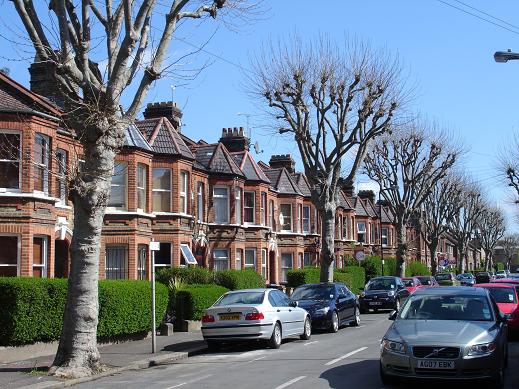
But you find quality in the most unlikely places. Further north, round Walthamstow, there's a whole area around Blackhorse Road which was developed by the Warner Estates at the end of the 19th Century and has street after street of the most beautiful red-brick terraced houses. I think it's arts-and-crafts influenced, but I'm no expert. Some were for the middle classes but these, along Edward Road, were working class houses:

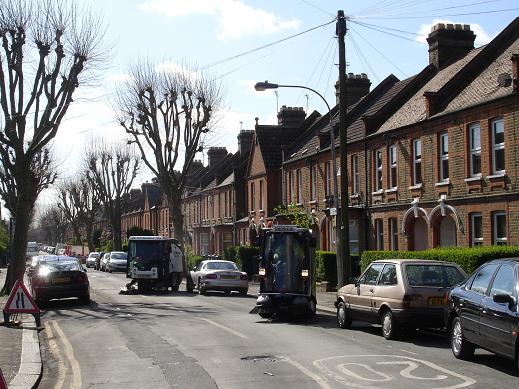
Looking up Lloyd Road:
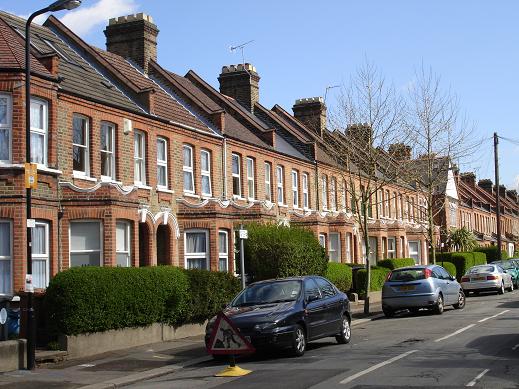
I love the doorways:
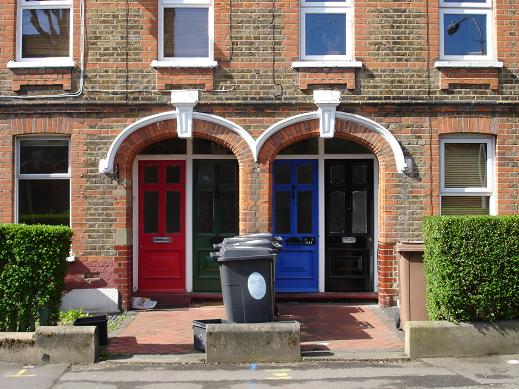
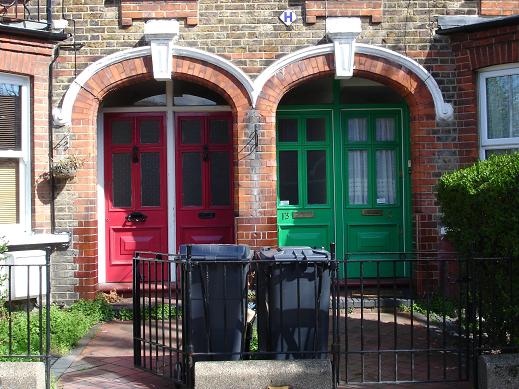
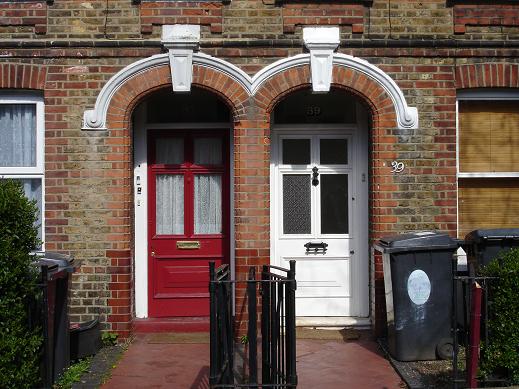
Shame about the bins, mind.
Every terrace is different, if only in the minor details. If I had the time and the patience I sometimes think it'd be good to do some kind of project on the typology of London terrace doorways, in the spirit of industrial photography pioneers Bernd and Hilla Becher. They concentrated on blast furnaces, cooling towers, and grain elevators but somehow – time was too short – never got round to terraced housing. Perhaps, being German, they weren't aware of the wealth of quality suburban material. And there are considerably more doors than cooling towers: on the whole, I think, a good thing, but not if you're wanting to keep a record of all the different variations.
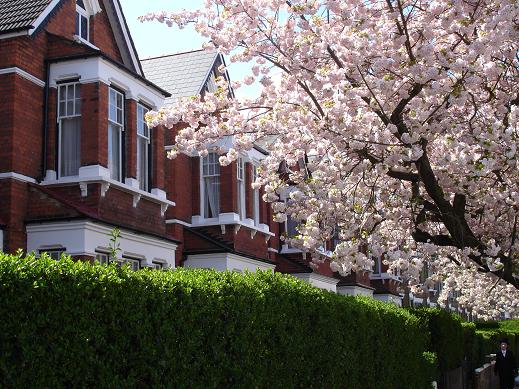
Anyway it's springtime, so here's Fairholt Road, back in Stoke Newington:


 Mick Hartley
Leave a comment